- 1
Book your park for your animal: Tarangire for elephants in August and September, Ngorongoro for lions and rhinos at first light.
- 2
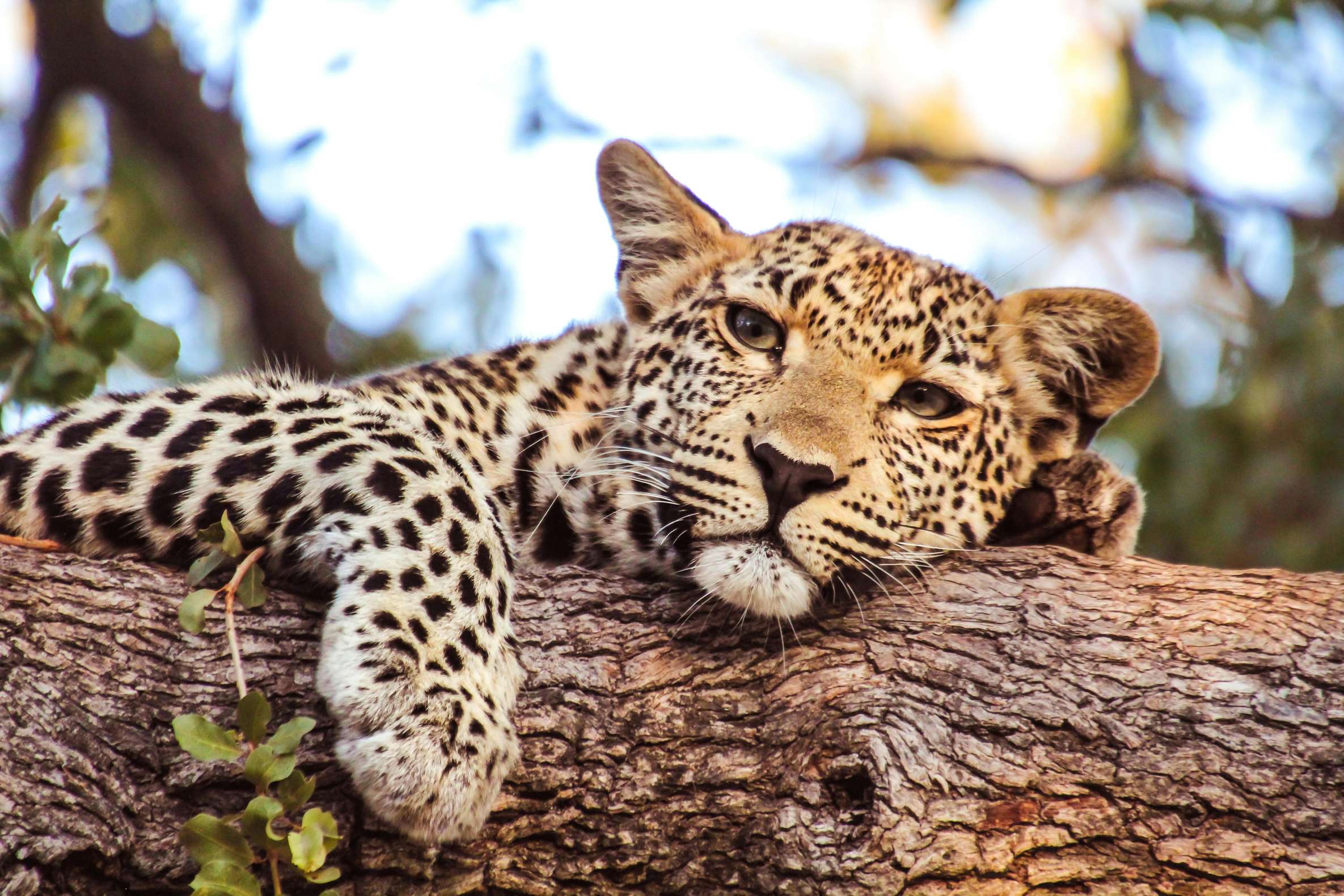
Predators hunt at dawn and dusk and sleep up to 20 hours, so the 6 am game drive is the one that counts.
- 3
Park gates everywhere run 6 am to 6 pm; pack in khaki and beige, never dark blue or black.
Yellow fever proof is only asked of travelers arriving from or transiting 12 hours or more through a country with yellow fever risk, and flying between mainland Tanzania and Zanzibar requires no vaccination at all. Travelers who do pass through an endemic country need the certificate issued at least 10 days before arrival, and anyone exempt for age or medical reasons should carry an official waiver letter; infants under 1 year are exempt by law.
Wildlife photos - animals in Tanzania safari tours
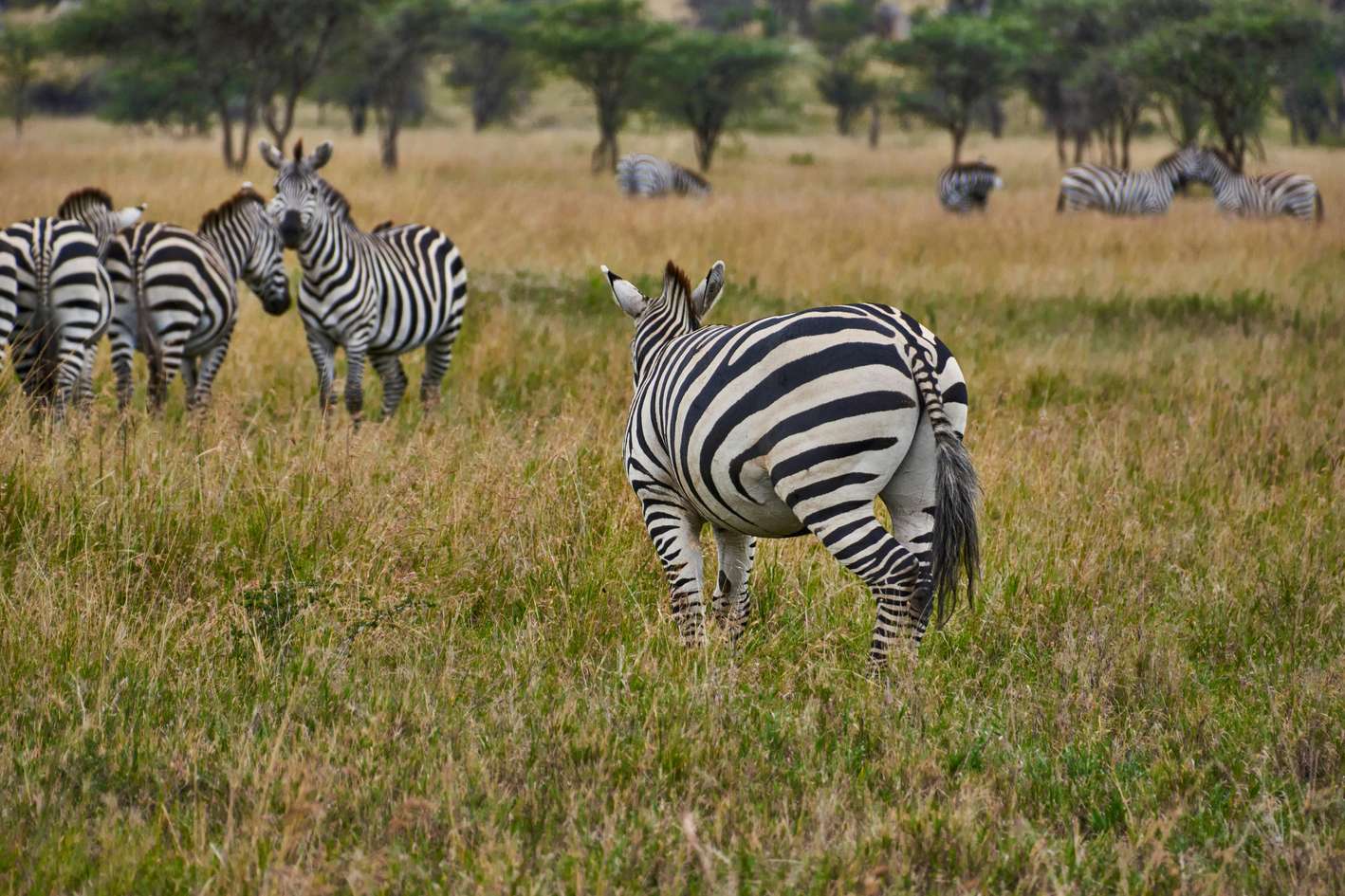
The animals you can see on a Tanzania safari, park by park
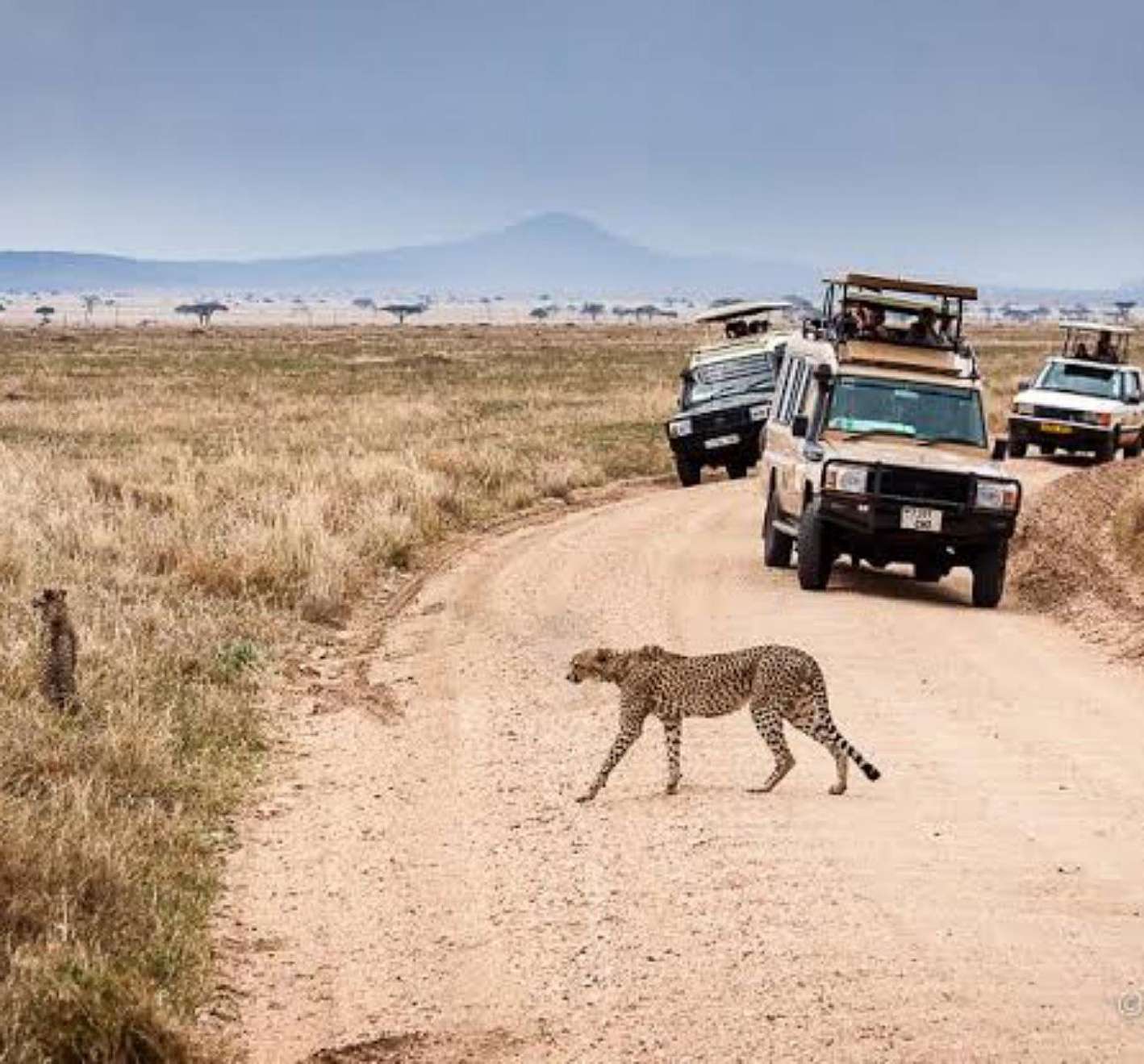
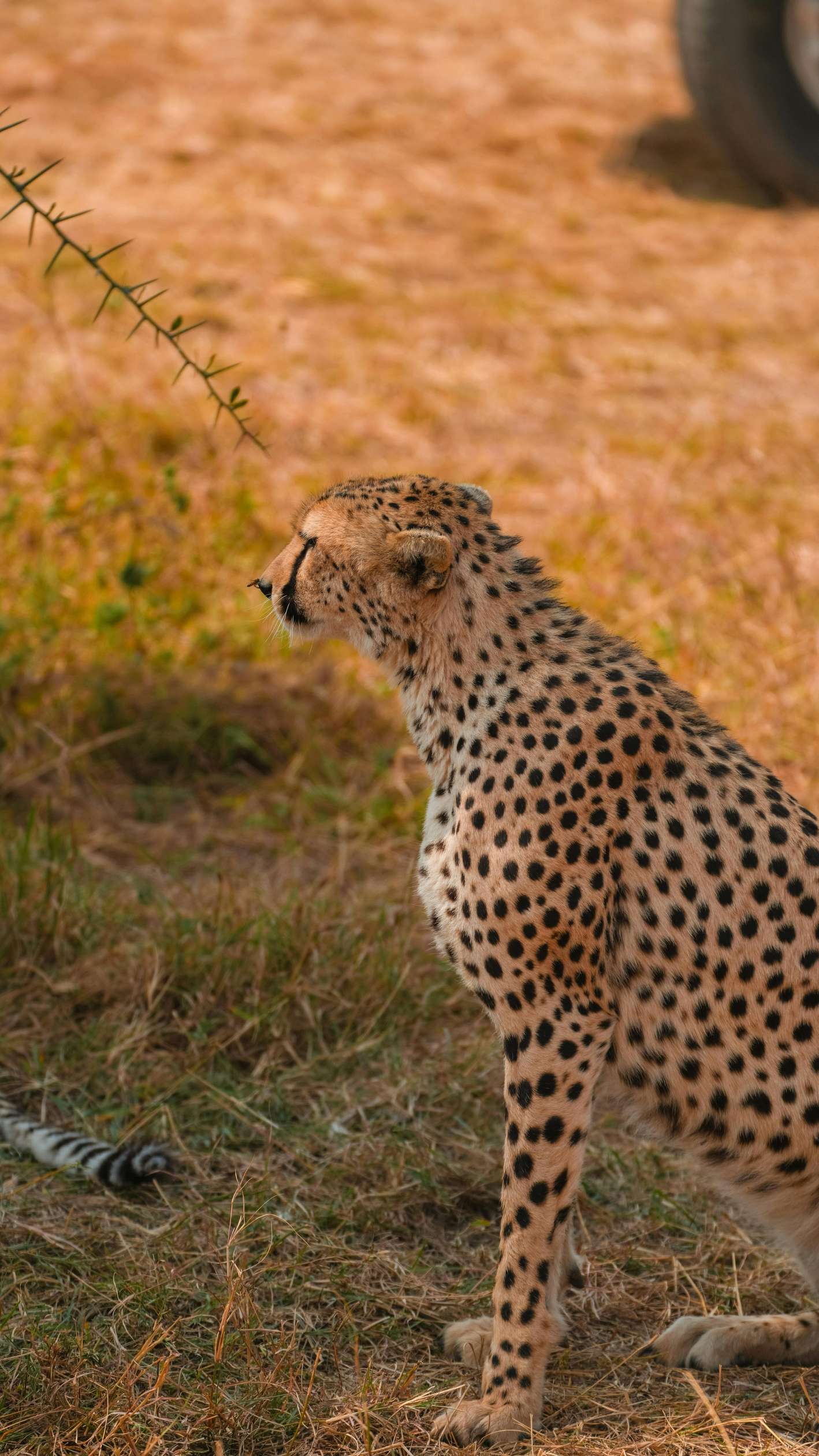
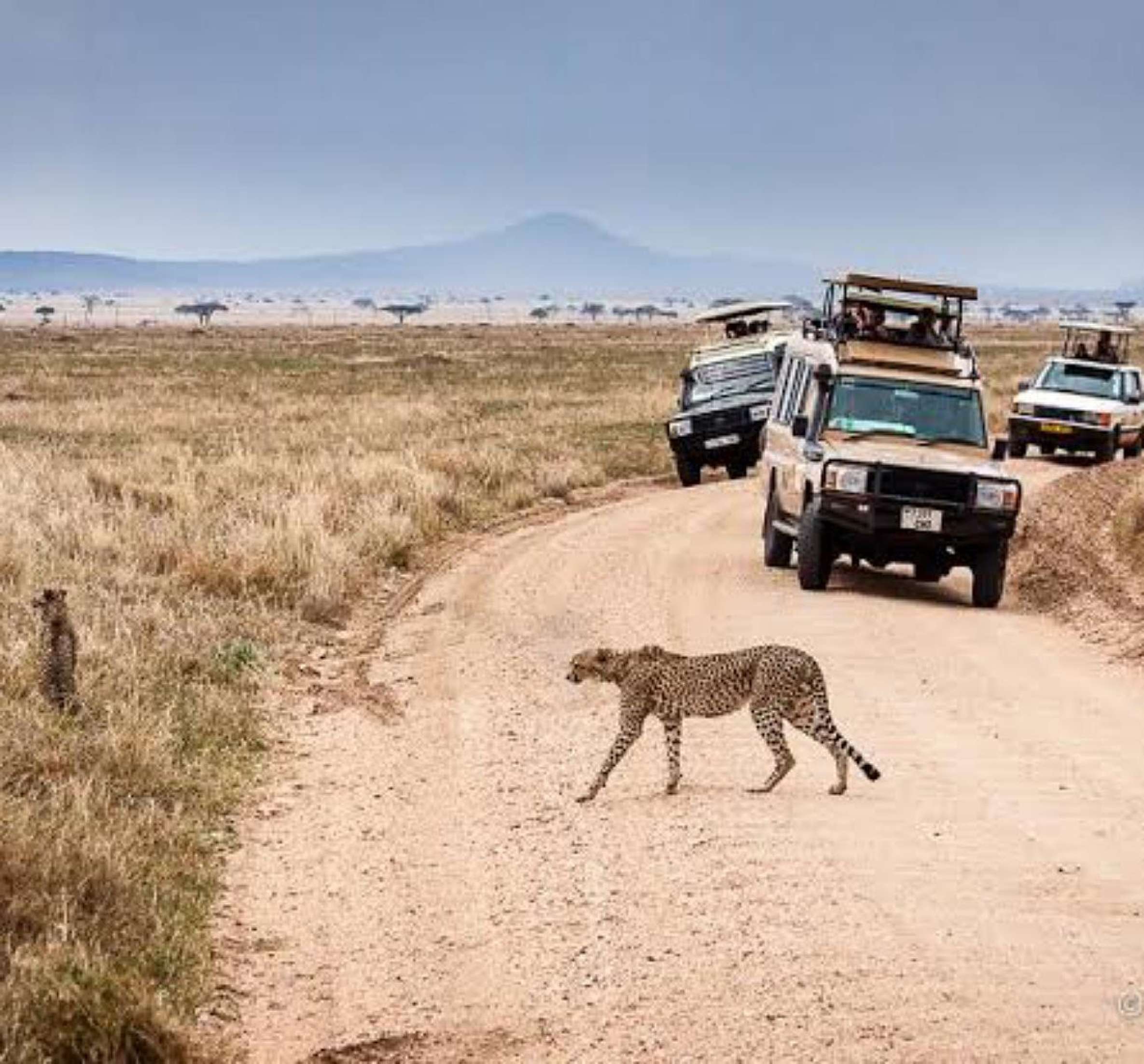
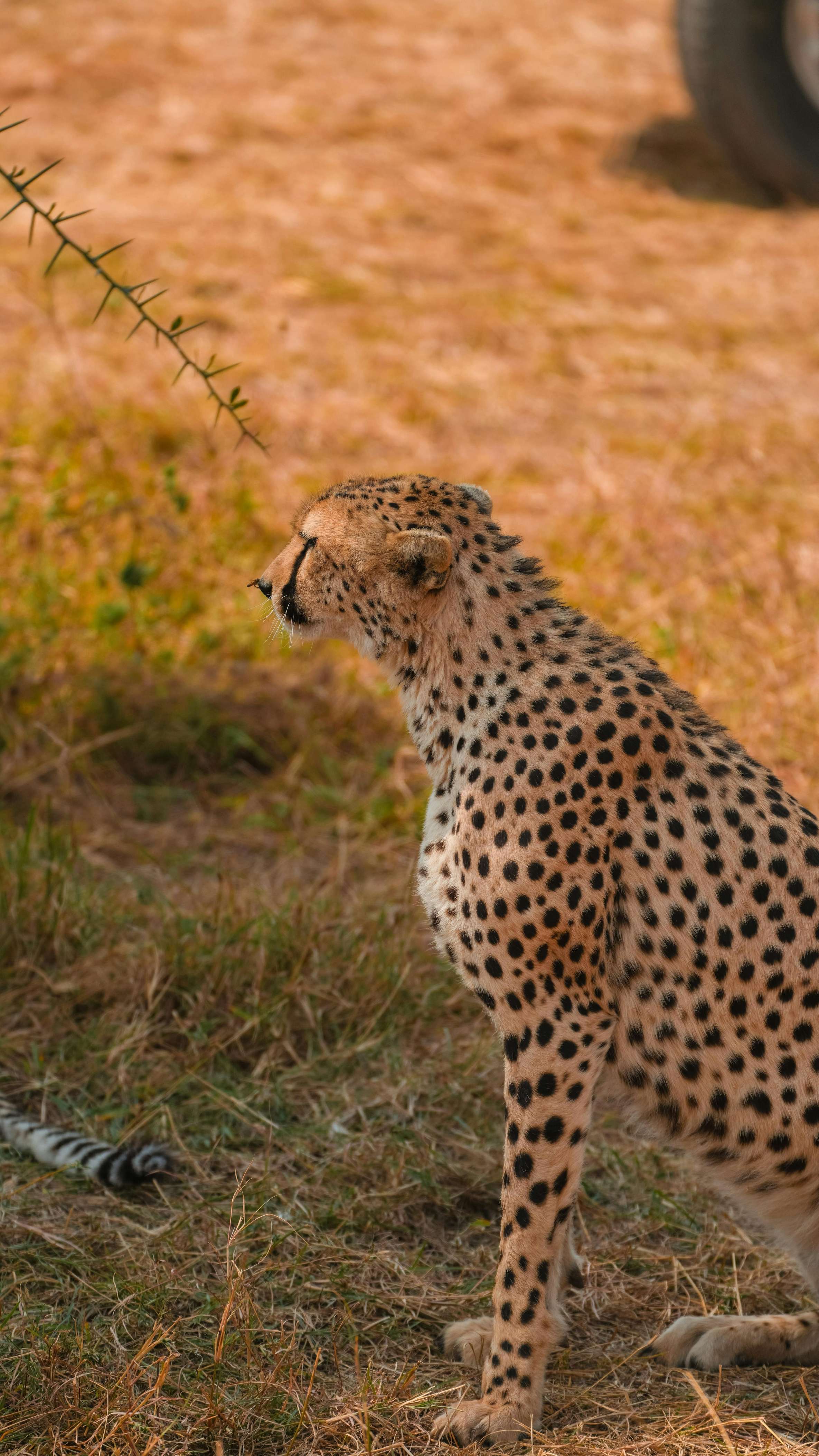
A cheetah flattens itself against the termite mound, one eye on a gazelle a few hundred metres out. Every animal on your wishlist lives somewhere specific in Tanzania, and the park you pick decides whether it shows up at all.
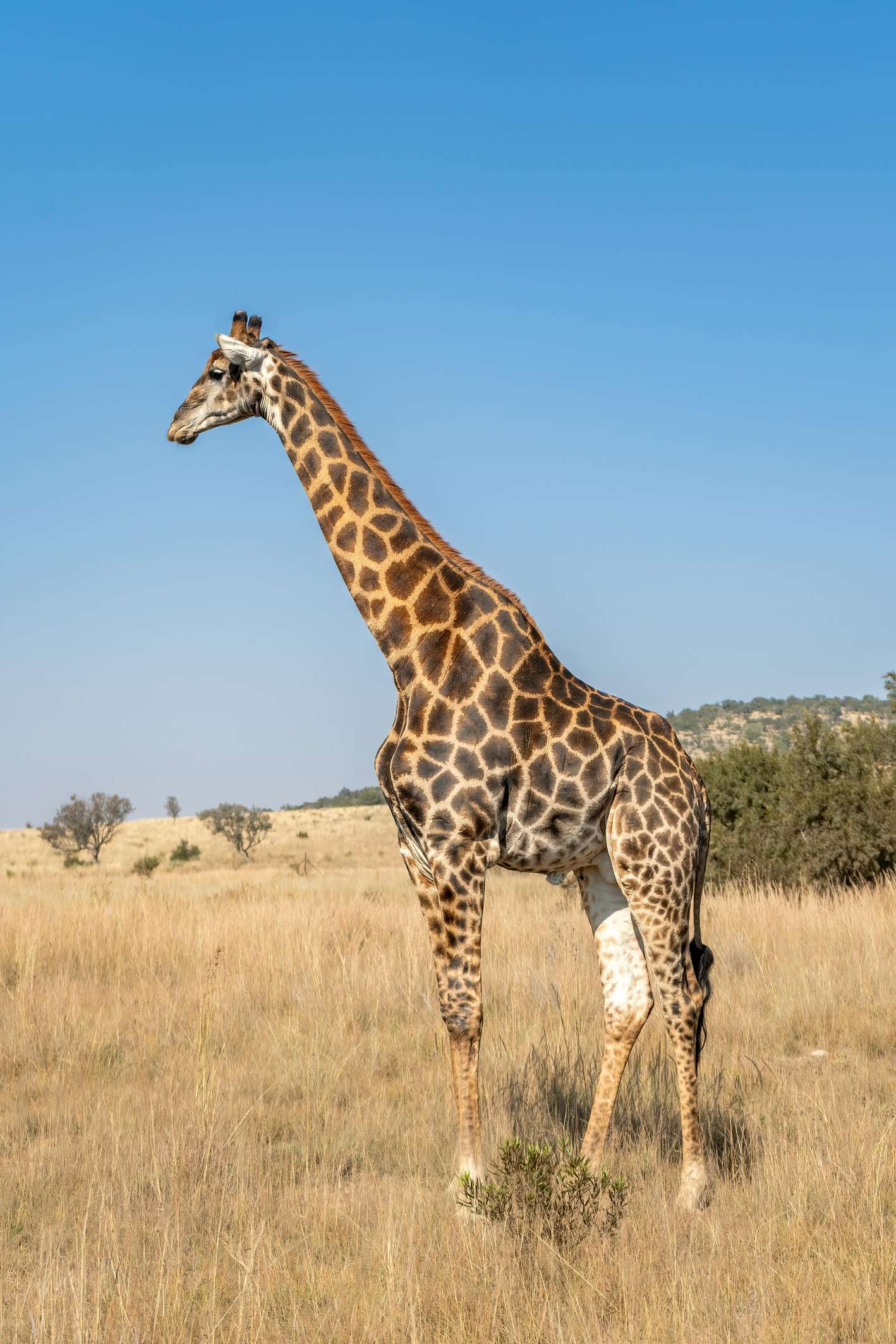
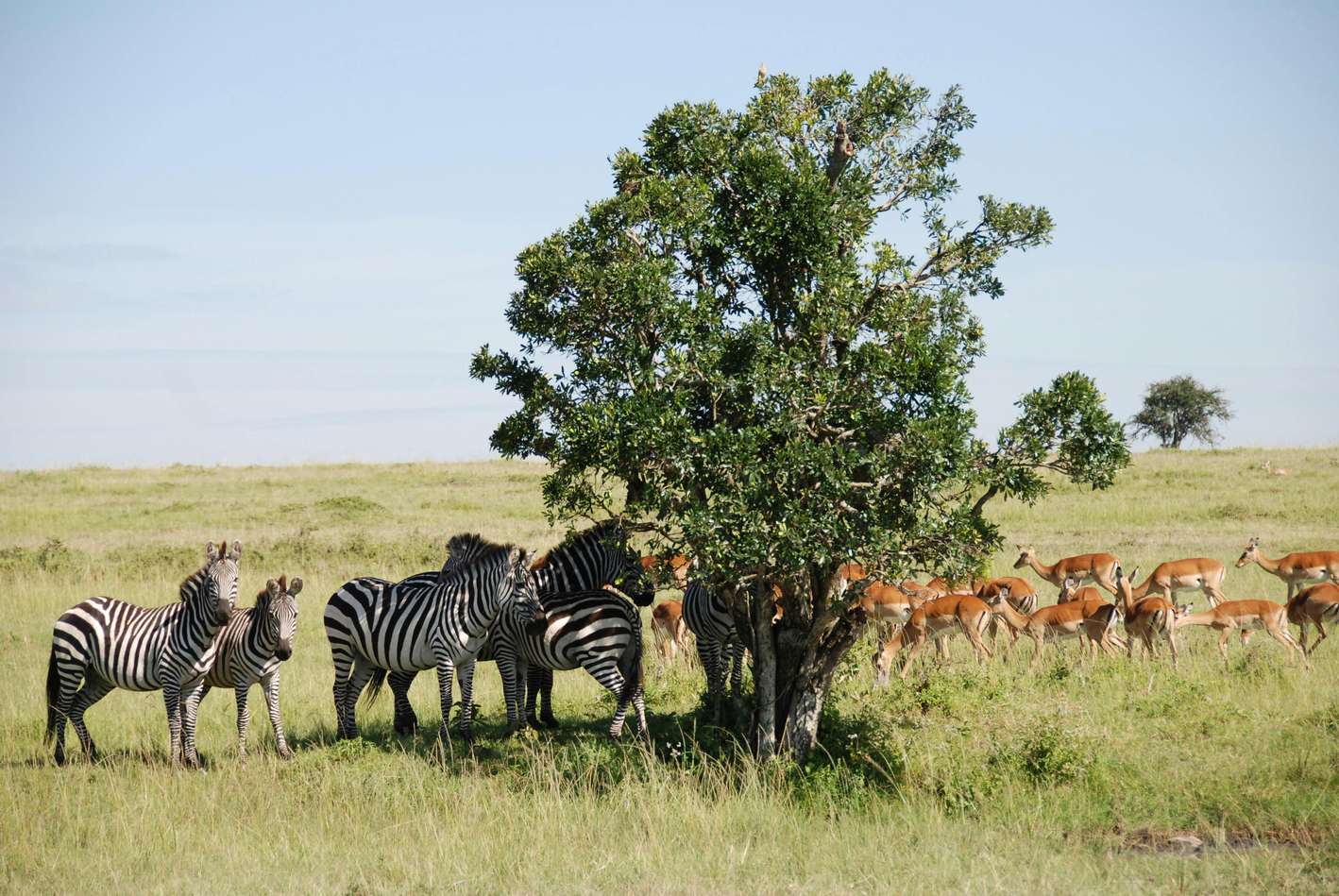
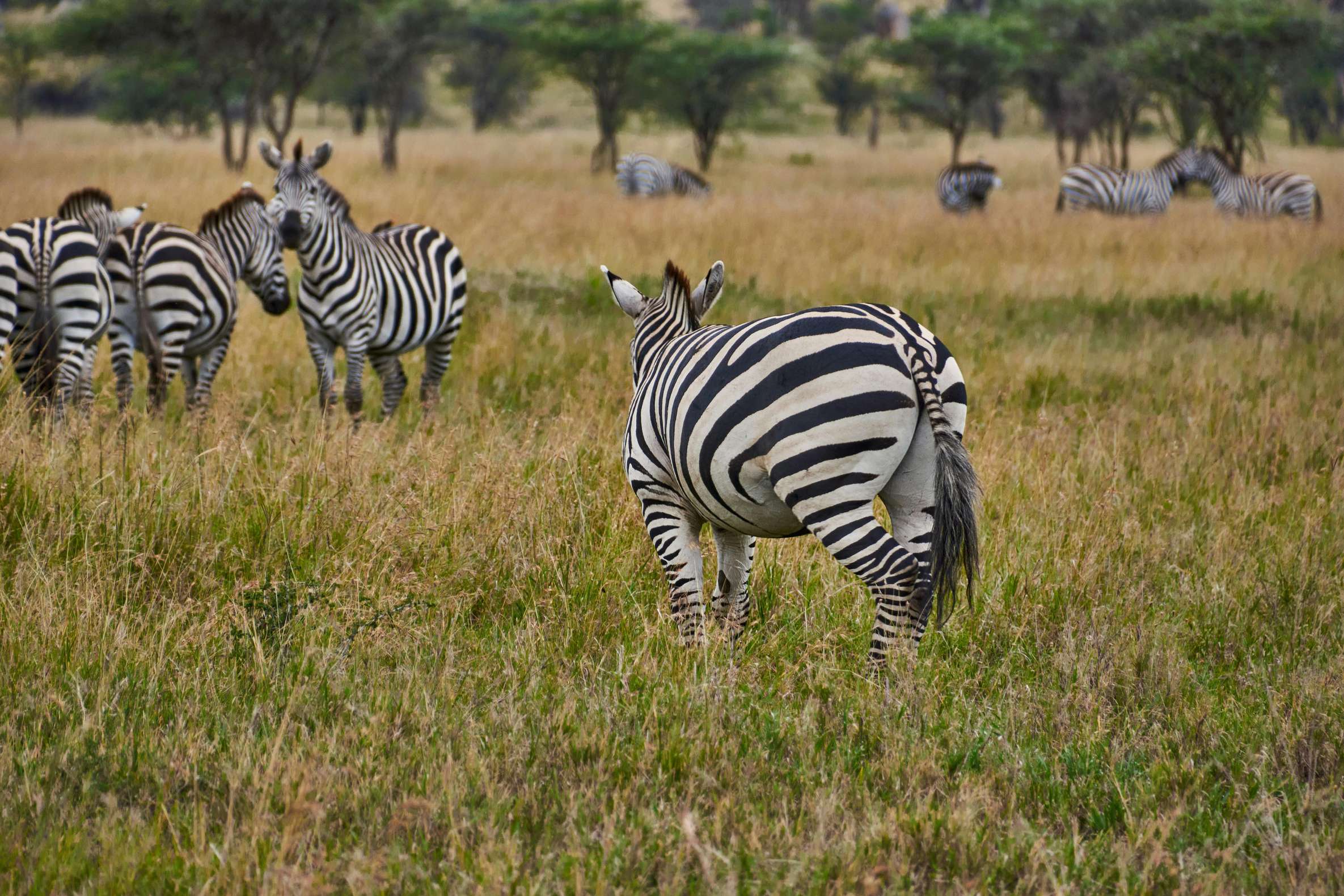
The northern parks carry the fullest list. The Serengeti, Ngorongoro Crater, Tarangire and Lake Manyara regularly give up lions, leopards, cheetahs, elephants, buffaloes, giraffes, zebras, wildebeest, hippos, crocodiles, hyenas, baboons, flamingos and even black rhinos.
The southern parks trade rhinos for wild dogs. In Nyerere, Mikumi and Ruaha you meet lions, elephants, leopards, African wild dogs, buffaloes, giraffes, zebras, hippos, crocodiles and a run of antelopes.
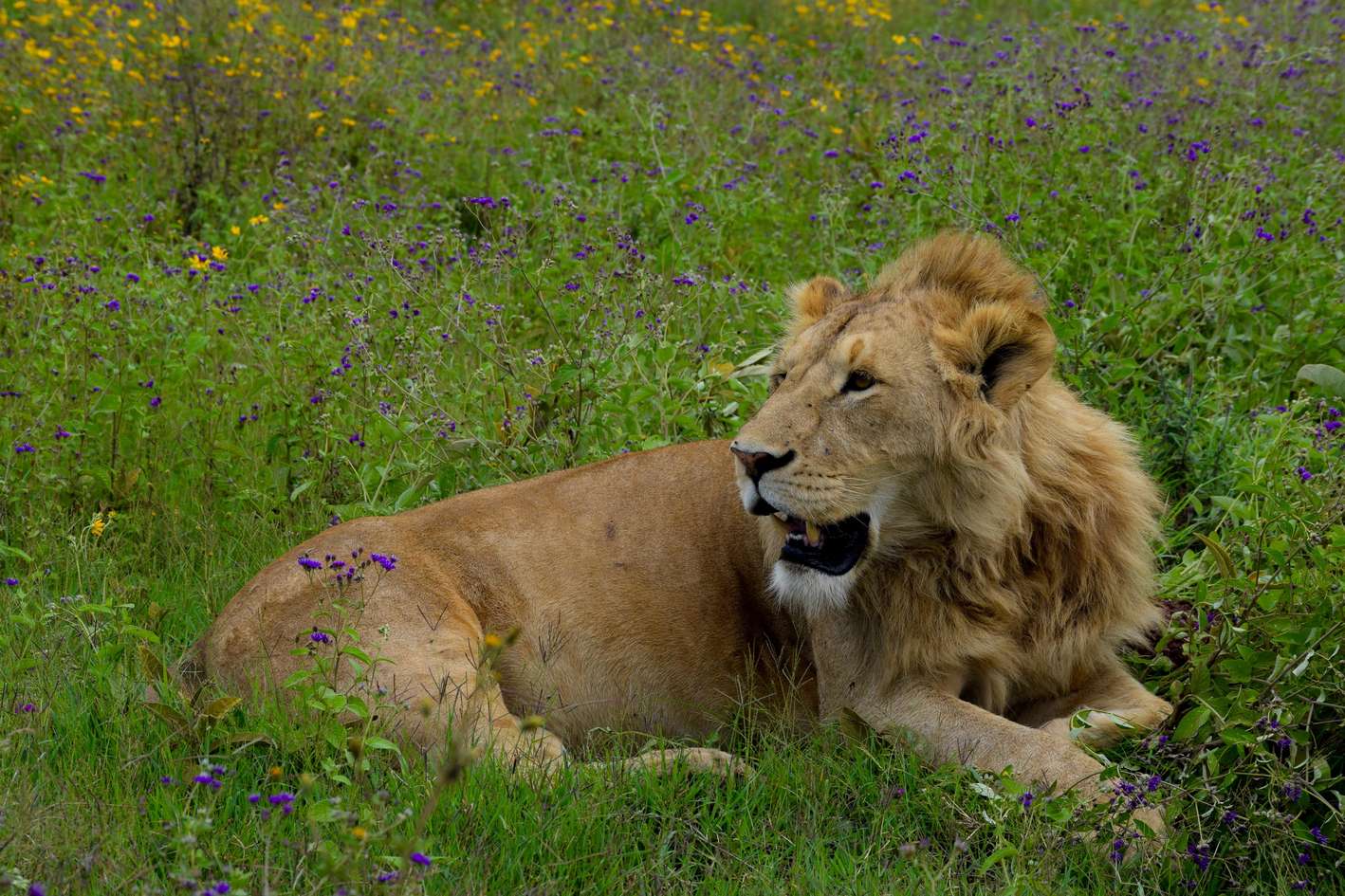
Two facts sharpen the wishlist. Ngorongoro Crater holds Africa's densest wild lion population, so a cat sighting there is close to routine. And the dry months from July through October stack the odds highest everywhere, because animals crowd the water.
Start your checklist, then match each animal to a park. That single decision decides more of your trip than the lodge or the month.
Where to see lions, cheetahs and leopards on a Tanzania safari
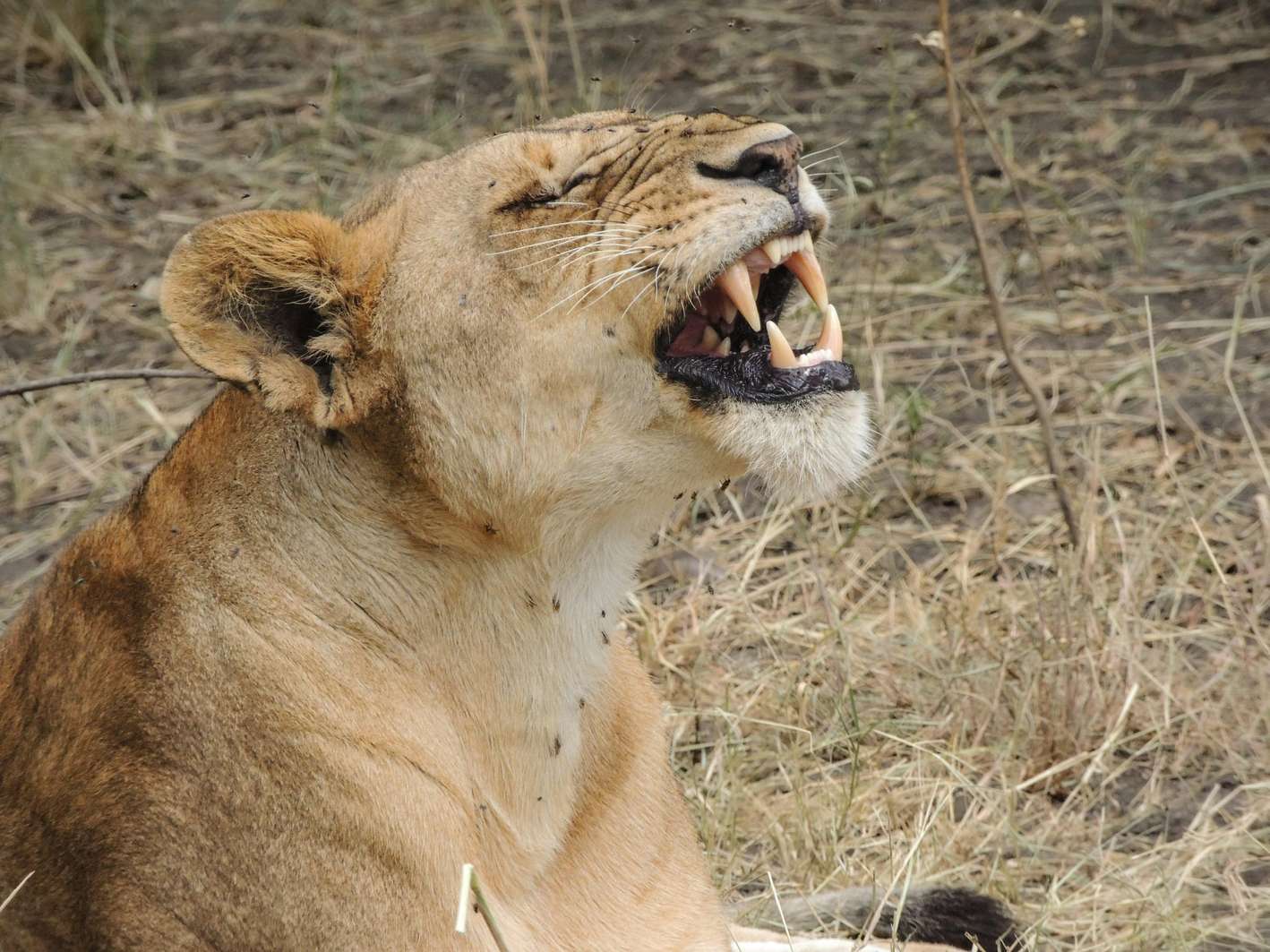
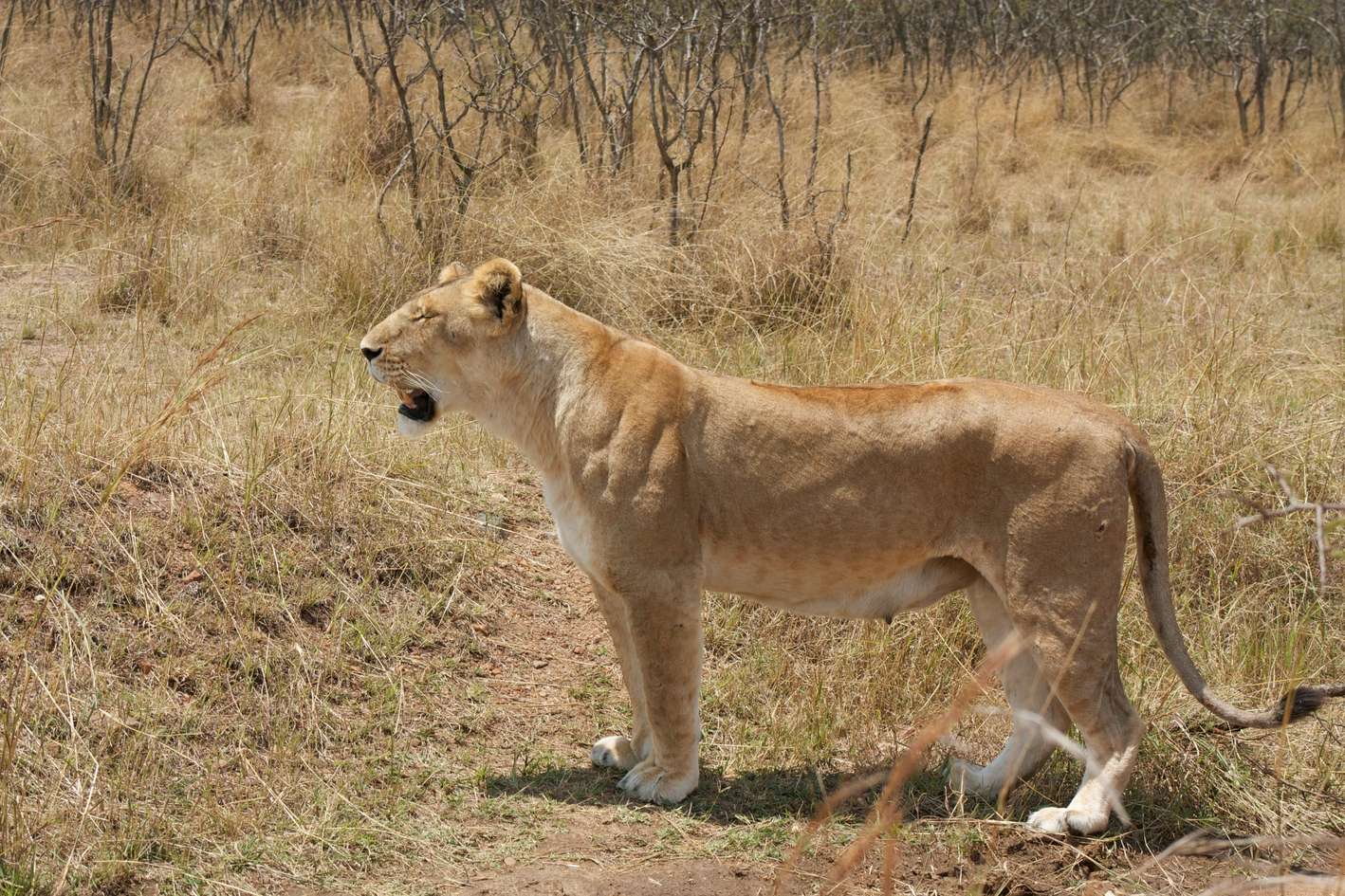
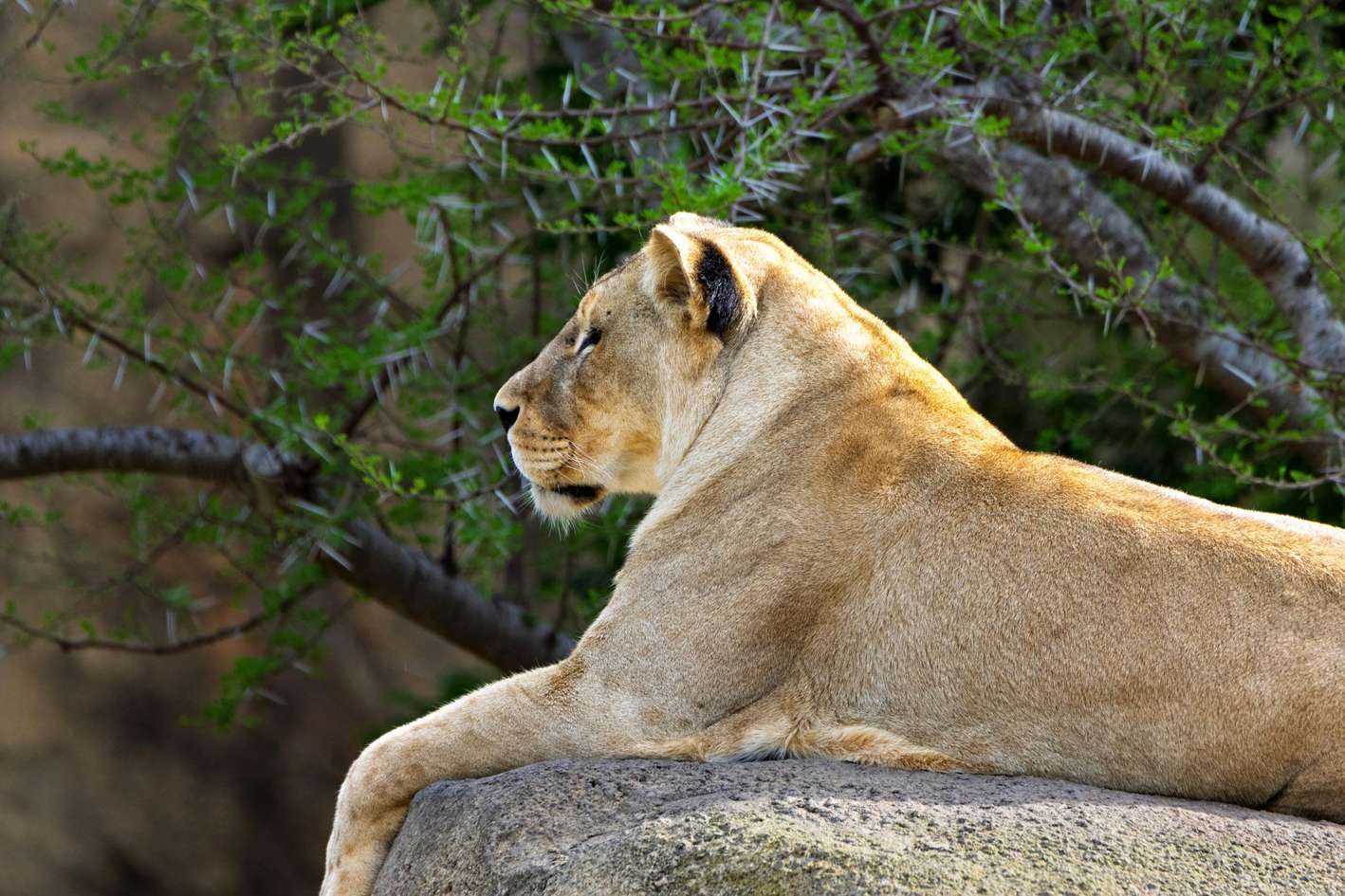
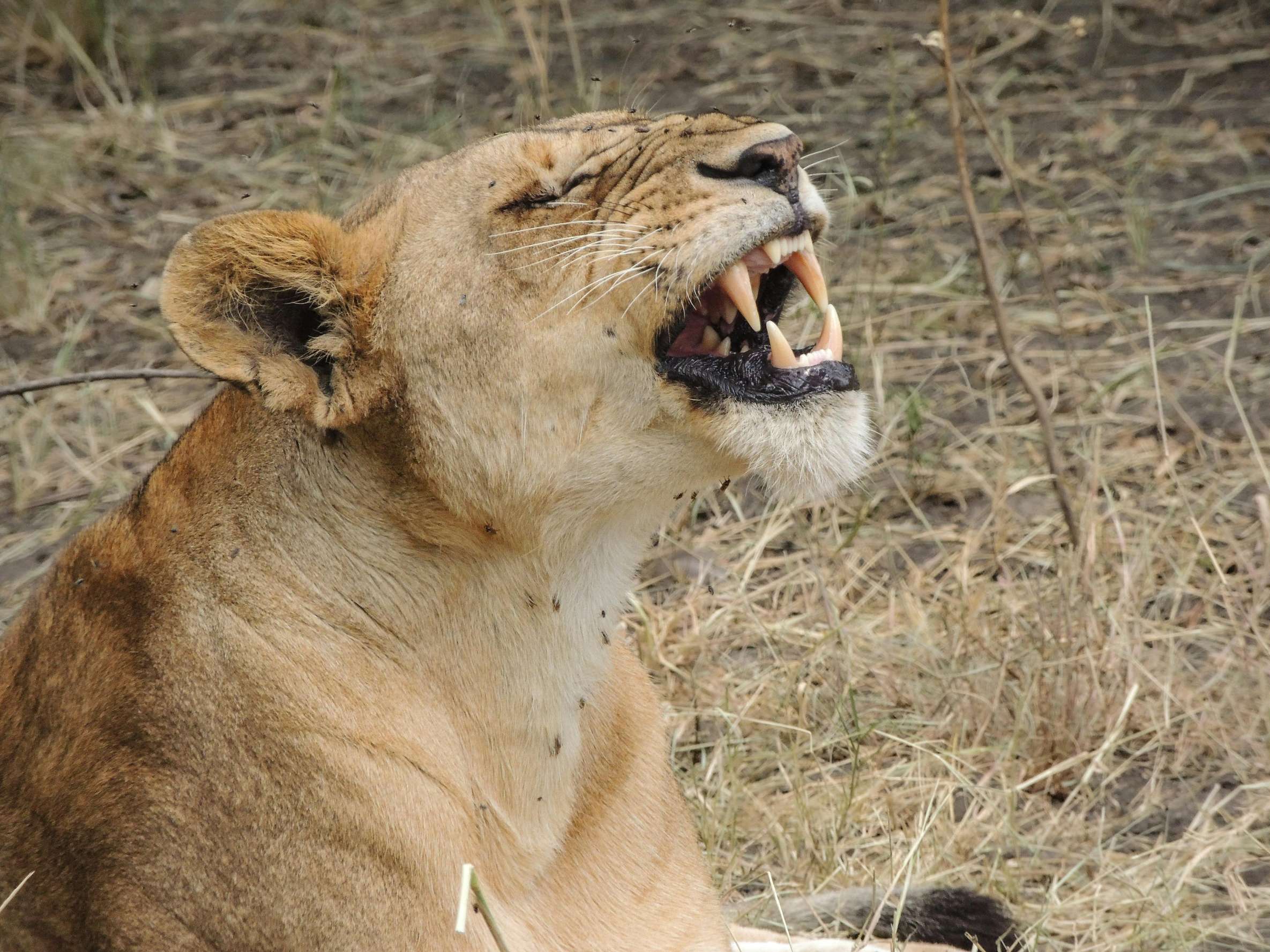
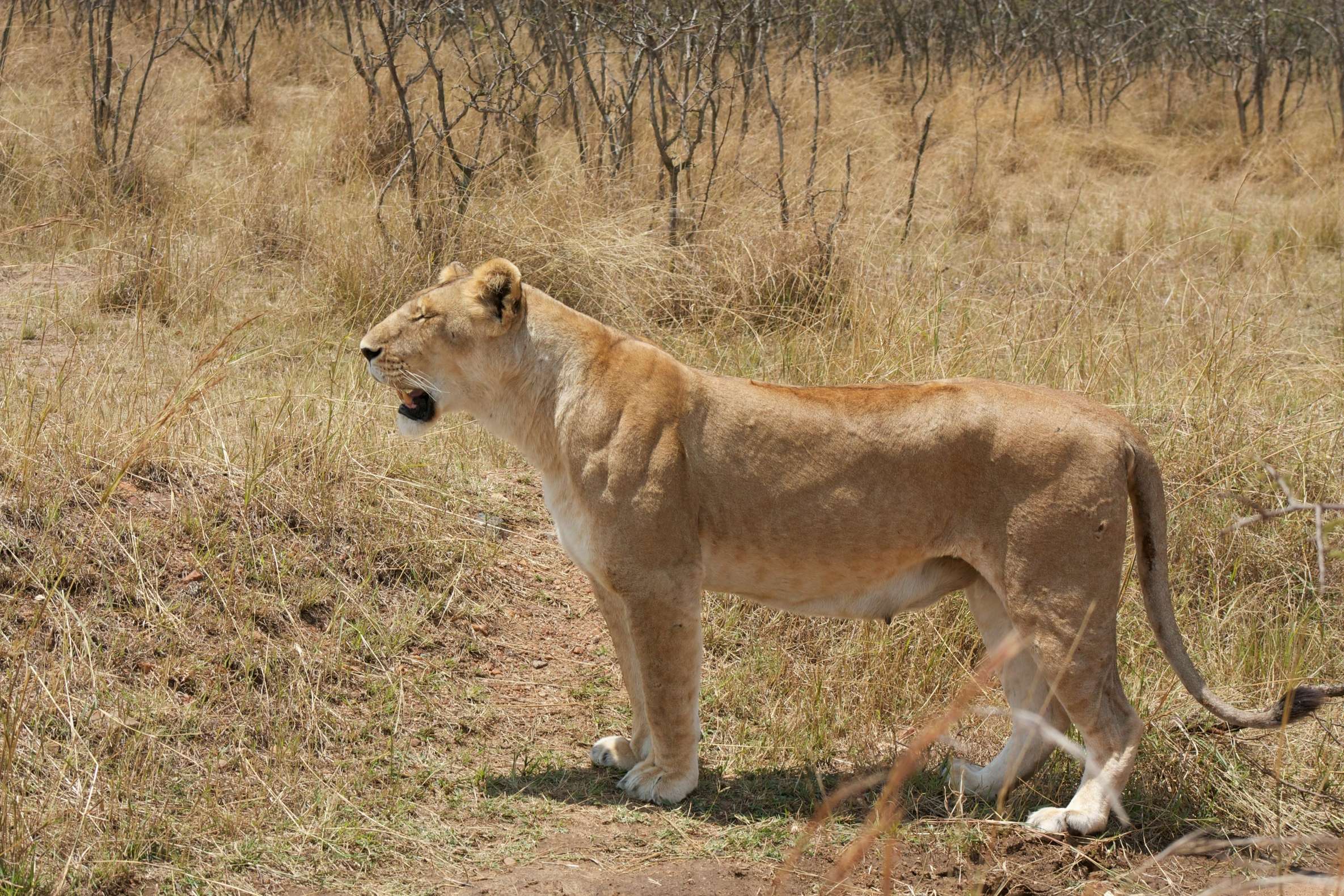
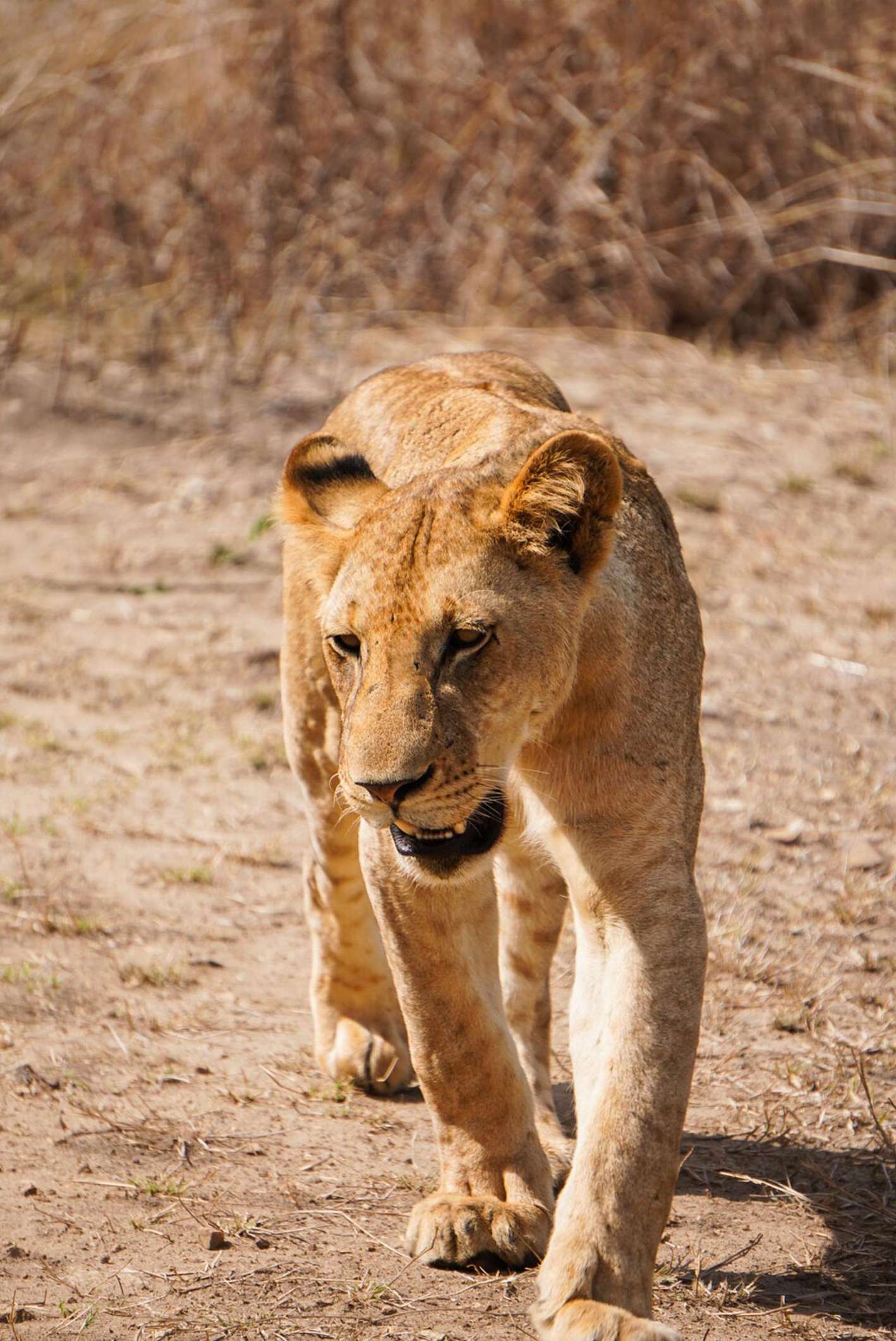
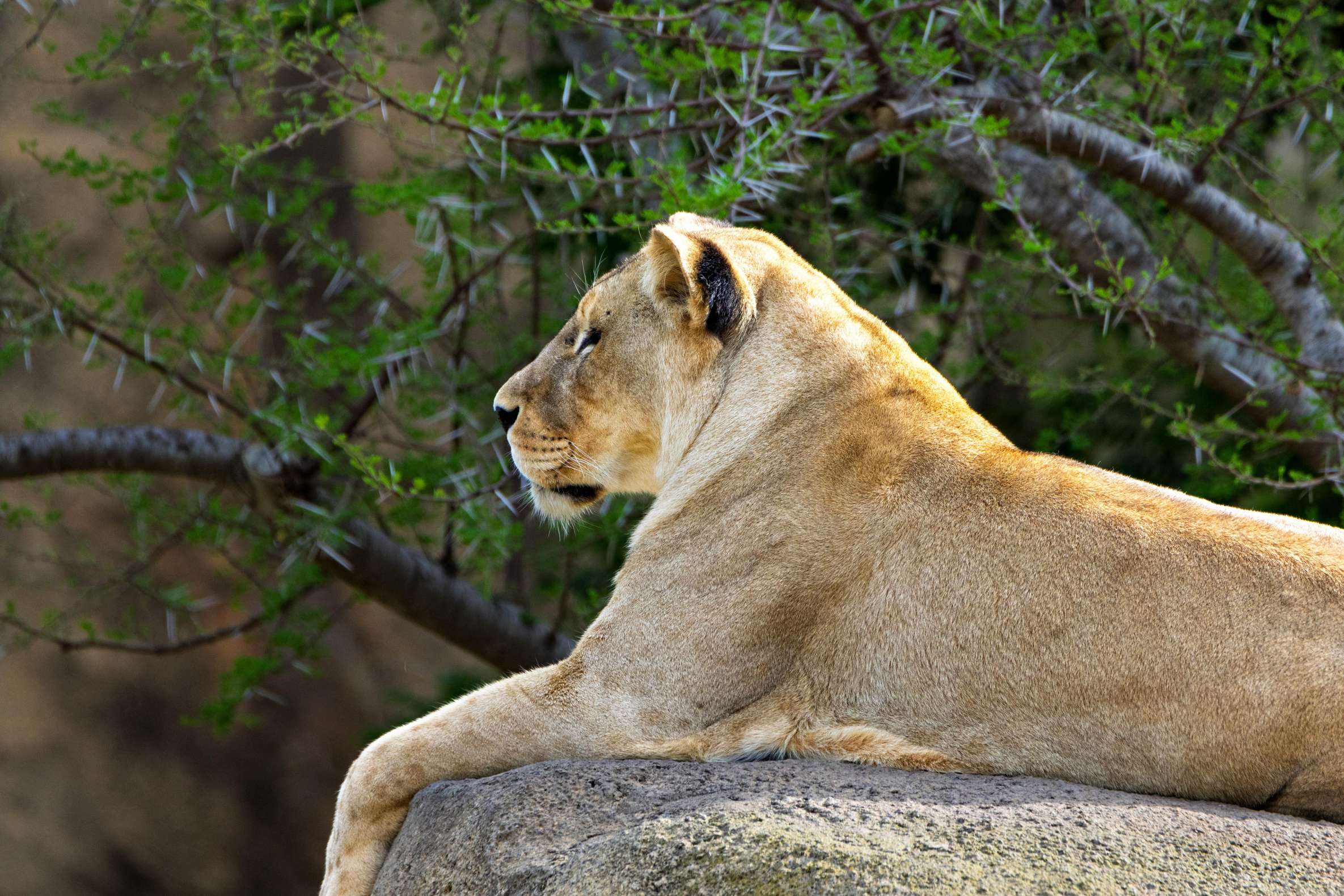
First light, and the grass is still cold. This is when the cats move. Predators are active at dawn and again late in the day, and a big cat sleeps 16 to 20 hours out of every 24, so the afternoon drive often finds lions flat in the shade doing nothing at all.
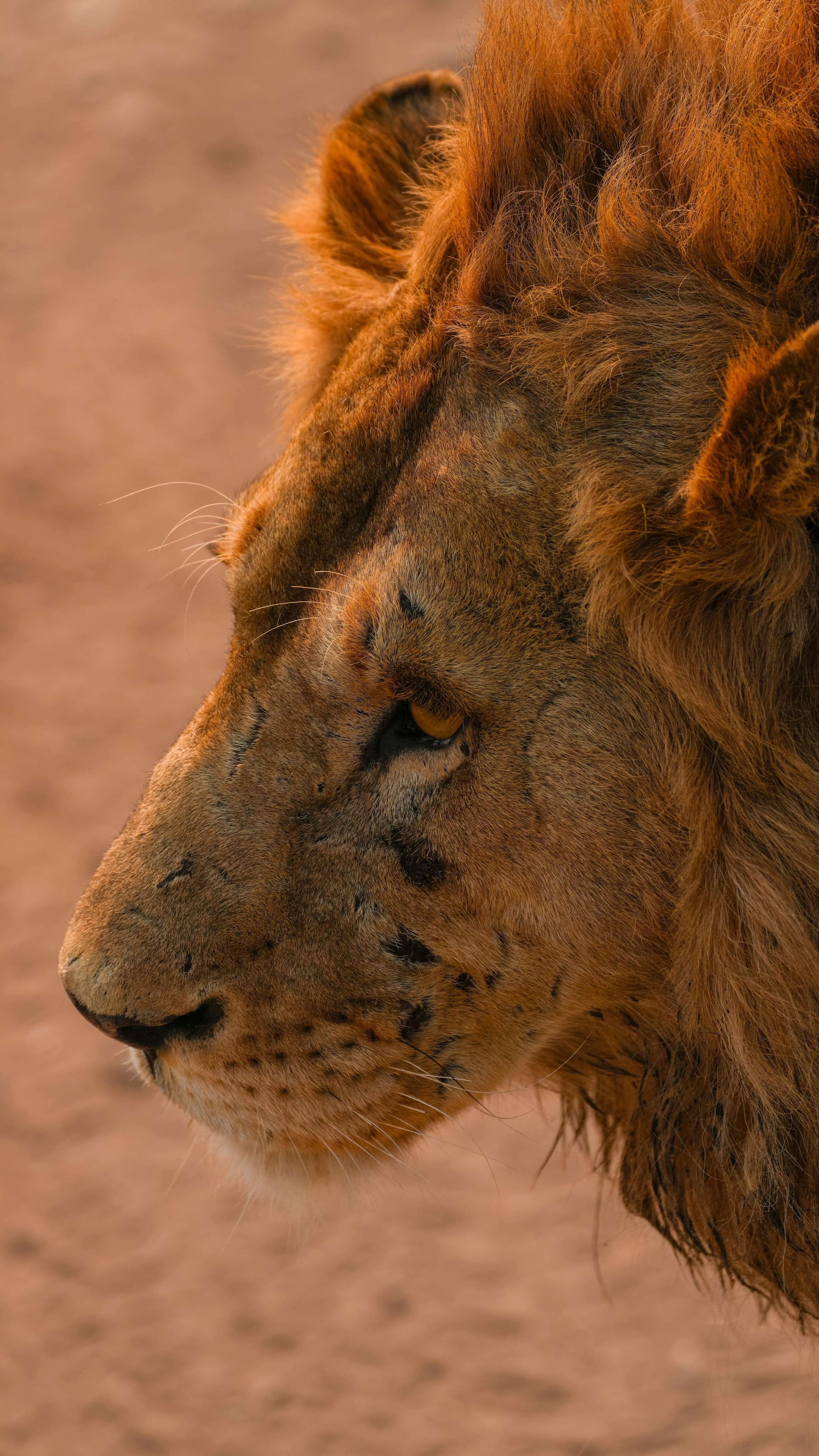
Ngorongoro Crater holds Africa's densest wild lion population, and the central Seronera Valley of the Serengeti concentrates prides like nowhere else. Book a morning drive in either and the odds work in your favour.
The two sprinters want different ground. Cheetahs need open plains and long sightlines to hit their full sprint, which can touch 100 km/h. Leopards want dense cover and trees, where they stalk, ambush and then haul the kill up into the branches to keep it from hyenas.
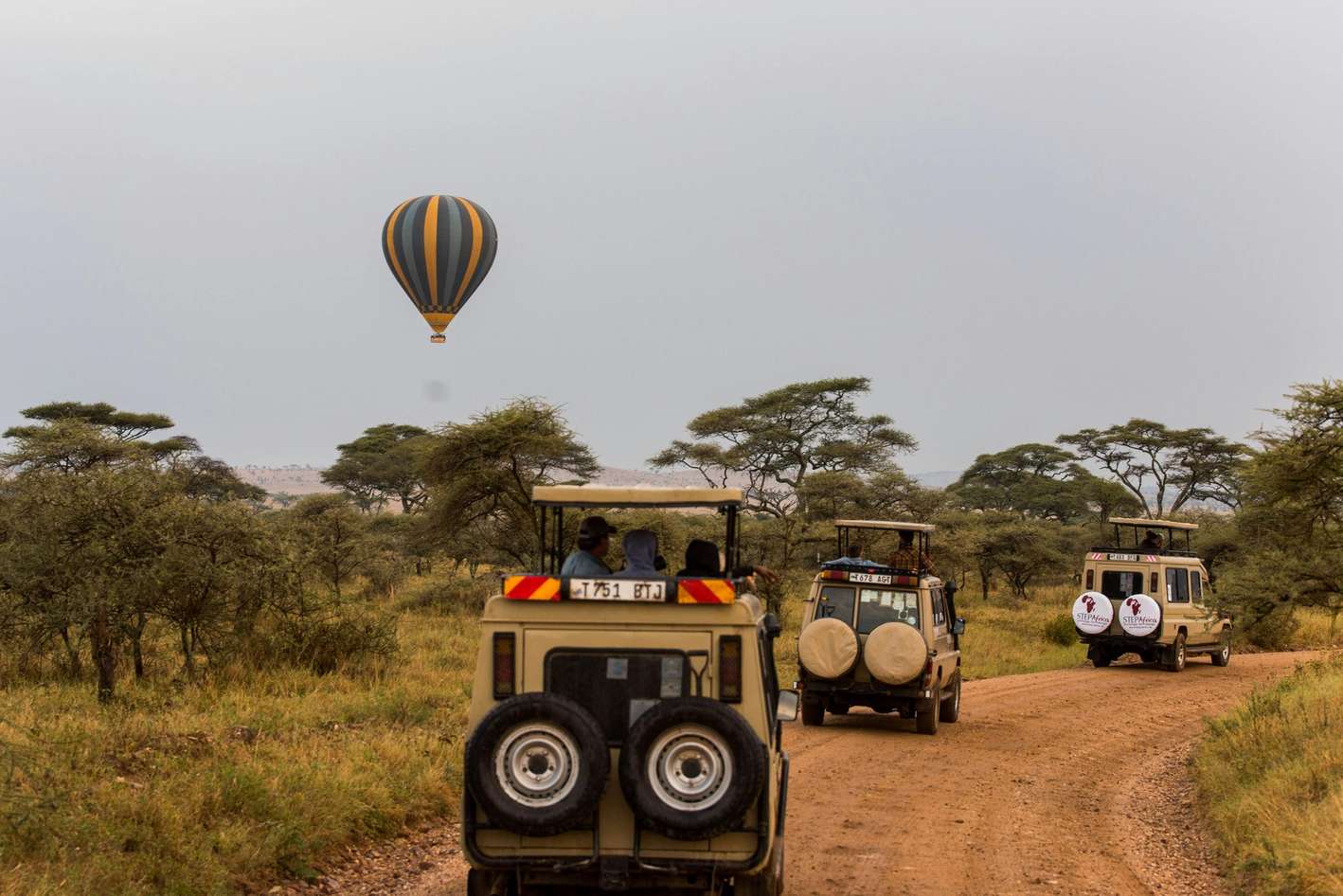
The guides do the tracking for you. Drivers talk to each other by radio across the whole park, so a lion sighting near one Land Cruiser soon draws the rest. Sightings still are never guaranteed, because the animals wander free.
What nobody tells you
Lions rest 16 to 20 hours a day and lie in shade through the heat, so plan your predator drives around first light
Drivers across the park share sightings by radio, which is how rare animals get found
Animals roam freely, so any operator guaranteeing a lion is telling you something else
That changes how you spend the day: many travelers swap the hot afternoon slot for a pool and a rest, and put every vehicle hour they have into the first light drive.
Tarangire's giant elephant herds and when to see them
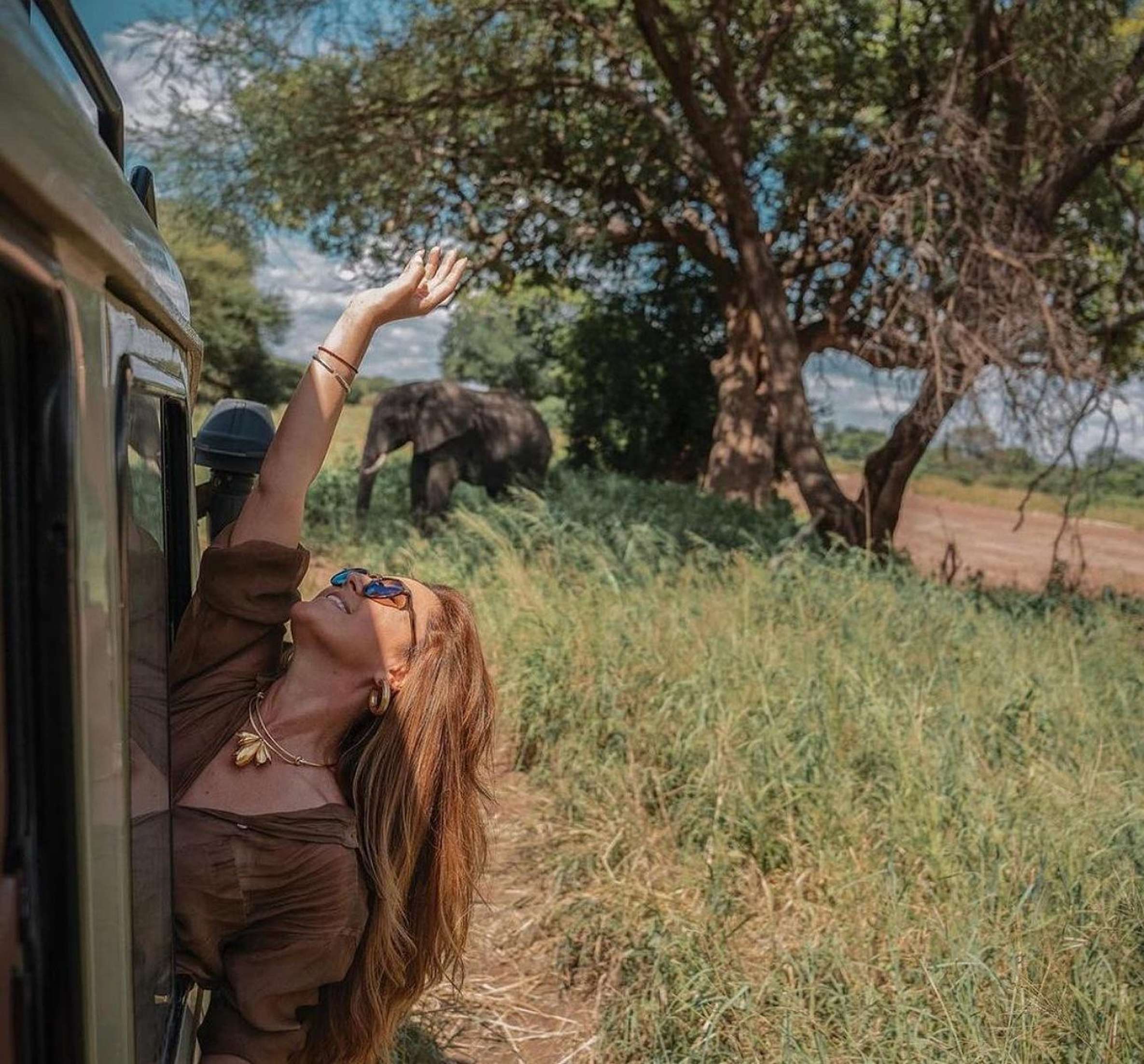
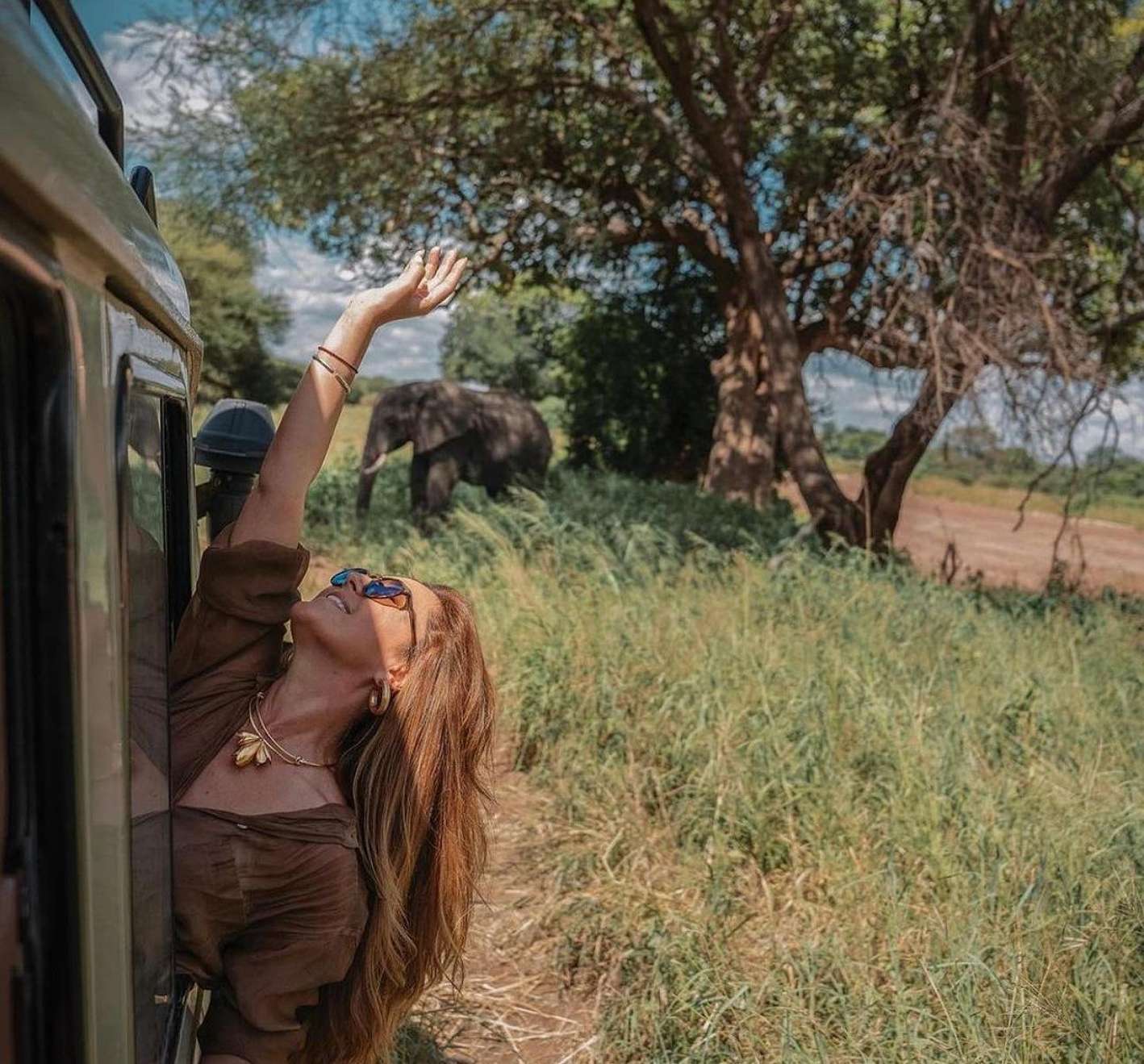
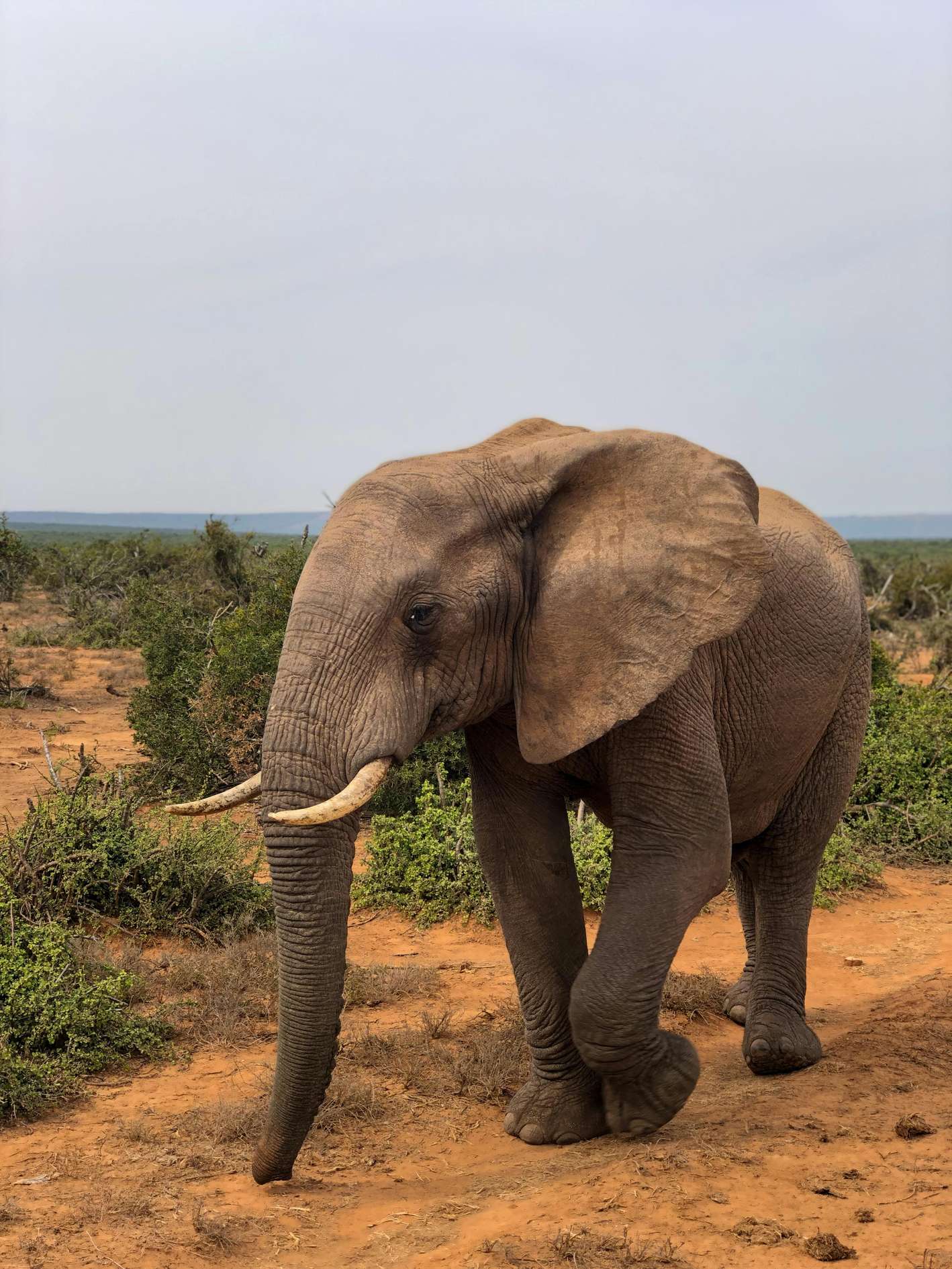
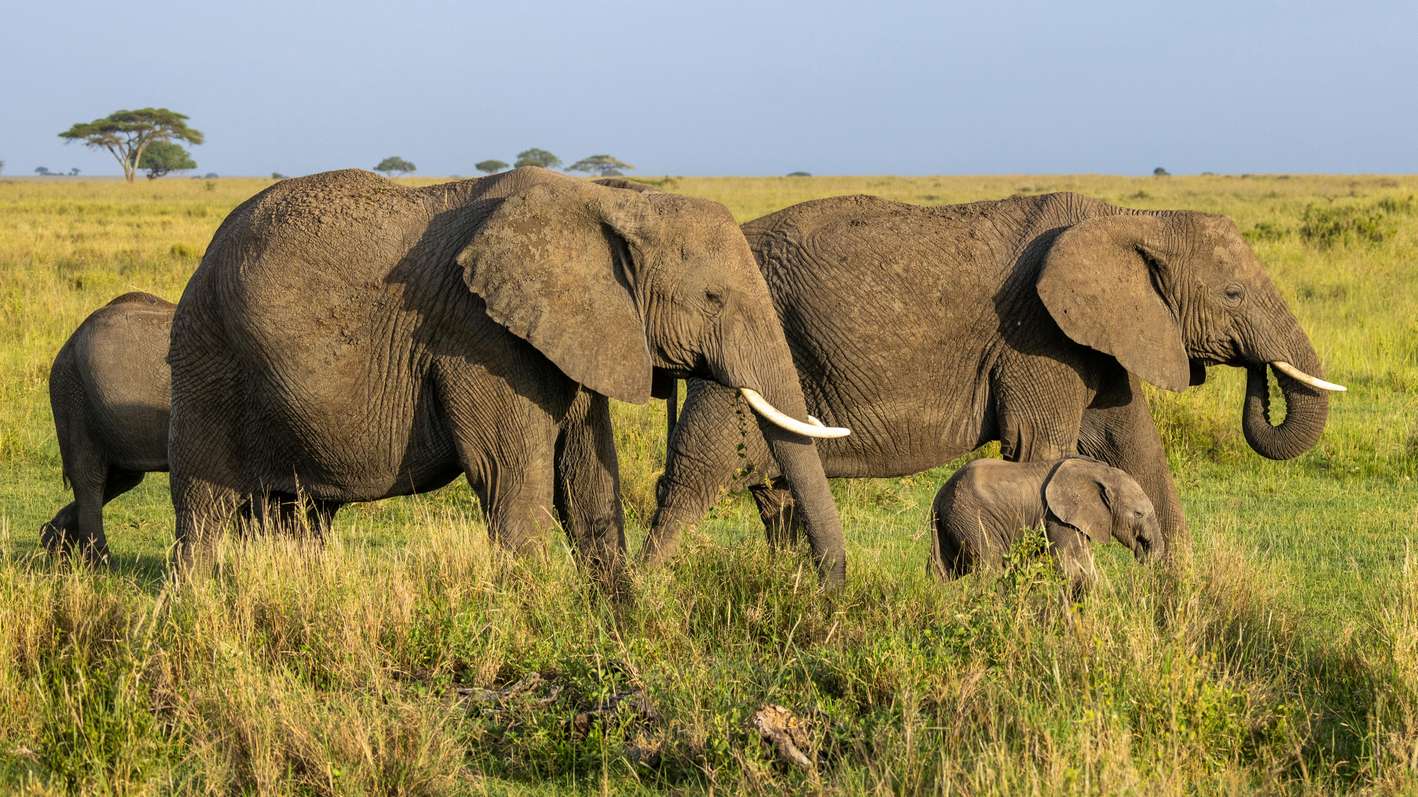
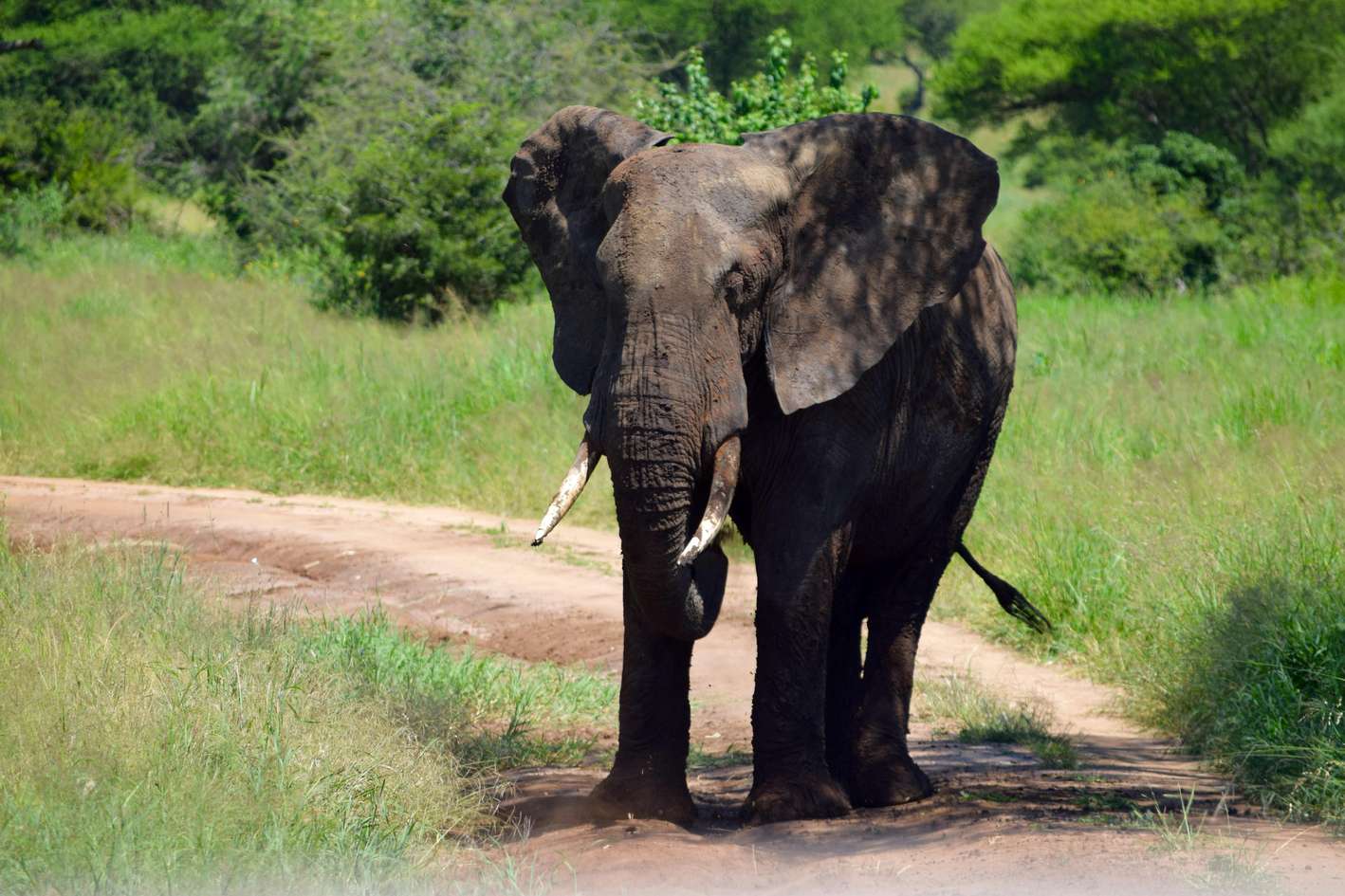
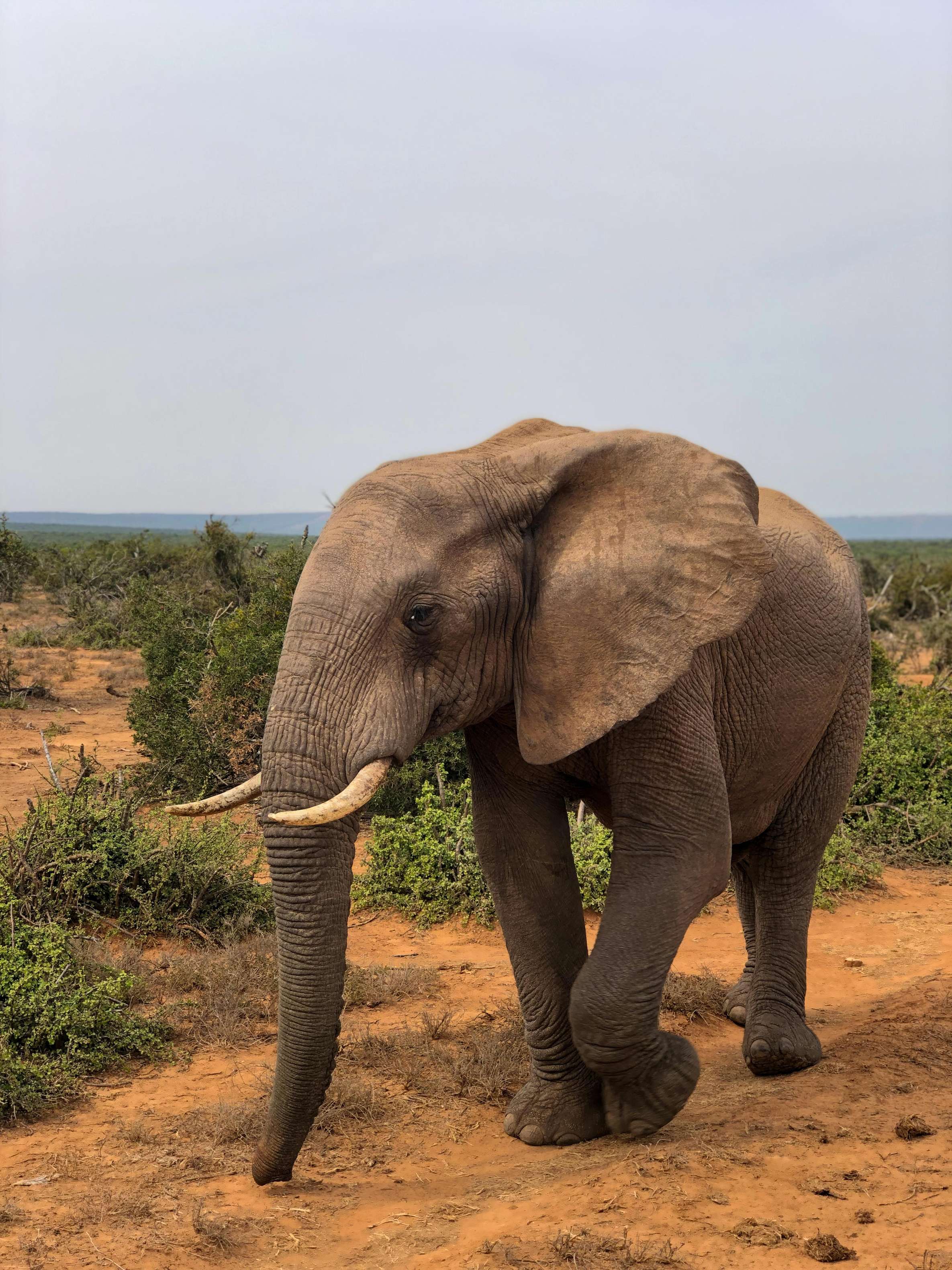
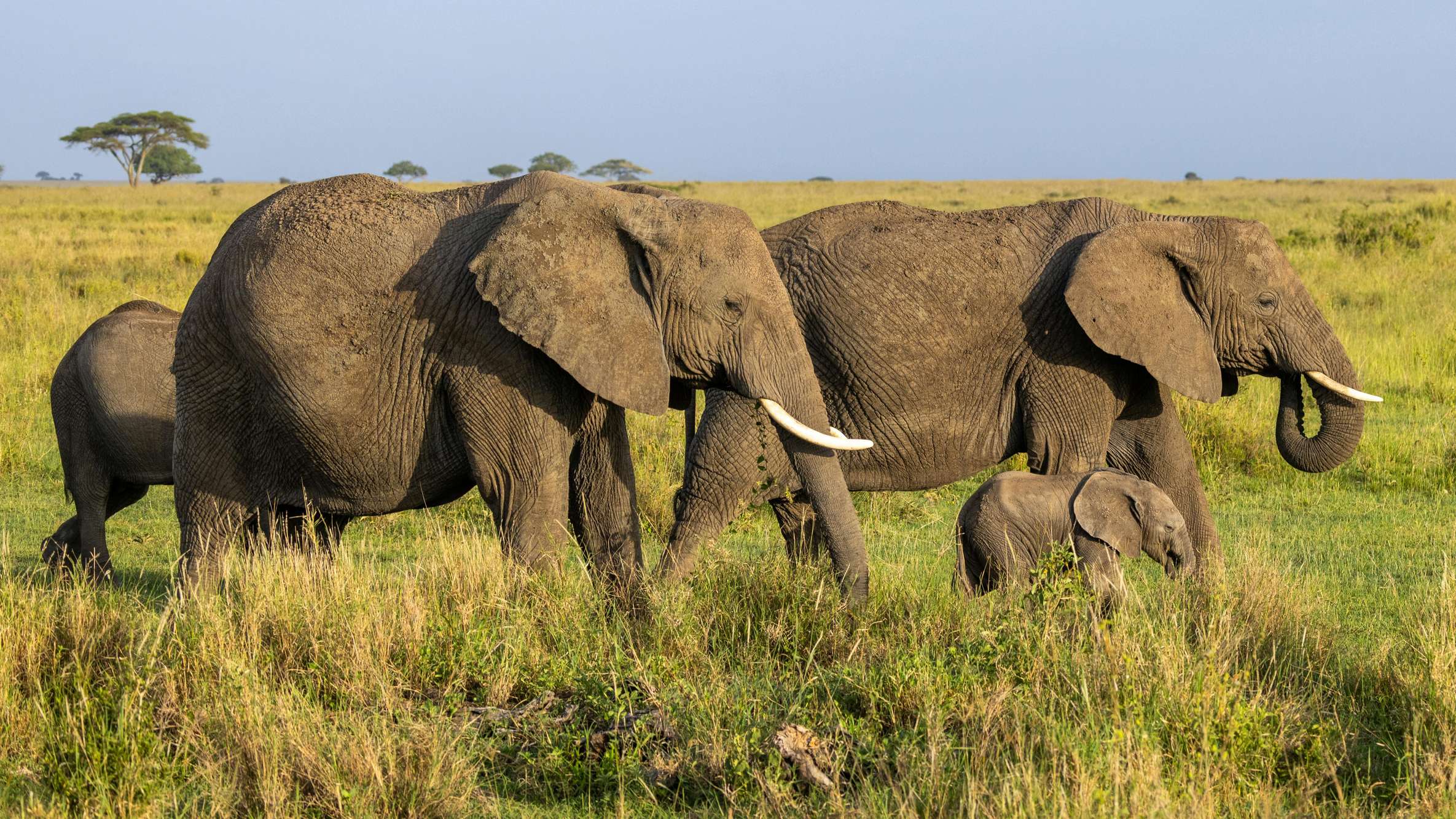
By late morning in September, the dust around the Tarangire River stands in the air and the elephant families keep arriving. Tarangire holds Tanzania's largest elephant herds, and the dry season pulls them in from every direction.
Between June and October the breeding herds crowd the Tarangire River and the Silale Swamp, and the gathering peaks in August and September, when the park runs around 25 to 29 dry days a month. Water is scarce, so the animals come to the places water remains.
The green season scatters them. From November to May the rains fill every puddle, the brush thickens, and the herds spread wide, which makes sightings slower and harder. The chart tells the story month by month.
July: african savanna elephant seen 94 times. Dry conditions draw massive elephant herds back to the river valley, offering prime game viewing alongside busy safari tracks.
Tap a month to read it.
August: lion seen 39 times. Peak safari crowds arrive to experience exceptional concentrations of elephants and predators along shrinking watercourses under clear skies.
Tap a month to read it.
April: 160 mm of rain. Peak rainfall and low visitor numbers coincide with tall foliage and dispersed herds, while migratory birdlife remains abundant.
Tap a month to read it.
July: 29.4 dry days. Dry conditions draw massive elephant herds back to the river valley, offering prime game viewing alongside busy safari tracks.
Tap a month to read it.
June, July and August give the strongest combined elephant and lion odds, while March and April can feel almost empty. For a first taste of the park, the Arusha: Tarangire National Park Day Safari runs 13 hours, covers the plains with an English, French or Spanish-speaking guide, and includes transport, entry fees and lunch.
Where the great migration is month by month
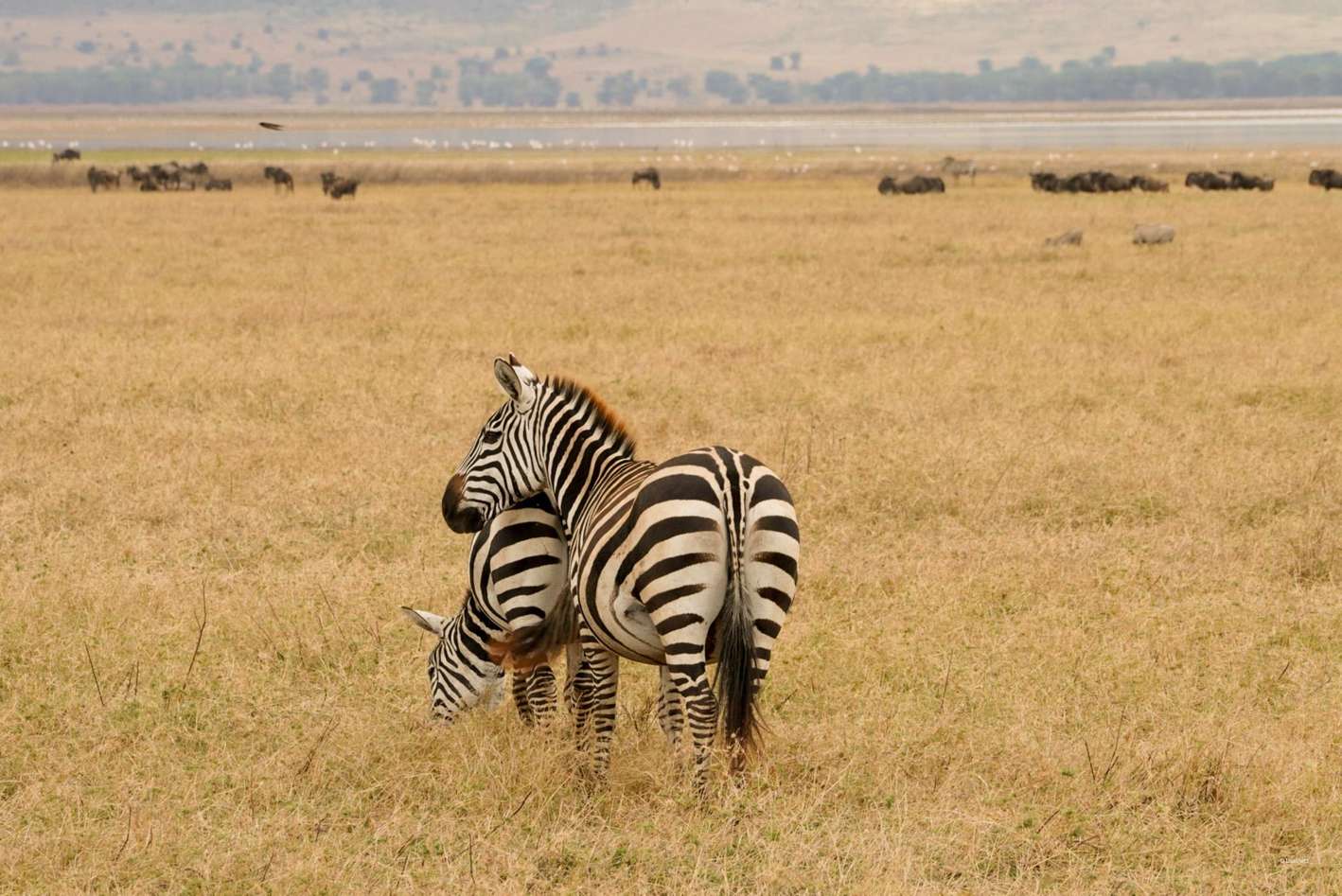
The herds never stop moving. More than a million wildebeest walk a clockwise loop around the Serengeti ecosystem every year, and where you should sleep depends entirely on which month your flights land.
From January to March the animals gather on the southern Serengeti and Ndutu plains for calving. Over half a million calves drop in two or three weeks, and the predators know it.
February on the Ndutu plains is the calving season, and people who go say the lion and cheetah hunts around the newborns are the rawest wildlife they have ever watched.
In April and May the herds move through the central Serengeti during the long rains, when tracks turn to mud and drives reroute. June and July bring the Grumeti River crossings in the Western Corridor. August and September put them in the north, crowding the Mara River crossings into Maasai Mara.
So the choice is simple to state: February for calving and hunts, June and July for the Grumeti, August and September for the Mara River. Pick the camp that matches the month your dates fall in, and the migration meets you where it stands.
Rare animals of Tanzania - black rhinos, wild dogs and the cheetahs few travelers see
The descent starts in the dark. The road drops off the crater rim before six, mist on the windows, and the first rhino of the day is often spotted from the switchbacks.
Ngorongoro is Tanzania's most reliable place for the endangered black rhino, and an early descent gives you high odds of one alongside the crater's dense predators.
Some checklists need correcting before you build an itinerary around them. Tarangire has no rhinos at all; the local population was wiped out by poaching decades ago, so no amount of driving will find one there.
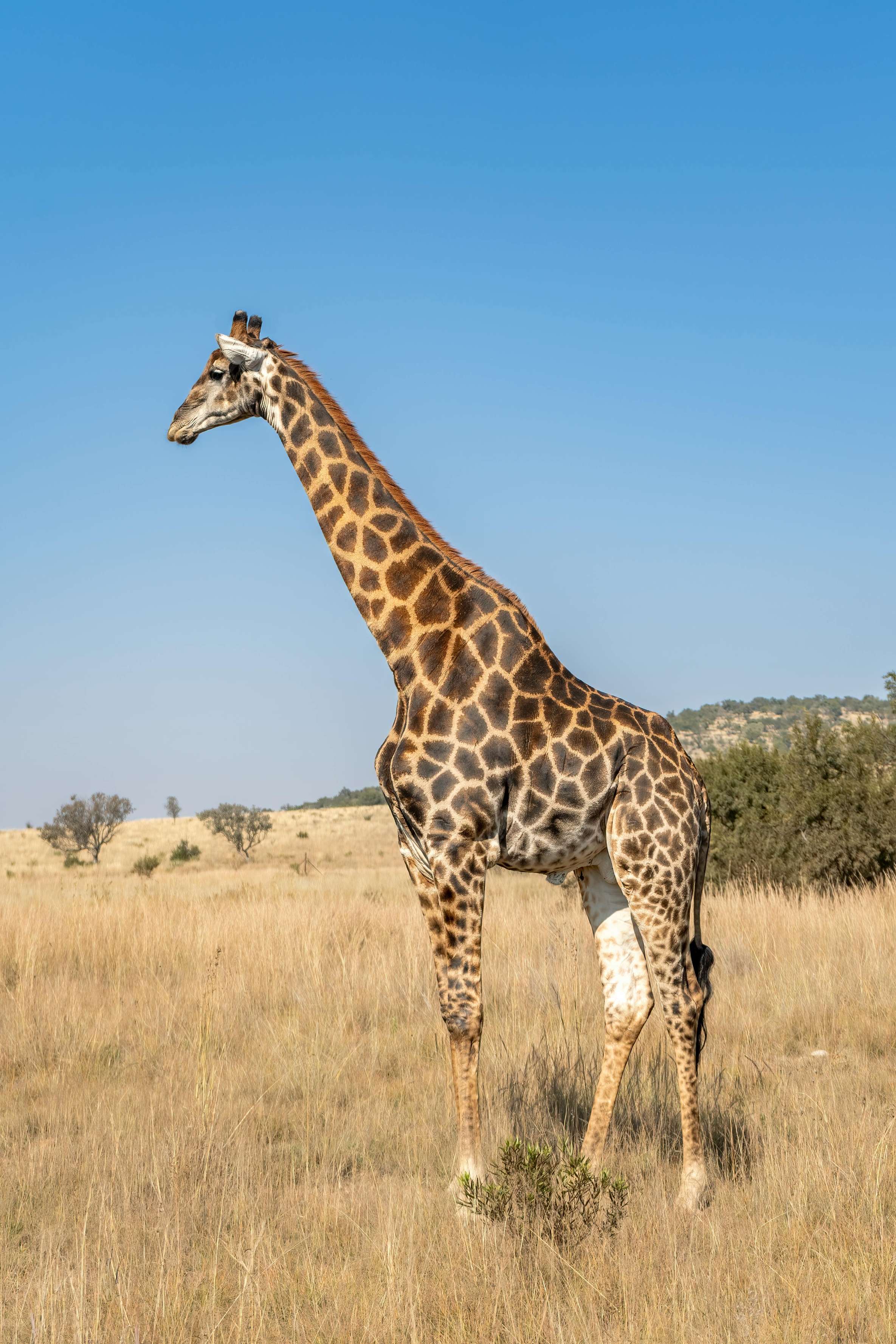
Giraffes stay outside the crater walls too. The floor lacks the open woodland and tall acacias they feed on, so you will scan a full day inside and see none. Drive the surrounding Ngorongoro Conservation Area and giraffes are everywhere.
For African wild dogs, look south. Nyerere and the other southern parks are where the packs live, and they are one of the hardest canids on the continent to find anywhere. A southern itinerary earns its keep for that alone.

How the seasons change what animals you see
Grass length decides your sightings more than park choice does. From June to October the vegetation thins to short grass, visibility stretches for hundreds of metres, and scarce water stacks animals and predators around the permanent rivers and waterholes.
September and October are the easiest months to see everything: warm and dry, rain on barely a handful of days, highs in the low thirties on the Serengeti plains and cooler on the Ngorongoro rim. Nights drop towards the low teens, so a fleece for the dawn drive is enough.
The green season from November to May hides the game instead of removing it. Taller grasses and thicker foliage screen the animals, and water everywhere lets the herds disperse. What you gain is lush scenery, migratory birds and the calving migration from January to March.
January itself is a strong northern month: it coincides with calving in the southern Serengeti and the predator activity that follows, with showers on about one day in three. Rain falls, the afternoon clears, the drives go ahead.
Safari from Zanzibar - Island animals and what needs a flight
Zanzibar has its own animals, and they live in the water. Boat trips to Mnemba Atoll watch wild dolphins off the coast, and snorkeling excursions around Kwale Island turn up starfish on the sand. The lions and elephants all live on the mainland.
The flight to Mikumi takes 40 to 60 minutes, landing on a bush airstrip inside the park, and day trips run six to seven hours of real game viewing before the flight home.
The alternative is the ferry to Dar es Salaam and the road north, a 6.5 to 7.5 hour journey with a two-hour sea crossing and up to five hours of driving. Land animals, one hour by plane or half a day by road.
The From Zanzibar: Mikumi Safari Day Trip with Flights and Lunch covers the whole arc, with the return flight, shared 4x4 game drives and an English-speaking driver-guide included, and hotel pickup if you pick that option.
Short mainland trips reward you with lion and elephant sightings, and the June to October window suits both the parks and the beach.

What a real game drive is like - patience, distance and safety
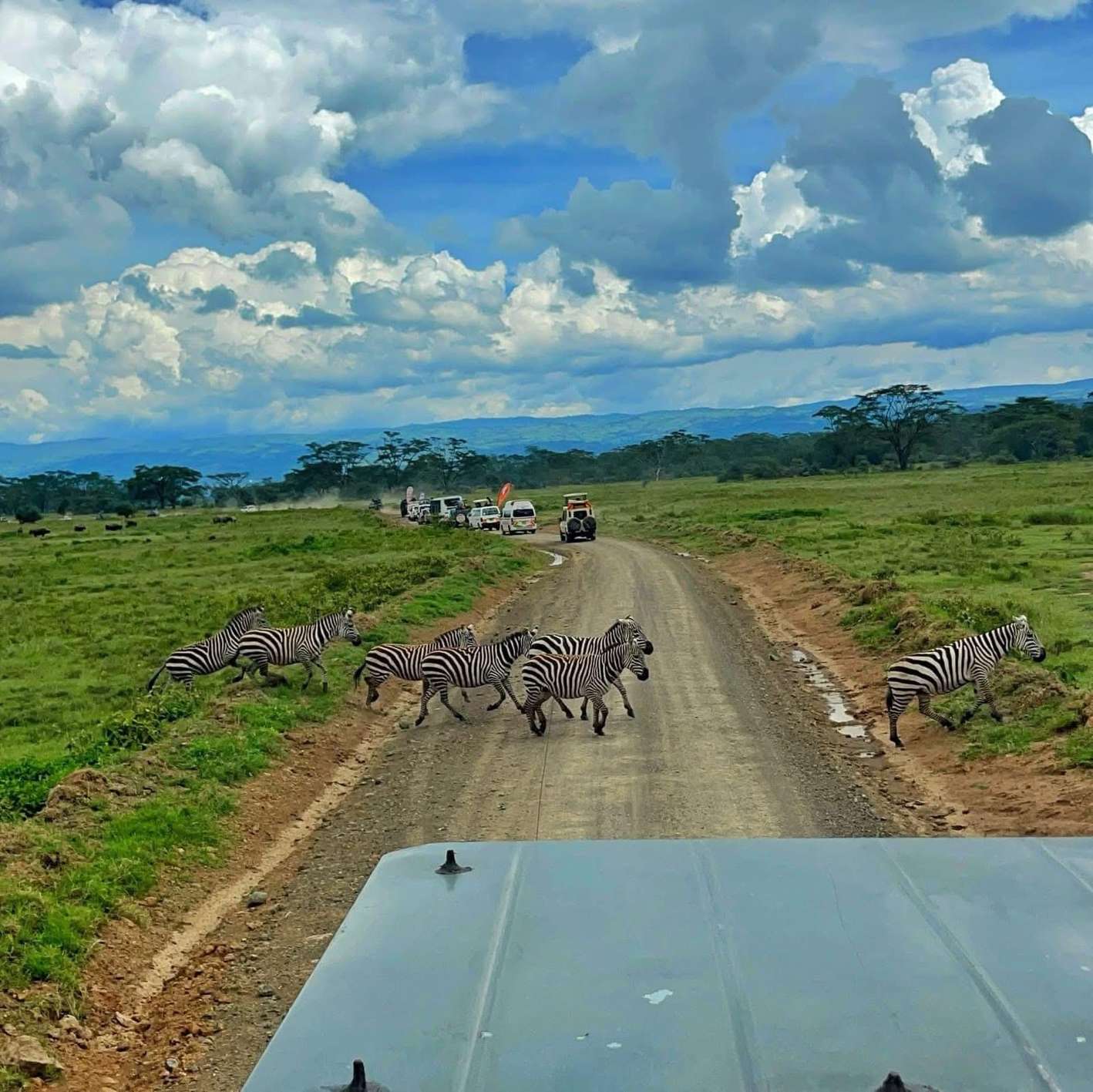
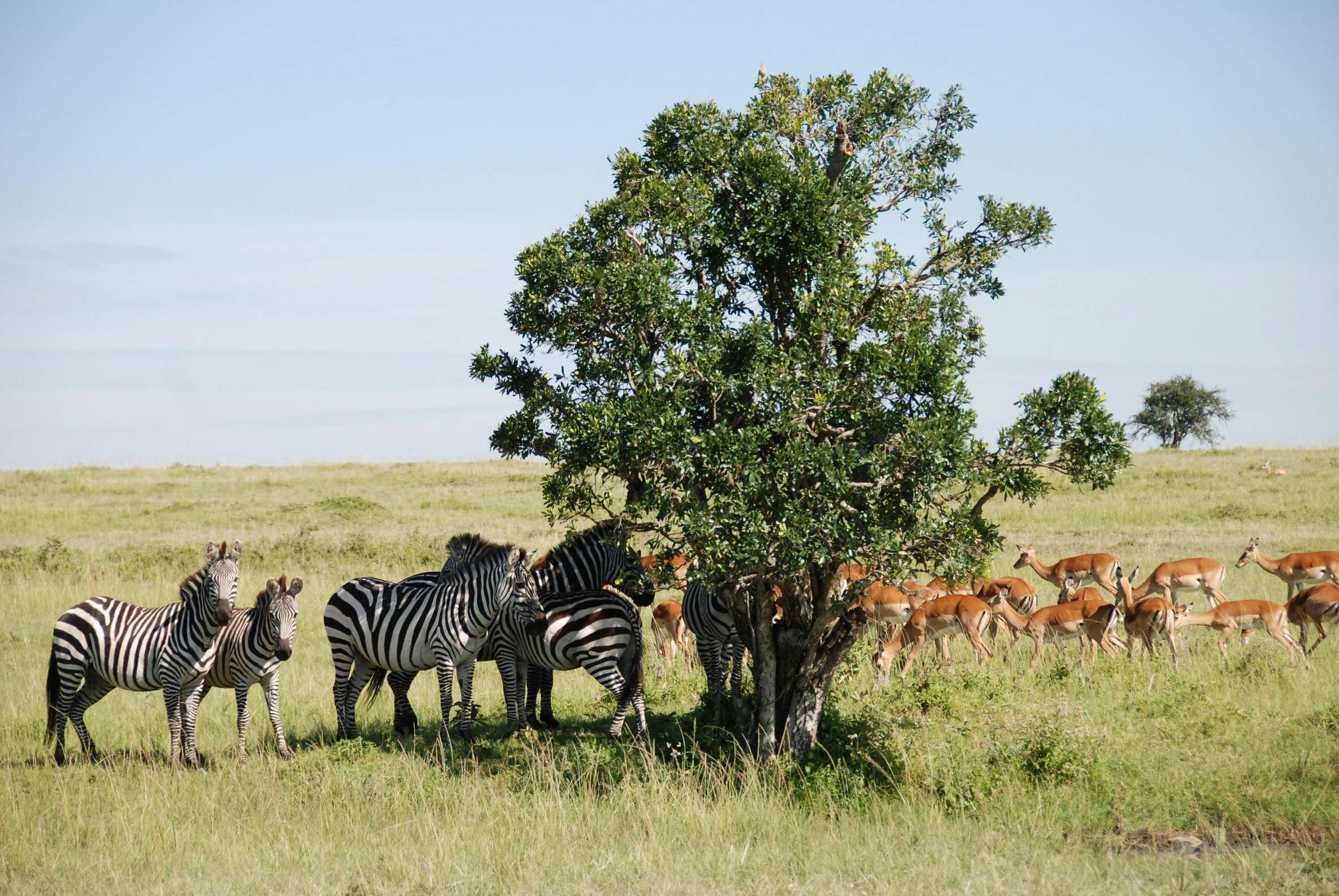
An hour of nothing, then everything at once. Game drives are not a zoo reel; you drive for long stretches through open savanna before an encounter happens, and no park outperforms the others on any given day, because the animals move with the seasons.
When the sighting comes, it comes close. Guides position the vehicle near animals that are long accustomed to cars, and you get a front-row view of lions and elephants from behind the pop-up roof.
The rules that keep it safe are simple and strict. Stay inside the vehicle, step out only at designated picnic and restroom sites, and never feed, touch or chase anything. Off-road driving is banned in the national parks and on the crater floor, so the vehicle stays on the tracks.
Three beliefs are worth sorting out before you book a single night.
Visitors stay inside sturdy vehicles and the animals are accustomed to cars, so a rule-following game drive is safe
Sightings come after hours of patient driving through open savanna, when an encounter happens on the animals' terms
Animals roam free and no sighting is guaranteed; guides radio each other to track the rarer ones
For your booking, that means two things: a rule-following vehicle with a good guide is genuinely calm, and the quiet stretches between sightings are exactly where the unexpected ones land.
Private safari or group tour - how to choose and how many days
The choice comes down to who holds the wheel. For two people travelling together, a private safari usually costs only marginally more than a group seat, and it hands you the departure times, the drive lengths and how long you linger at each sighting.
A shared group seat cuts the cost sharply, which matters most for solo travellers, who otherwise absorb a single supplement that can be brutal at upscale lodges. The trade is sharing the vehicle with strangers and running to their rhythm.
Solo travellers do best in pre-scheduled small-group departures, and if a group fails to fill, operators often run the itinerary anyway with a private vehicle for the shared-seat price.
Four days is the balanced first-timer formula: Tarangire, Ngorongoro Crater and the Serengeti, with two nights in the Serengeti and one near the crater. Budget three nights in the Serengeti if the ecosystem itself is the draw.
Private or group safari: what changes
| Private safari | Group joining tour | |
|---|---|---|
| Schedule | You set departures, drive lengths and stops | Fixed itinerary shared with the vehicle |
| Cost for two | Marginally more than a group seat | Lowest per-person cost |
| Solo travellers | Single supplement bites hard | Avoids the supplement, shares the ride |
| Vehicle | Your own 4x4 and guide | Shared Land Cruiser with strangers |
- Schedule
- You set departures, drive lengths and stops
- Cost for two
- Marginally more than a group seat
- Solo travellers
- Single supplement bites hard
- Vehicle
- Your own 4x4 and guide
- Schedule
- Fixed itinerary shared with the vehicle
- Cost for two
- Lowest per-person cost
- Solo travellers
- Avoids the supplement, shares the ride
- Vehicle
- Shared Land Cruiser with strangers
The 4-Day Tarangire, Serengeti, Ngorongoro Group Camping Safari runs that exact route from Arusha with a pop-up roof for unobstructed views, elephants in Tarangire and the crater's abundant game included.
What to pack - tsetse-fly colors, duffel bags and crater layers
Colours come before gear on the packing list, because tsetse flies read colour first. Dark blue and black attract the biting flies, the same shades used to bait the traps, and white soils fast in vehicle dust.
Pack khaki, olive, beige and tan, in tightly woven long sleeves and trousers, because the flies bite through thin fabric.
Leave three things at home entirely. Single-use plastic bags are banned nationwide and confiscated on arrival, clear zip-top toiletry bags being the permitted exception. Camouflage clothing is illegal for civilians.
And for bush flights, hard-shell suitcases are not accepted: soft duffels only, capped around 15 kg including hand luggage, with some operators holding you to 10 kg.
The crater rim writes the rest of the list. Mornings up there sit near 5 degrees with mist and wind chill in an open vehicle, so a fleece, beanie and light gloves go on at dawn and come off by late morning on the warm caldera floor.
Repellent has limits here: DEET and permethrin have not been proven against tsetse flies, so the clothing does the work. Add sunscreen, a sun hat, closed shoes and a camera with a telephoto zoom to reach distant predators. Malaria prophylaxis applies at these lowland parks, including Mikumi.
Park gates, entry fees and documents for a Tanzania safari
The gates run the day. TANAPA entry gates and the Ngorongoro checkpoints, including Loduare and Naabi Hill, open at 6 am and close at 6 pm, and some stop admitting vehicles around 4 pm, which is also the standard cutoff for descending into the crater. Driving inside the Serengeti after 6 pm is strictly prohibited.
Bring your original passport, or a clear copy, to every park gate. TANAPA requires proof of identification at entry, and Loduare Gate wants a valid passport or national ID from every visitor. Miss the evening curfew and the vehicle answers to the rangers.
Money at the gate is cashless. The national parks take credit cards and electronic payment, not cash, and Ngorongoro adds a flat per-vehicle descent fee on top of each person's admission. Tarangire and the Serengeti charge their own daily entry fees.
At the border, your passport needs six months of validity left and blank pages for stamps. One Tanzanian visa covers both the mainland and Zanzibar, most travellers need one, an e-Visa can be filed online in advance, and arrival requires proof of accommodation and a return ticket.
Getting to the parks - the northern circuit route from Arusha
The Northern Circuit unspools west from Arusha in three long drives. Arusha to Tarangire takes 2 to 2.5 hours, Tarangire to the Ngorongoro area about two more, and Ngorongoro up to Central Serengeti around three. Drive straight from Tarangire to the Serengeti instead and you sit in the vehicle for 6 to 7 hours.
The route the other way round saves hours: sleep inside the parks or right at their edges and you start the dawn game drive where the predators are, instead of losing the best hours commuting from outside the gates.
The town of Karatu earns its own overnight. Sleep there and the crater descent happens at sunrise, rested, instead of after an exhausting pre-dawn drive from Arusha.
Fly the route smart too. Arriving into Kilimanjaro Airport and departing from Zanzibar eliminates backtracking across the country. Departure mornings start early: group pickups in Arusha run between 6 and 7:30 am, Zanzibar hotel pickups for day trips can begin as early as 4 am, and the charter flights leave around 6:30 to 7 am.
Not-to-miss excursion. The crater is an incredible place: beautiful nature, landscapes, and an amazing variety of wildlife. Great lunch and quality service, very good value for money. Highly recommended!
Match the animal, then book
Tanzania delivers every animal on the classic wishlist, and the park decides the odds: Tarangire for elephant herds in the August and September dry season, Ngorongoro for Africa's densest lions and a black rhino at first light, the Serengeti's Seronera Valley for cats and the Migration.
Four days covers the northern trio without rushing, and a one-hour flight brings mainland game within reach of a Zanzibar holiday.
What to know before you book a safari for the animals in Tanzania
Every tour on this page includes pickup, usually at your hotel. Day safaris start early, often between 6 am and 7 am, because animals move at first light and the long drive to the gate eats into the morning.
You can cancel most of these tours up to 24 hours before departure and get a full refund, so an early booking costs you little if plans change.
Most tours fold park entry fees, transport, a guide, water and lunch into the booking. Exceptions exist: one Ngorongoro day trip asks for entry fees, the crater service fee and tax to be paid in cash a day before, and marine trips often exclude a conservation ticket payable on the day.
Bring your original passport or a clear copy to every park gate. TANAPA rangers register each visitor before the vehicle enters, and gates at Tarangire, Mikumi and Ngorongoro open at 6 am and close at 6 pm, so a missing document costs you the day.
You stay inside the vehicle during game drives and step out only at picnic and restroom sites. Feeding or touching animals is banned, off-road driving is illegal, and drones are strictly not allowed in the Serengeti. Breaking park rules can bring immediate fines or expulsion.
Wear khaki, beige or olive. Dark blue and black attract biting tsetse flies, bright colors disturb wildlife, white shows every speck of dust, and camouflage clothing is illegal for civilians in Tanzania. Long sleeves and trousers protect against sun and bites.
Single-use plastic bags are banned nationwide and confiscated on arrival; clear zip-top bags for toiletries are the exception. If you fly to a park, pack a soft duffel, since hard-shell suitcases are not accepted on bush planes.
Predators hunt at dawn and again toward dusk. Lions spend most of the day resting in shade, so an afternoon drive may show you sleeping cats while an early start finds them on the move.
“Not-to-miss excursion. The crater is an incredible place: beautiful nature, landscapes, and an amazing variety.”
Animals in a Tanzania safari - your questions answered
Which animals will I actually see on a Tanzania safari?
In the northern parks (Serengeti, Ngorongoro Crater, Tarangire and Lake Manyara) you regularly see lions, leopards, cheetahs, elephants, buffaloes, giraffes, zebras, wildebeest, hippos, crocodiles, hyenas, baboons, flamingos and black rhinos. In the southern parks, such as Nyerere and Mikumi, expect lions, elephants, leopards, African wild dogs and giraffes.
Where are the best lion sightings in Tanzania?
Ngorongoro Crater holds Africa's densest wild lion population, and the central Seronera Valley in the Serengeti carries dense pride concentrations too. Early morning drives give you the best odds of catching a pride on the move before the heat sets in.
Which park has the biggest elephant herds?
Tarangire supports Tanzania's largest elephant herds. Massive breeding herds gather along the Tarangire River and Silale Swamp during the dry season from June through October, peaking in August and September when the park runs 25 to 29 dry days a month.
Can I see the full Big Five on one safari?
Yes, on the northern circuit. Ngorongoro Crater is one of the few places where you can spot the endangered black rhino alongside lions, leopards, buffaloes and elephants. Rhino never appear in Tarangire, where poaching wiped out the local population years ago.
Can I see giraffes inside Ngorongoro Crater?
No. The crater floor lacks the open woodland and tall acacia trees giraffes feed on, so they stay away. Giraffes are abundant in the Ngorongoro Conservation Area around the crater, and you will pass them on the drive in.
How close do safari vehicles get to the animals?
Guides position the vehicle close to animals that are used to cars, so you get front-row views of lions and elephants. You stay inside the vehicle at all times, except at designated picnic and restroom sites, and feeding or touching wildlife is banned.
Are wildlife sightings guaranteed?
No, animals roam freely, so nothing is guaranteed. Guides talk to other drivers by radio across the park to track down rarer sightings like lions, and a good guide makes a big difference over a full day.
What animals can I see on safari in Zanzibar itself?
The wildlife around Zanzibar lives in the water. Boat trips to Mnemba Atoll watch wild dolphins, and snorkeling excursions around Kwale Island turn up starfish. For lions and elephants you cross to the mainland, by flight to Mikumi or Nyerere or by ferry.
What should I wear to see more animals and fewer bites?
Skip dark blue and black in Tarangire and Mikumi, because tsetse flies are drawn to those shades. Khaki, beige, tan and olive work best, in tightly woven long sleeves and trousers. Camouflage clothing is illegal for civilians in Tanzania.
Where do cheetahs and leopards hunt?
They use opposite terrain. Cheetahs need open ground with long sightlines to sprint at up to 100 km/h in daylight, while leopards rely on dense vegetation and trees to ambush prey and haul kills up away from scavengers.
Will a game drive be non-stop animal action?
Some stretches are quiet. You can drive for hours through open savanna between encounters, especially in the Serengeti, and no single northern park wins every day. Patience is part of it, and the sightings that follow tend to be worth the wait.
What about bathroom breaks during a long game drive?
Safari vehicles have no toilets on board, and you cannot step out onto open terrain except at designated sites. Toilets sit at park gates, visitor centers and approved picnic spots, and guides plan comfort breaks around these stops.