- 1
Ride between June and October, when trails are firm and rain is rare; a second window runs in January and February.
- 2
You need to be secure at walk, trot, canter and gallop, with 4 to 6 hours in the saddle each day.
- 3
Leave dark blue and black at home: earth tones keep tsetse flies away and keep you low-key in the bush.
What travelers said about their Tanzania horse safari in the bush
Most reviewers praise the guides for spotting giraffes, zebras and antelopes at eye level, with no engine noise in the way.
Many were surprised that zebras and giraffes let riders canter calmly alongside, treated like just another herbivore.
Several wished the saddle time lasted longer and asked to extend the ride beyond the day's trails.
 ★★★★★
The safari was extraordinary, the guide fantastic, the cook superb.
Emile · Netherlands ★★★★★
I'd do this trip again anytime. It was the highlight of our honeymoon, thank you so much!
FAWAZ · Kuwait ★★★★★
Sublime 3-day safari with Season Master Adventures. Patrick and his team were informative, helpful, timely. Saw all the animals up close and the food was delicious. Definitely recommend!
Frederik · Denmark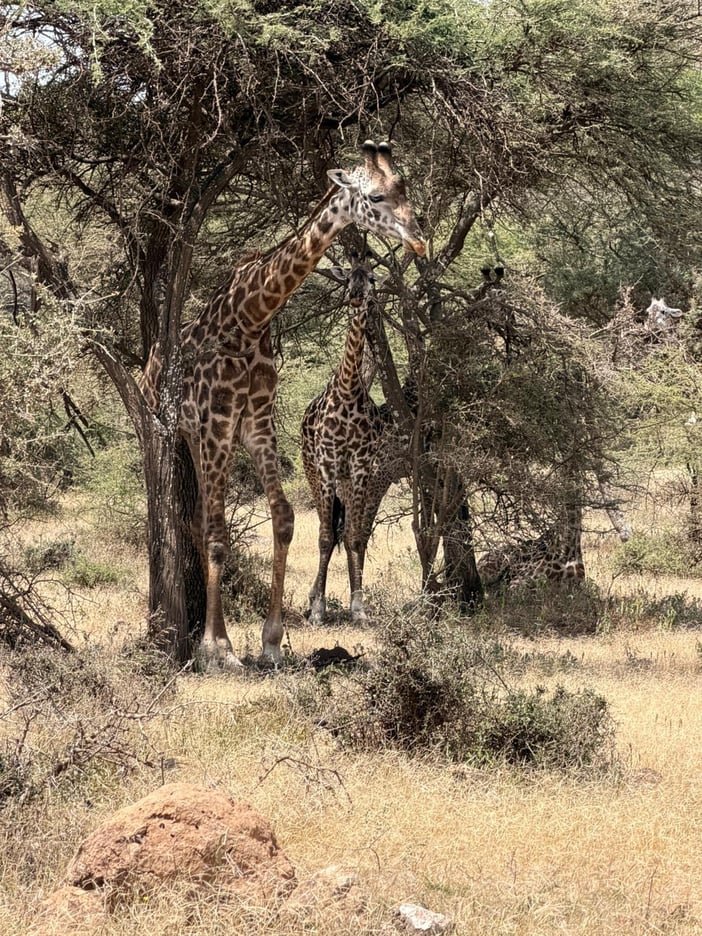 ★★★★★
The safari was extraordinary, the guide fantastic, the cook superb. A breathtaking adventure, the team was perfect from start to finish.
Salima · Mayotte ★★★★★
I'd do this trip again anytime. It was the highlight of our honeymoon, thank you so much!
Chiara · Germany ★★★★★
Wonderful safari with Season Master Adventures. Polite, communicative, best driver. Saw the Big Five and beautiful landscapes. Long road hours, but worth it. Sleeping in tents with animals nearby was exciting. Highly recommend!
Najim · Denmark ★★★★★
Amazing trip! Patrick organised everything, great communication. Guide Mike was fantastic, knew where to find every animal and gave us time for photos. First-rate accommodation, amazing food. Book with them!
A traveler · United Kingdom
What a horse safari in Tanzania is, and why it beats a 4x4 for wildlife
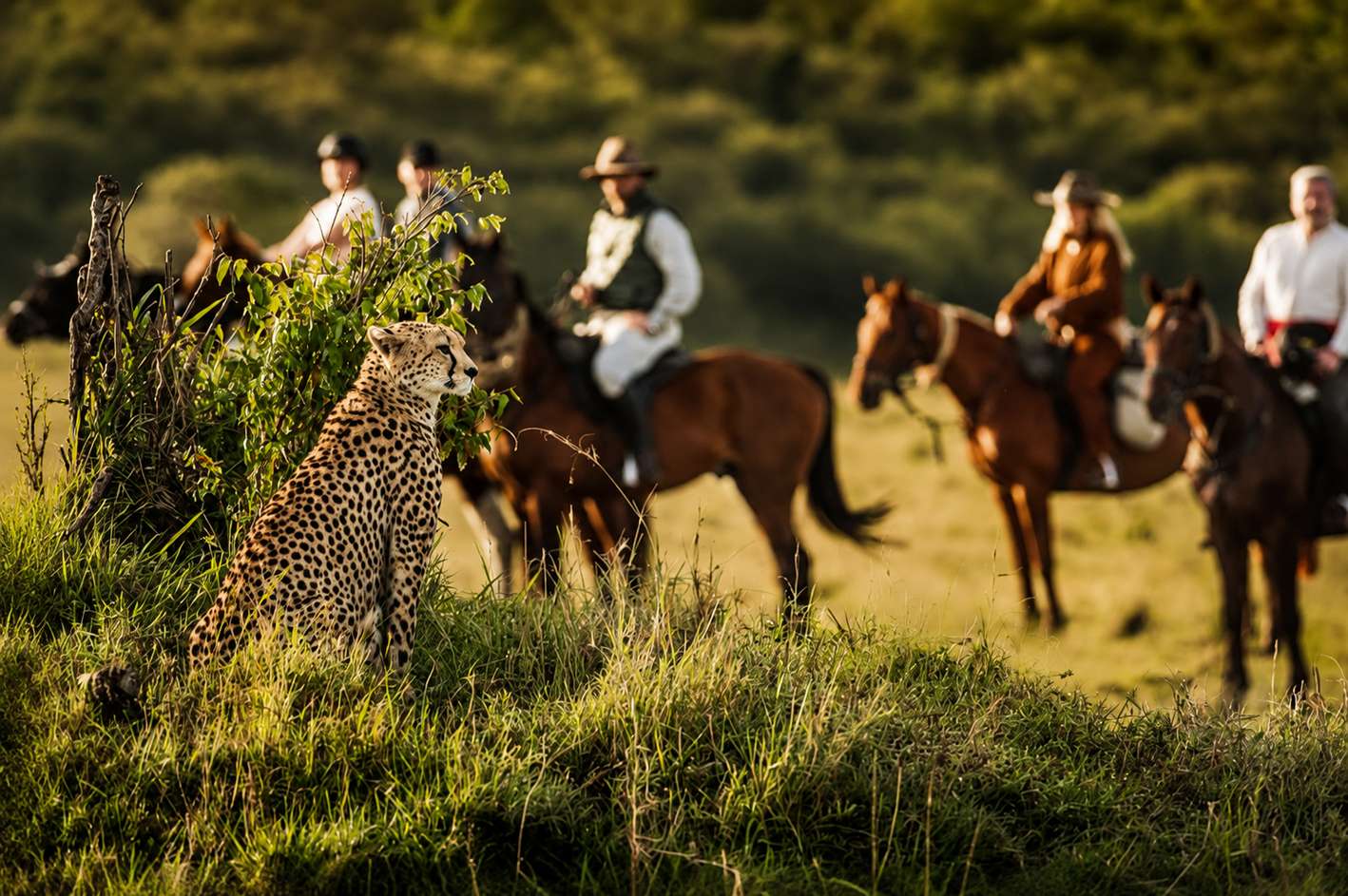
The quiet comes first. A horse makes no engine noise, so the bush stays audible: hooves on dry grass, birdsong, the low sounds herds make among themselves. Plains game reads horse and rider as one of their own, and that changes everything about the encounter.
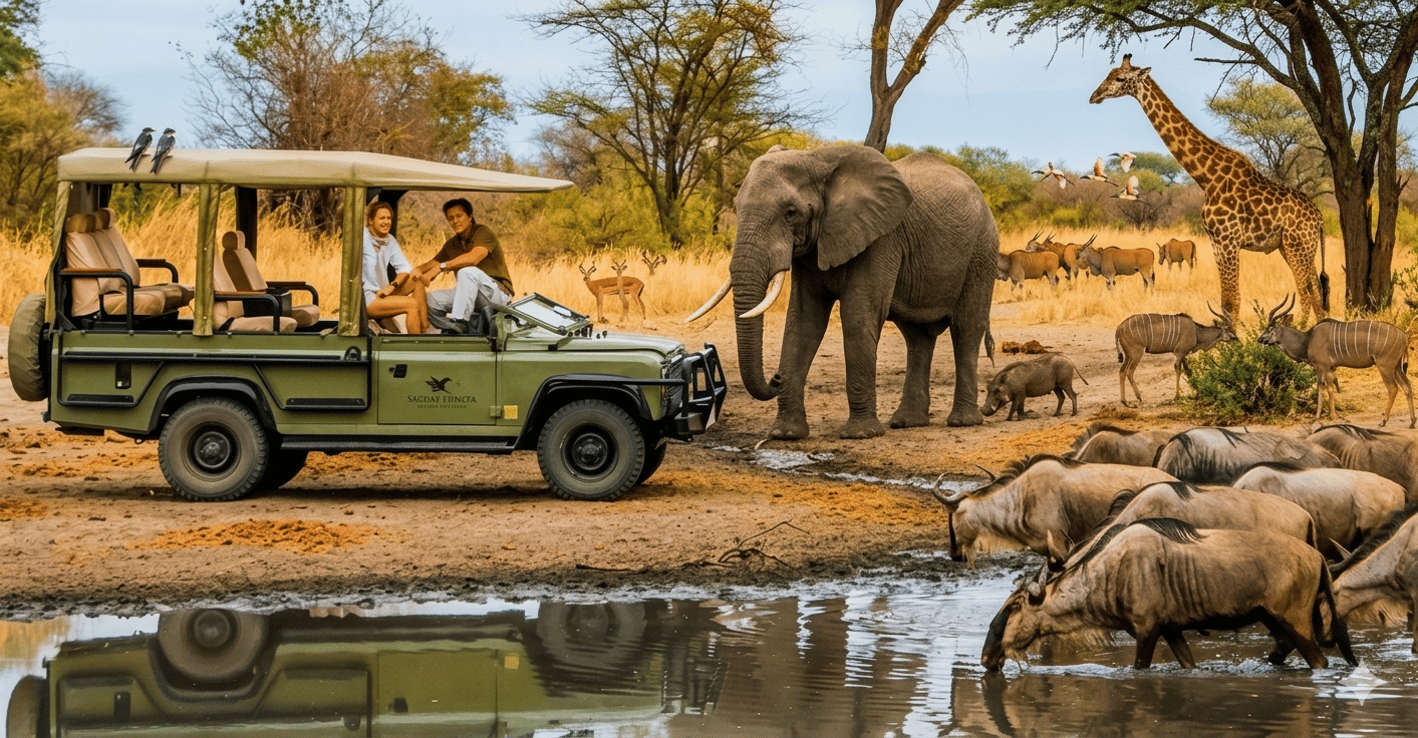
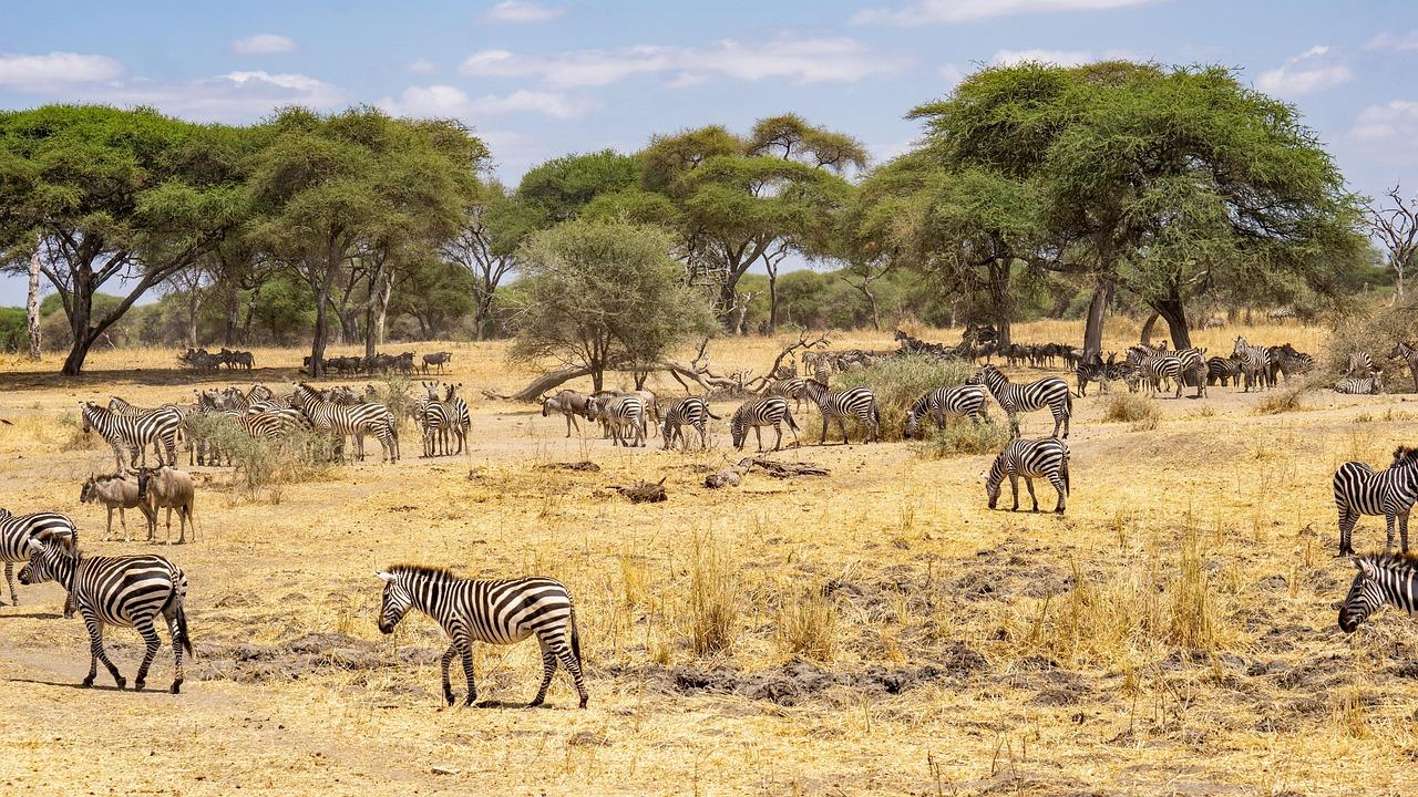
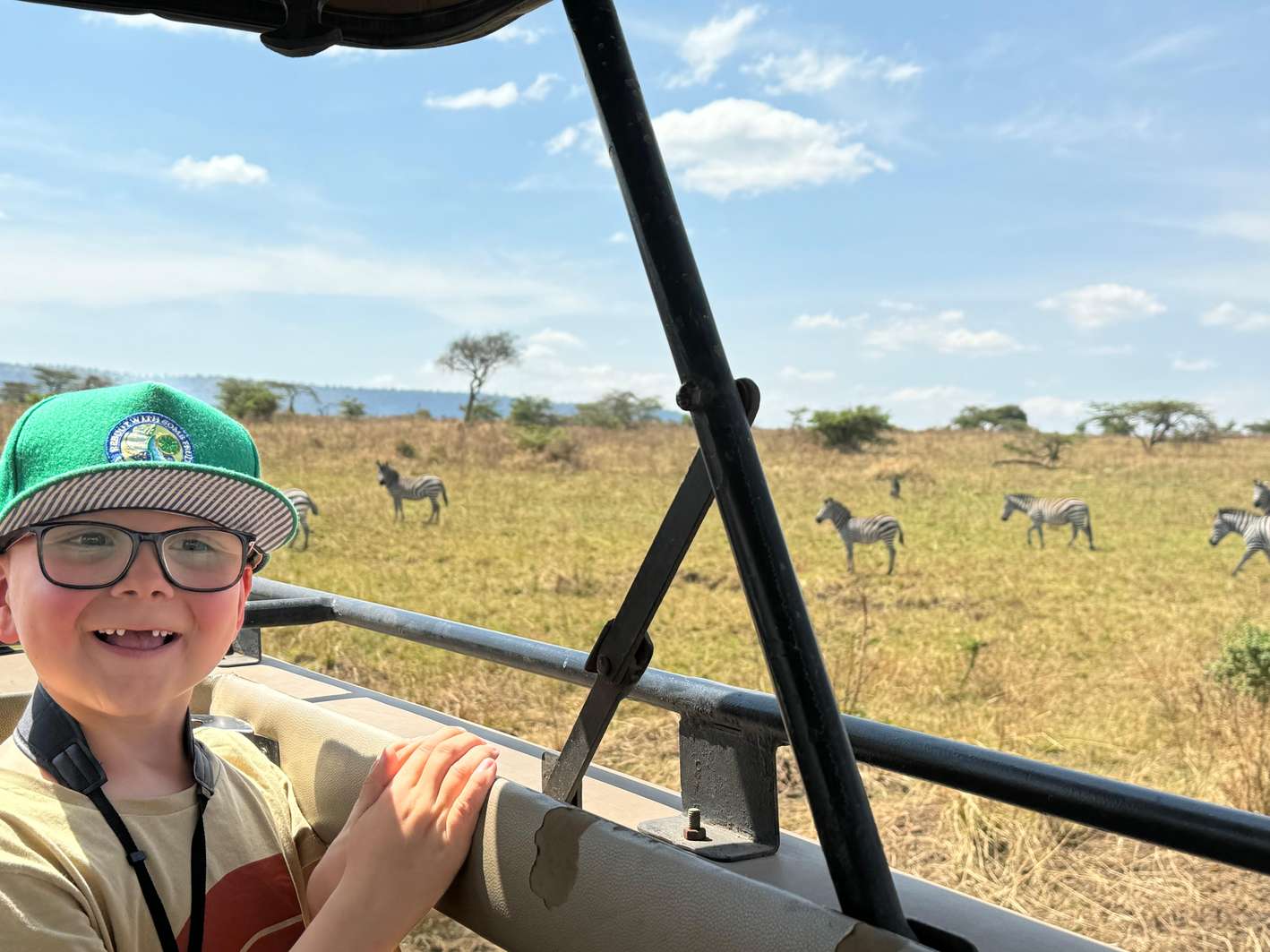
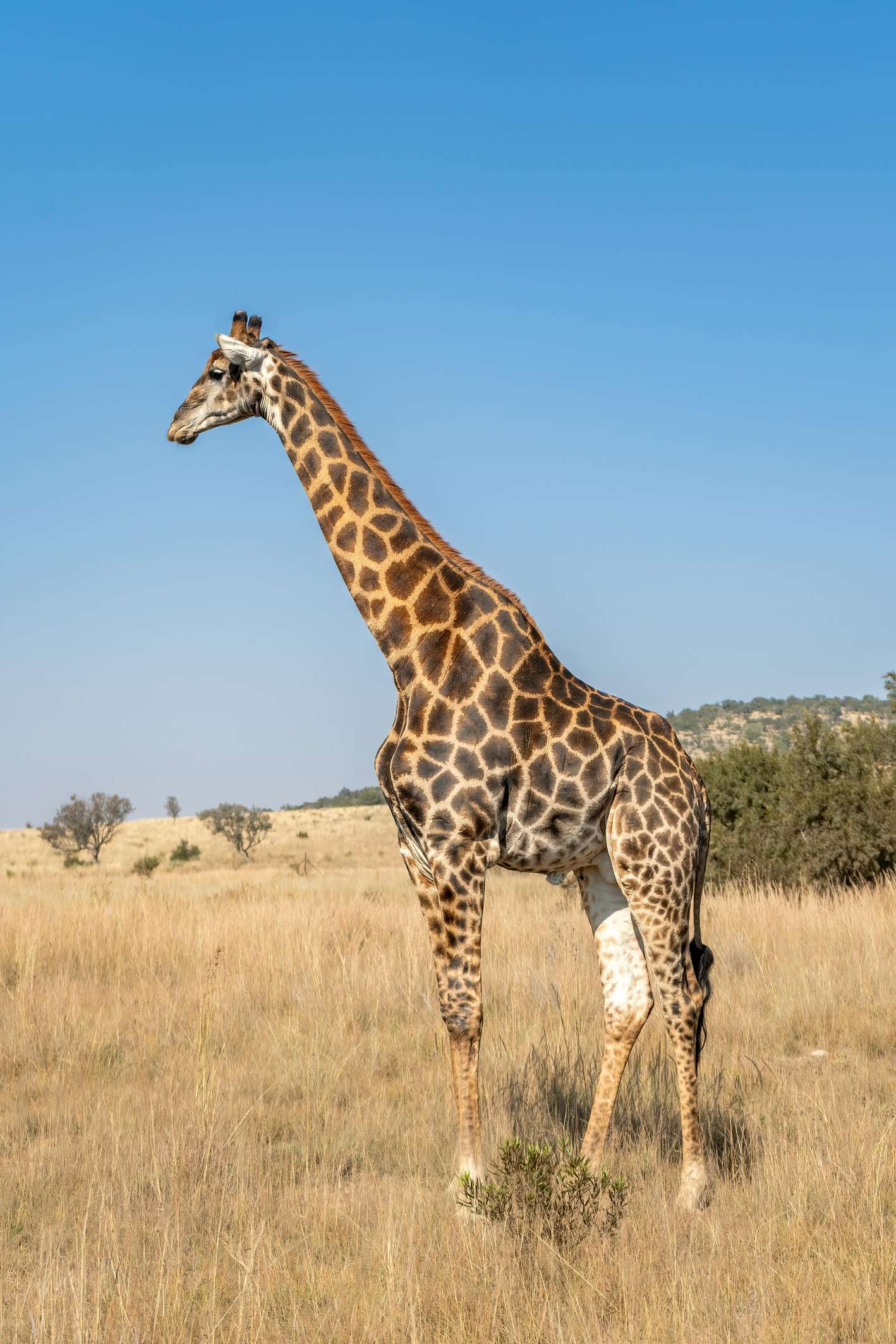
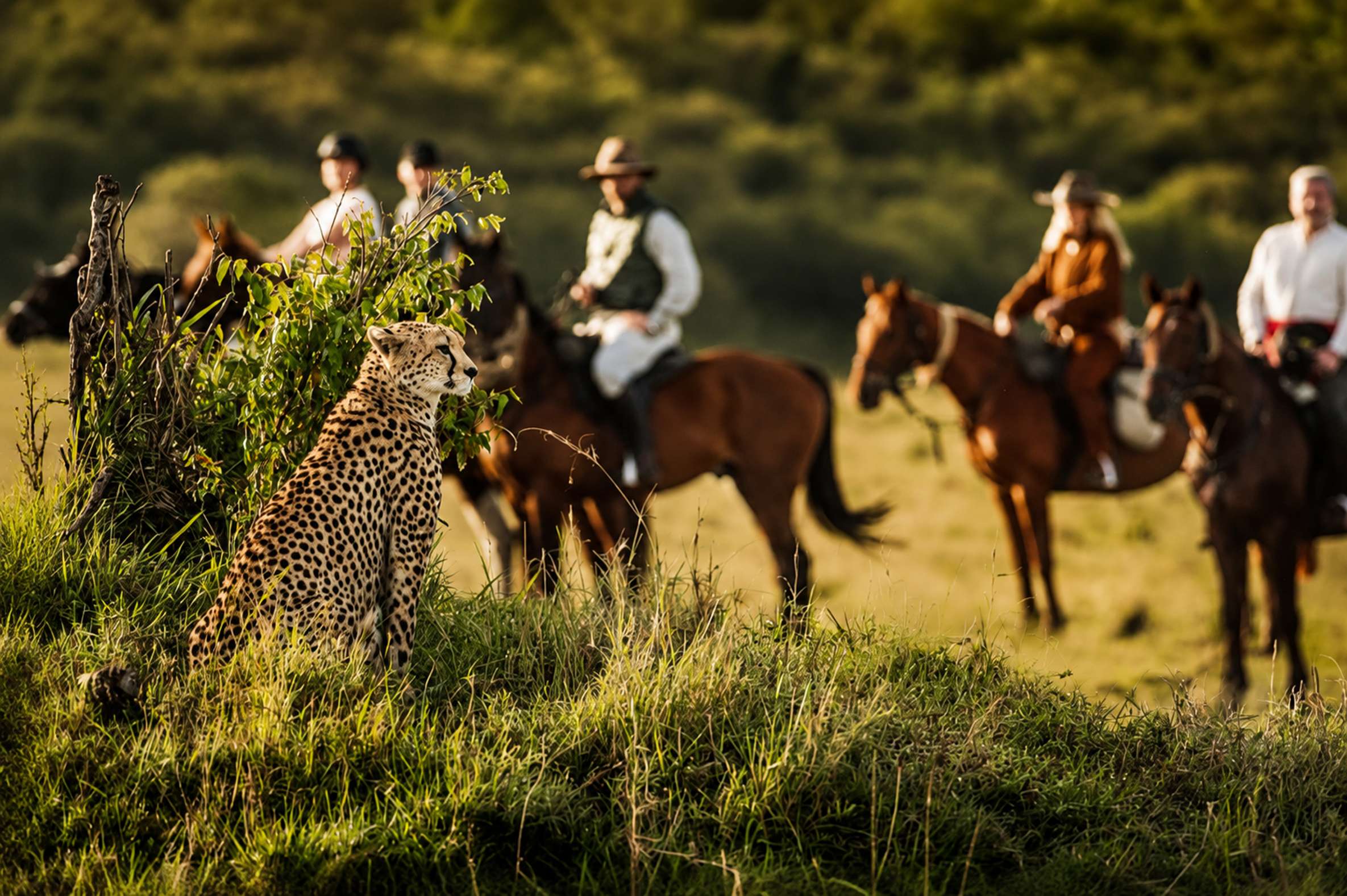
Zebras, wildebeests, giraffes and antelopes treat a horse as another herbivore of their own kind. A jeep rolling up scatters them faster than any of the passengers would like. On horseback you can ride abreast of a zebra herd or canter alongside giraffes, meeting them at eye level instead of through a window frame.
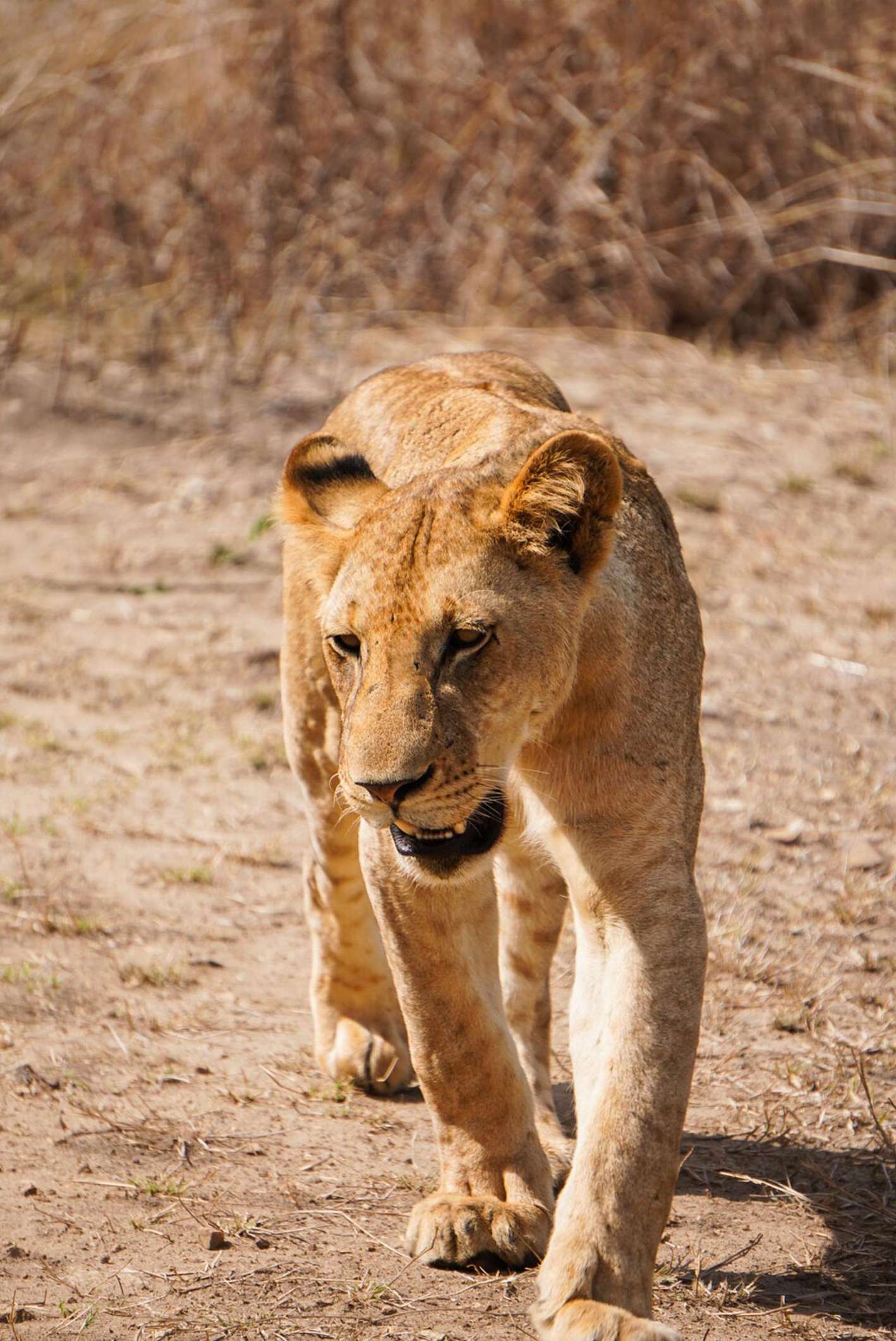
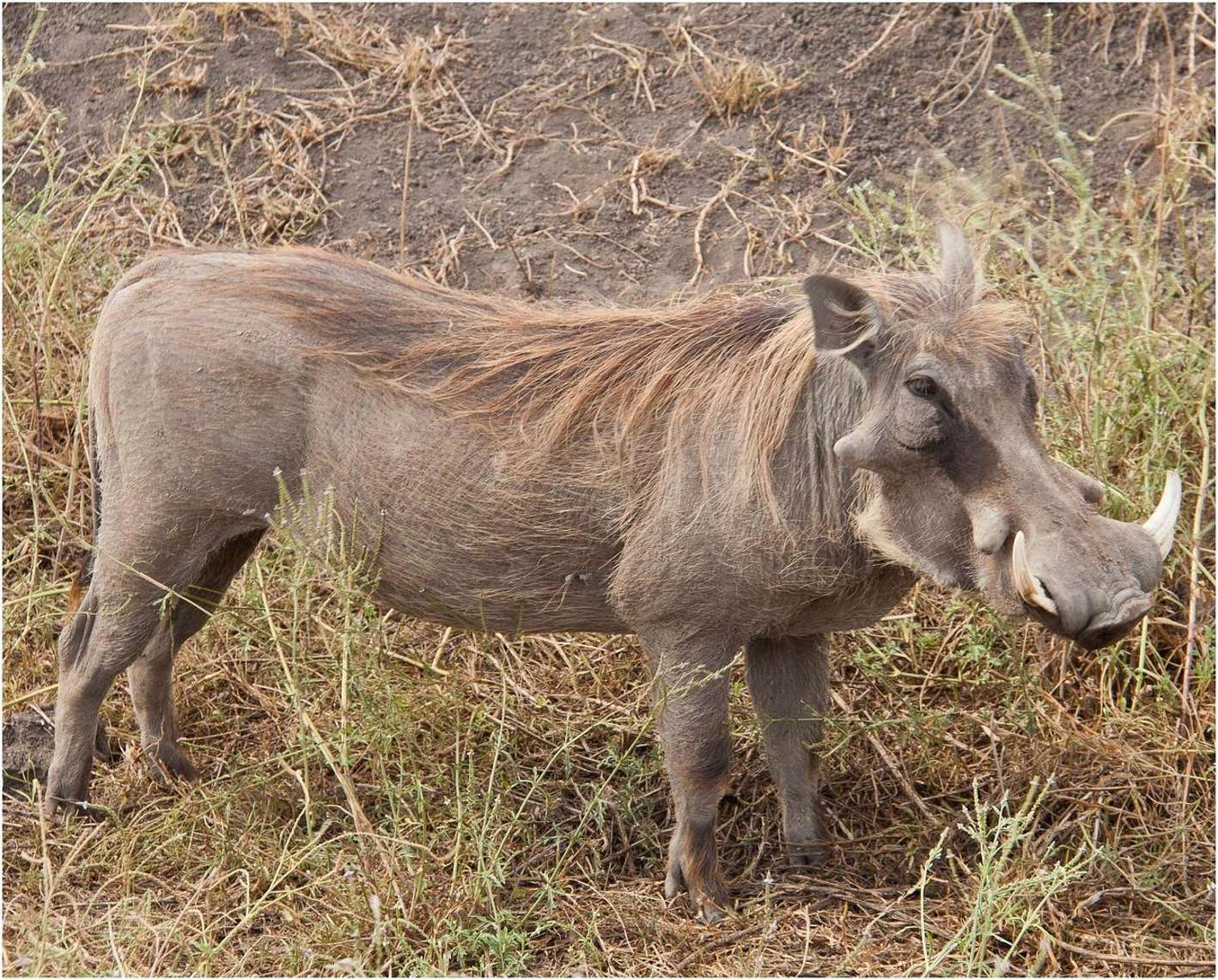
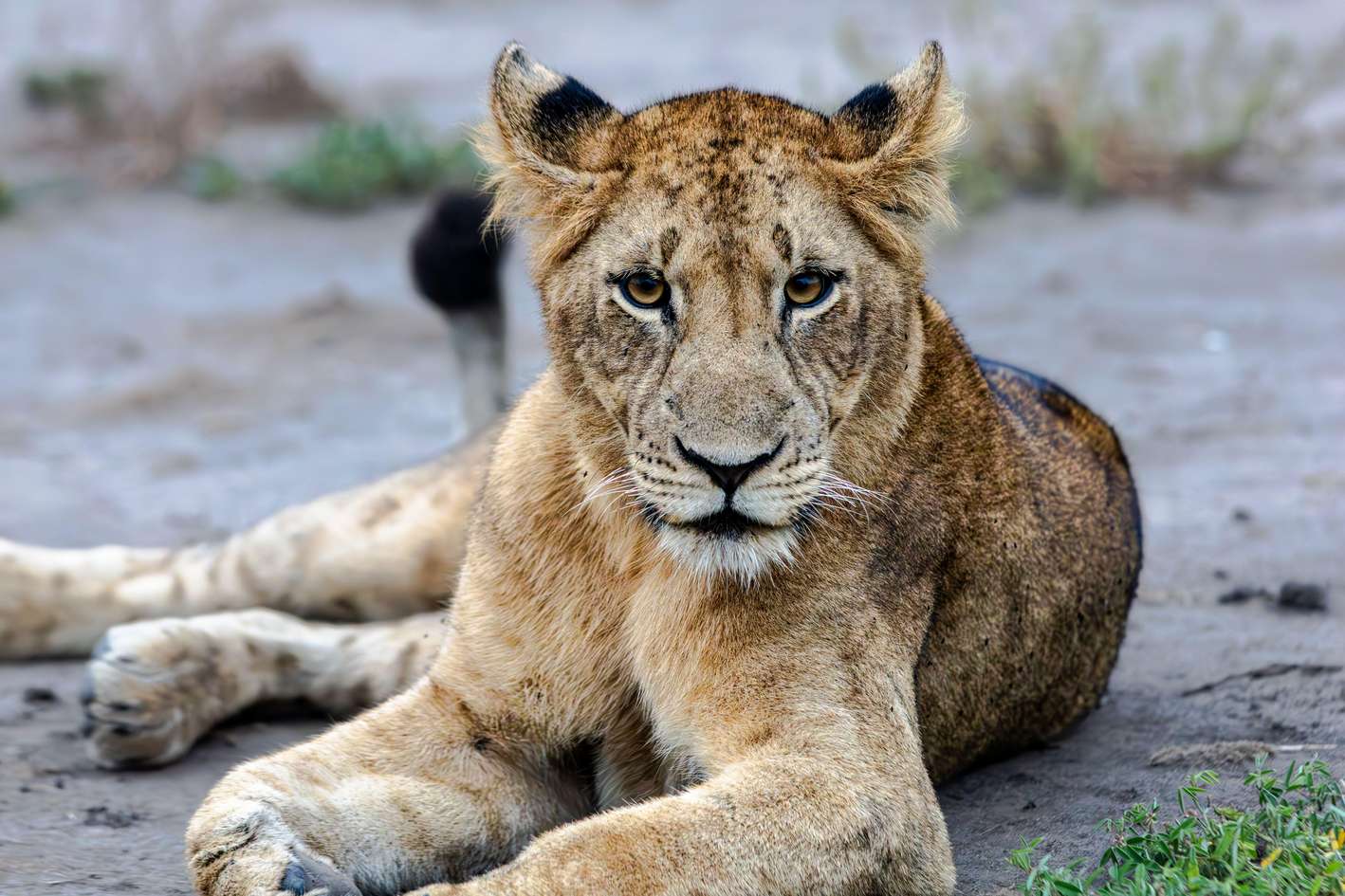
The rule that governs it is simple: horses move silently, so animals let them come closer without startling. On the trails around Arusha and Mount Meru that means giraffes, zebras, waterbucks, bushbucks, buffaloes, warthogs, monkeys and a long list of birds.
What nobody tells you
Wildlife reads horse and rider as a fellow herbivore, so it stays calm as you draw near
Riders walk abreast of zebras and giraffes or canter with them
You meet the animals without a vehicle wall or roof between you
Engine noise on a game drive scares animals away sooner
That is the whole reason to trade the jeep for the saddle: the herds let you in, and the bush stays loud in the ways that matter.
Riding fitness and ability you need for a bush horseback safari
This is the honest checkpoint, and it deserves a straight answer. A bush riding safari is not a nose-to-tail beach walk. Plan on 4 to 6 hours in the saddle each day, sometimes as few as 3 or as many as 7, at a fast and challenging pace.
The standard is specific. You need to be confident and secure at all four paces: walk, trot, canter and gallop. Fitness matters in the saddle, too: riders post to the trot for up to 10 minutes at a stretch and hold a two-point seat at the canter for up to 5.
Bush riding demands confidence at all four paces and real posting stamina
Extended stretches of trotting and cantering come with chances to gallop
The pace stays fast and demanding, with long trots and canters from the first morning
If those numbers read like a normal morning's work for you, book with confidence. If they read like a test, the 4x4 alternatives on this site are the better pick for now.
Best time of year for horse riding around Arusha
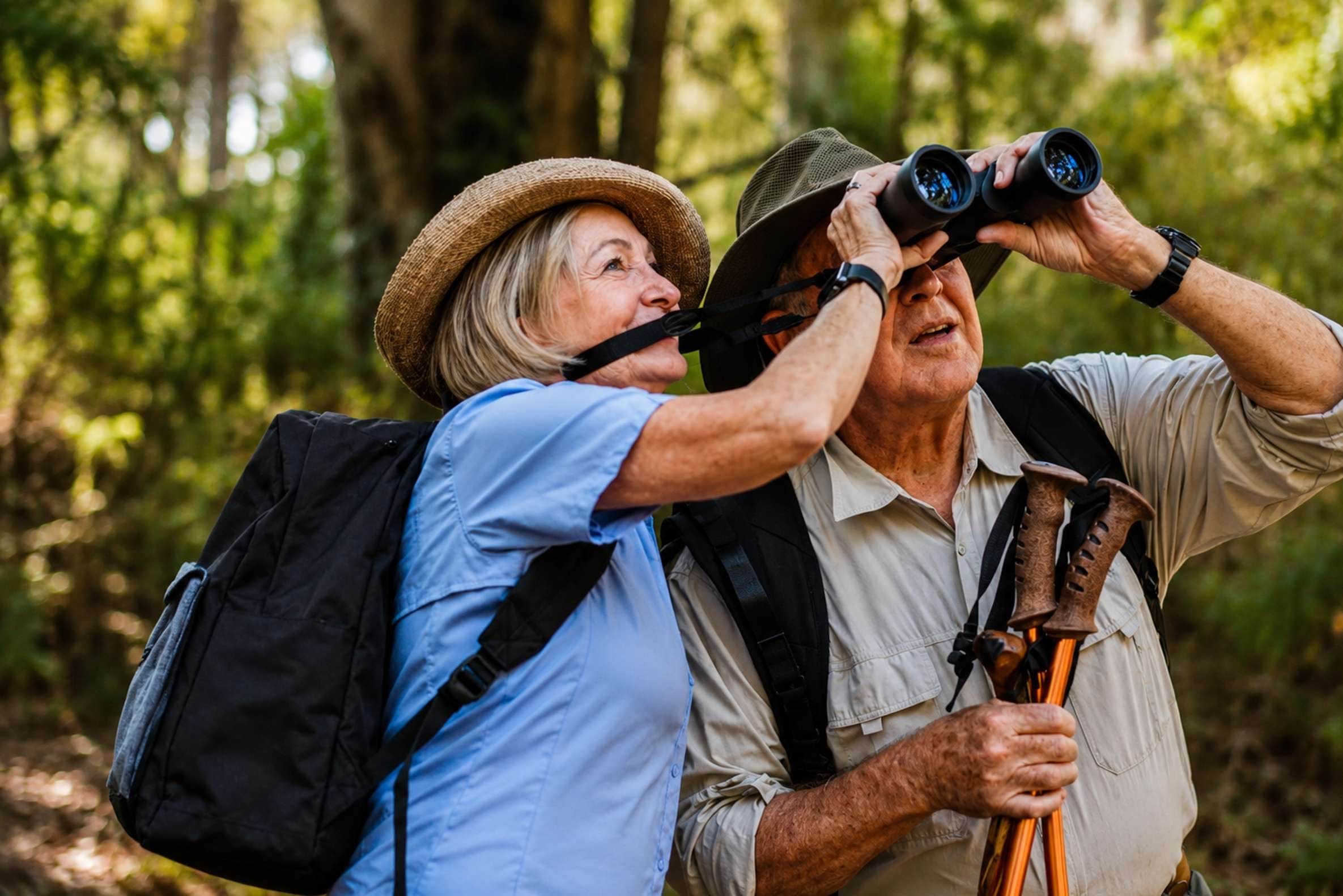
Trails decide the month. The long dry season from June to October gives the driest ground and the firmest footing, with rainfall at its lowest and trails holding up day after day. A second window runs in January and February, warm and mostly dry, good enough to plan around.
Then there is the long rains. From March through May the ground turns to mud, and April sits at the wettest point of the year. Riding those weeks means heavy going under hoof, and the trails suffer for it. Skip March to May unless a muddy adventure is the point.
September is the sweet spot, with rain on barely a handful of days and warmth without the mid-year chill. December and April swing heavy. Plan the dry weeks first, then fit the rest of your northern itinerary around them.
Getting to the stables and where the tour starts in Arusha
The ride slots into an Arusha stay without friction. Hotel pickup and drop-off come included, and the transfer runs from your accommodation straight to the riding area on the plains below Mount Meru.
That makes your hotel choice the practical decision of the evening before. Base yourself in Arusha City Centre, near places like Kibo Palace, Four Points or Equator Hotel, and the morning pickup lands within minutes.
Use prearranged transport for your own evening and morning movements; a firm, polite refusal is all it takes to send street touts around the transit hubs on their way.
The trailhead sits on open grassland and farm country at the foot of Mount Meru, and the transfer is a short hop from the city.
What to pack and wear for a horseback safari in the bush
Pack the night before, because the morning starts early. Boots with a small heel come first: they keep your foot from sliding through the stirrup iron on uneven ground. Skip jeans with thick inner seams; soft riding trousers save your thighs hours of chafing.
Colour is a real rule here, more than a style note. Wear khaki and olive; leave dark blue and black behind, because those shades attract biting tsetse flies. White shows every speck of dust within an hour. A breathable long-sleeved shirt handles sun, thorns and insects at once.
Add a lightweight fleece, because Arusha mornings at this altitude feel chilly before the sun climbs and warm up fast by midday. Sunglasses only work with a retention strap; nothing stays on a face through a canter otherwise. A camera rounds out the pile.
Your horseback safari day step by step around Mount Meru
The day has a shape, and it helps to see it whole before you commit. Pickup from your Arusha hotel comes first, then the transfer out to the riding area, where a professional riding guide runs a safety briefing before anyone mounts up.
Riders are matched with horses suited to their confidence and experience, and beginners get extra help in the saddle while experienced riders can take a faster pace where the trail allows.
- 1Morning pickupTransfer from your Arusha hotel to the riding area
Hotel pickup and drop-off are included
- 2On arrivalMeet the professional riding guide, safety briefing and basic riding techniques
Horses are matched to your confidence and experience
- 3Main stretchHours in the saddle across open grasslands, farms and woodland
Giraffes, zebras, waterbucks, bushbucks, buffaloes and warthogs along the trail
- 4Late afternoonReturn to Arusha with lunch and bottled water on the tour
Views of Mount Meru depend on route, season and weather
One rule to carry with you: riding the wild animals is strictly prohibited, and the guide sets the line you keep. Weather and route decide whether Mount Meru fills the horizon, so treat any clear view of it as a gift rather than a promise.
Going with a guided horseback tour or riding on your own
Independent riding sounds appealing until you look at what the bush demands. Horses, stables, a professional riding guide and a safety briefing all come as a package; there is no self-guided version of this day. The real choice is which guided format suits you.
The Arusha: Horseback Safari, Cultural Tour, and Market Visit tour answers it with range as well as riding.
Alongside the horseback safari through the countryside around Arusha, the same day takes in a cultural tour with traditional dance, a local market visit, lunch and bottled water, with hotel pickup and drop-off included. One booking fills a full day without a second transfer.
If you want pure saddle time, the riding portion stands on its own and the cultural half is a bonus for the hours before and after.
Riders who came only for the bush can treat the market stop as a glimpse of everyday life outside the parks, which is worth the hour on any first visit to Tanzania.
What to check before booking a horseback safari in Tanzania
Booking is where a good day is won or lost. Two checks separate the operators worth your money from the rest: standing in the official records and a professional riding guide on every ride.
Tanzanian operators can be verified through the Ministry of Tourism stakeholder register and associations like TATO, so a legitimate operator appears there by name.
The leading Arusha horseback tour holds up on each of these points, from credentials to what the day includes.
How to choose a horseback safari in Tanzania
| Check | Why it matters | Our pick |
|---|---|---|
| Operator credentials | Illegal or unlicensed outfits cut corners on horses and safety | Verifiable through the Ministry of Tourism register and TATO |
| Professional riding guide | The guide manages wildlife encounters and sets the pace | Included on every ride, alongside a safety briefing |
| Horse matching | Riders of different confidence levels need different mounts | Horses are matched to your riding experience on arrival |
| Beginner support | New riders need hands-on help, not just a briefing | Beginners receive additional assistance in the saddle |
| What the day includes | Lunch, water and transfers add up when bought separately | Hotel pickup, cultural tour, market visit, lunch and water are included |
Book once those boxes tick. Dietary needs belong in the conversation too: vegetarian, vegan and allergy requirements should be advised in advance, and the leading tour takes them that way.
Other safari activities and trips to add around Arusha
The ride takes one day, and a northern trip has room for more.
The obvious first add-on is a game drive in a vehicle, and the difference is the point: the Arusha: Tarangire National Park Day Safari runs a 13-hour day from Arusha with an English, French or Spanish-speaking guide, hunting for huge elephant herds and lion prides among more than 550 bird species, with a river view picnic lunch.
Longer circuits slot in just as easily.
The 3-Day Serengeti & Ngorongoro Crater Big Five Safari runs from Arusha with camping or lodge options across the crater floor, and the three-day Arusha, Tarangire and Lake Manyara combo adds a guided walking safari to Tululusia Waterfall, the closest thing on foot to the openness you get from the saddle.
Riding, walking and driving the bush
| Horses move without engine noise | Walking keeps the quiet too | A 4x4 hums through every sighting | |
|---|---|---|---|
| Access | Trails open around Arusha and Mount Meru | Fixed park trails with a park guide | Full park road networks |
| Wildlife variety | Plains game on the route | Buffalos, giraffes, zebras on the walking safari | Big Five across the crater and plains |
| Time commitment | One day | One day inside the circuit | 3 days or more |
- Access
- Trails open around Arusha and Mount Meru
- Wildlife variety
- Plains game on the route
- Time commitment
- One day
- Access
- Fixed park trails with a park guide
- Wildlife variety
- Buffalos, giraffes, zebras on the walking safari
- Time commitment
- One day inside the circuit
- Access
- Full park road networks
- Wildlife variety
- Big Five across the crater and plains
- Time commitment
- 3 days or more
Arusha National Park itself sits only 30 to 40 minutes from the city, and a full private 4x4 day there fits in an 8-hour tour with pickup and drop-off.
Who a horseback safari suits and who should choose a game drive instead
From the saddle, the verdict is easy to say. If you are confident at canter, fit enough for a full day's posting and want the bush without an engine between you and the herds, this is the best day of the trip.
The silence and the eye-level encounters are what stay with you long after the game drives blur together.
If any part of the riding standard gave you pause, choose a 4x4 instead; the wildlife rewards are just as real from a vehicle. Anyone unsure at the trot, pregnant, or managing a back condition will be happier in a seat that does the walking for them.
What to know before booking an Arusha horse safari
Hotel pickup and drop-off in Arusha are included in the tour. A driver brings you to the riding area, so you only need to be ready at your hotel on time.
You get matched with a well-trained horse suited to your confidence and experience. Beginners get extra help from the guide, while experienced riders can pick up the pace where the trail allows.
Before you mount up, the riding guide runs a safety briefing and teaches the basic techniques the trail needs. This happens on site, so no prior preparation is required.
Trails cross open grasslands, farms and wooded areas outside the city. Zebras and giraffes see the horse as a fellow animal, so the guide can *ride alongside herds at eye level* instead of viewing them from a vehicle.
Mount Meru shows itself clearly on some days and hides on others. Wildlife sightings and mountain views both depend on the route, the season and the weather, so treat a clear view as a bonus.
Riding the animals is prohibited. You also stay with the guide at all times, as with any guided safari in Tanzania.
The tour does not suit people with mobility impairments or animal allergies. Tell the operator about any condition when you book so the day can be planned around it.
Lunch is included, and vegetarian, vegan and allergy-related requirements are catered for. Advise the operator of any dietary needs in advance so the kitchen can prepare for them.
Pack for a day in the saddle and the open air:
- Camera
- Comfortable clothes
- Weather-appropriate clothing
The price covers the riding itself plus the rest of the day:
- Hotel pickup and drop-off
- Professional riding guide and safety briefing
- Cultural tour, dance performance and market visit
- Lunch and bottled drinking water
Worth it for confident riders
Confident riders get the most intimate wildlife day northern Tanzania sells: silent movement, herds at eye level, Mount Meru on the horizon when the weather allows.
Anyone who cannot post a trot for ten minutes straight, or would rather watch the Big Five from a seat with a roof, should book a vehicle safari instead and save the saddle for a beach holiday ride.
Your horse safari questions, answered
How does a horse safari compare to a game drive for animal encounters?+
Horses move in silence, so the bush stays quiet and animals keep grazing. Zebras, wildebeests, antelopes, and giraffes treat a horse as another herbivore, which lets you ride alongside herds at eye level. Engine noise from a 4x4 often pushes wildlife away faster.
How close can I get to zebras and giraffes on horseback?+
Wildlife reads a horse and rider as another animal, so you can move quietly alongside plains game. Riders sometimes ride abreast with zebras or canter beside giraffes, something a vehicle cannot manage.
What riding ability do I need for a bush riding safari?+
Active bush rides average 4 to 6 hours in the saddle daily, sometimes 3 to 7, at a fast pace with long stretches of trot and canter. You should be confident at walk, trot, canter, and gallop, and fit enough to post to the trot for ten minutes at a time.
Is a horse safari safe around wild animals?+
Every ride starts with an operational safety briefing and runs with a professional riding guide. Riding the wild animals is strictly prohibited, and staying with the guide keeps encounters calm.
What should I pack and wear for riding in the bush?+
Bring a camera and comfortable, weather-appropriate clothes for the day out. Wear closed shoes and neutral colors that suit long hours outdoors, and carry your own personal travel and medical insurance.
Will I see Mount Meru from the saddle around Arusha?+
Views of Mount Meru depend on the route, the season, and the weather. On clear days the mountain fills the horizon over the open grasslands, so keep the camera ready on a clear morning.
What animals live along the horse trails near Arusha and Mount Meru?+
The trails pass giraffes, zebras, waterbucks, and bushbucks, with buffaloes, warthogs, monkeys, and a wide range of birds along the way.
Can a horse safari fit into a longer northern Tanzania safari?+
Yes. A day in the saddle near Arusha pairs easily with vehicle safaris to Tarangire, Lake Manyara, or the Serengeti, since most rides start and end with hotel pickup in town.
Do I need prior safari experience to ride out?+
No. You are matched with a well-trained horse suited to your confidence level, and beginners get extra help while the safety briefing covers the basics before you set off.
Is riding near wild animals safe?+
Riders stay with a professional guide who manages the encounter, and the herbivores you meet on the plains treat horses as harmless. You follow the briefing, keep the group together, and let the guide set the pace around any buffalo or other larger animals.