- 1
Book the course for the start of your stay: after your last dive you need a day or more before flying.
- 2
Answer yes to anything on the medical questionnaire and you need a doctor's written clearance before the water.
- 3
Bring cash in dollars for the marine entrance fee, which is collected on site and not part of the course.
What travelers said about their scuba diving Zanzibar courses
Most reviewers praise the instructors as patient and thorough, and three of the four found the whole course well organized.
Several first-time divers were surprised how safe they felt, and one got a free extra dive when currents cut a session short.
Many wished the course had more dives, since the fish and coral left them hungry for extra time underwater.
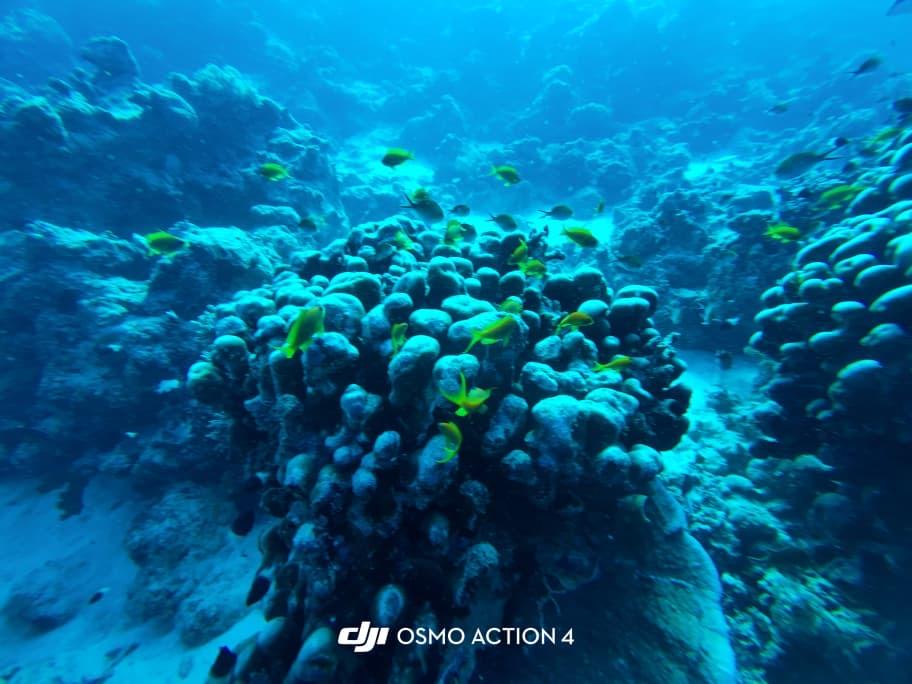 ★★★★★
Got my PADI Open Water at Eagle Ray.
Danielle · United States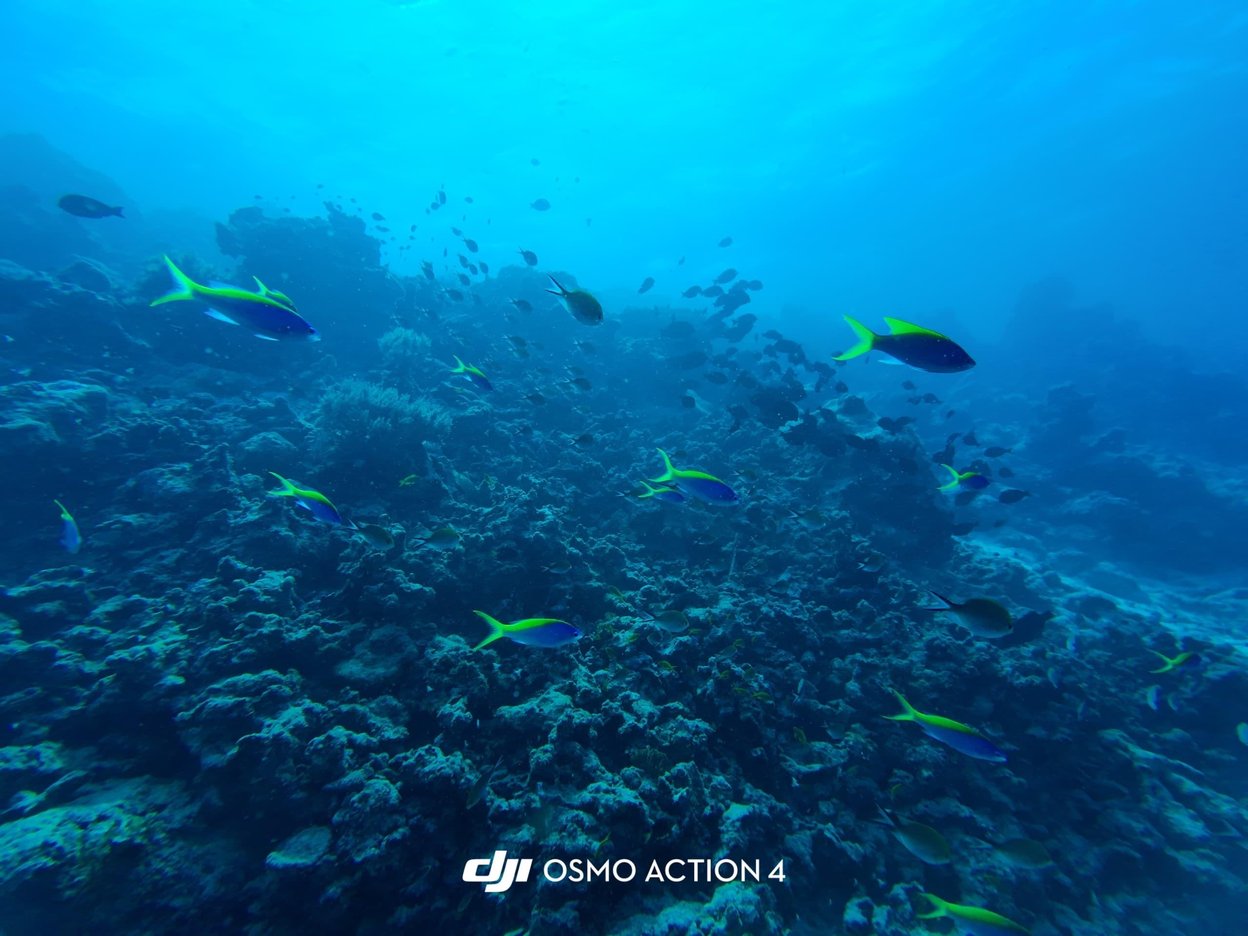 ★★★★★
Three of us (F49, M48, M30) got our PADI certification in Tanzania with Eagle Ray Divers.
Christian · Denmark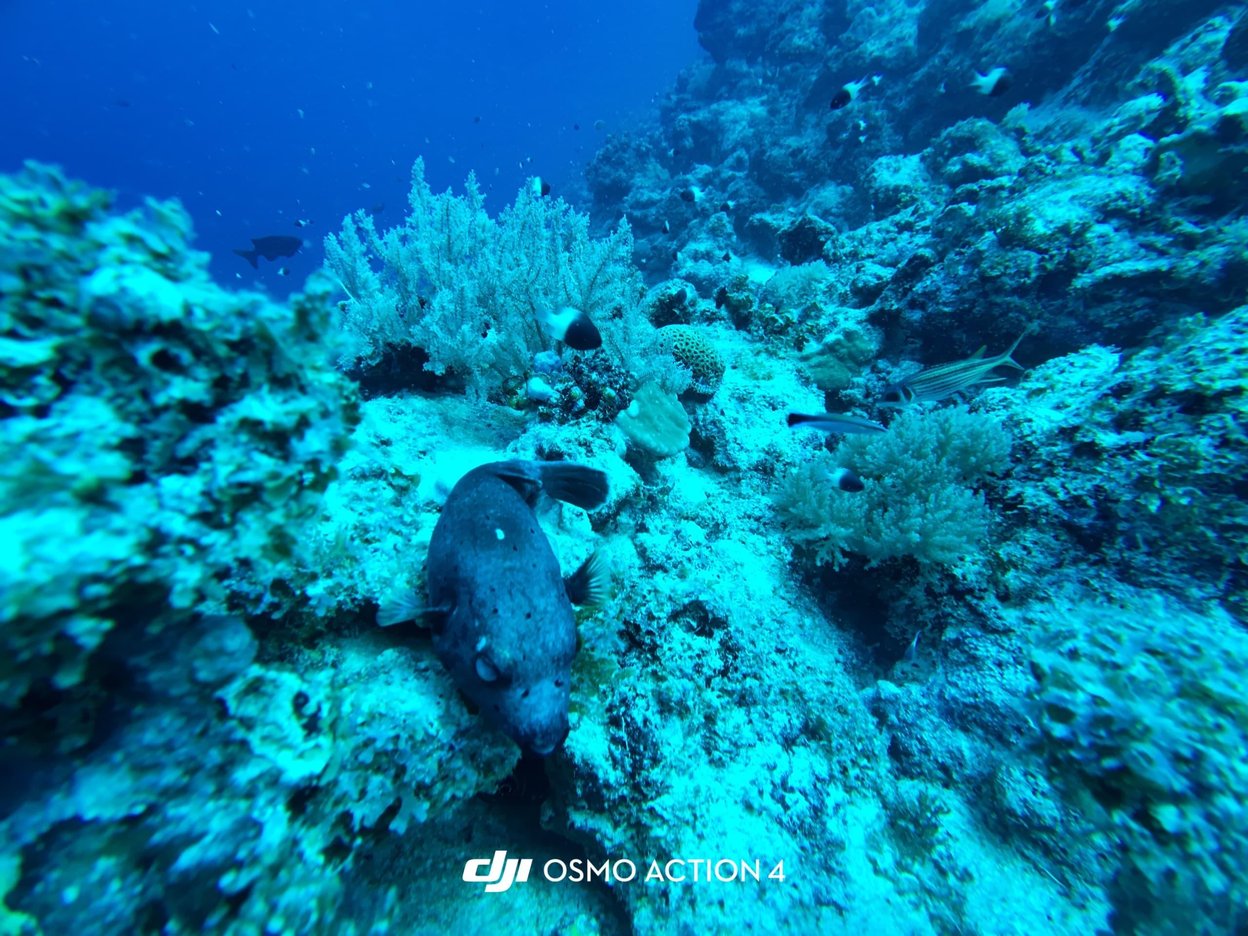 ★★★★★
Got my PADI Open Water at Eagle Ray. Top service, current too strong on my first dive, so I got an extra dive. Friendly divemasters who explain diving well. Highly recommend 👍
Jarno · Germany
What the reefs are really like underwater
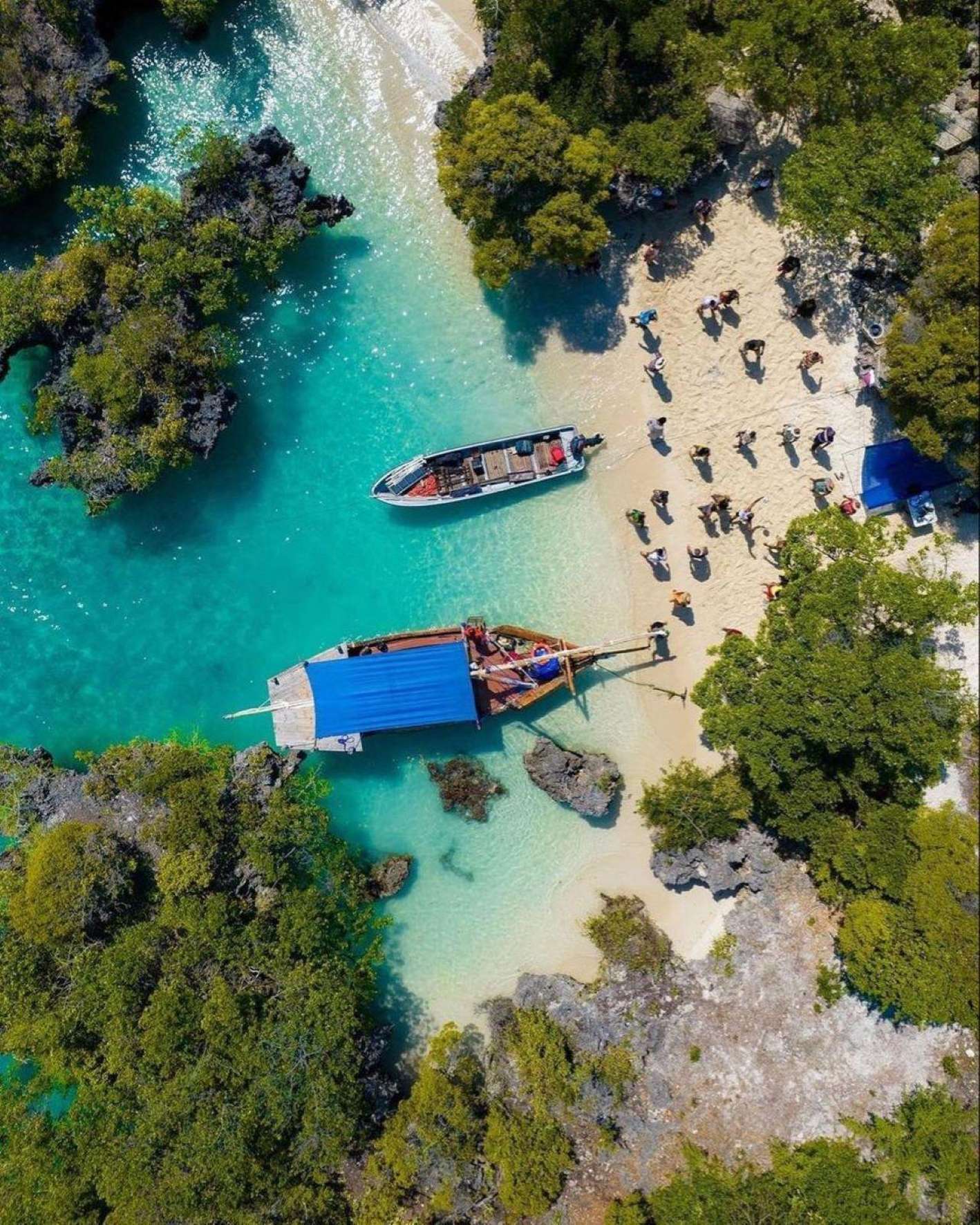
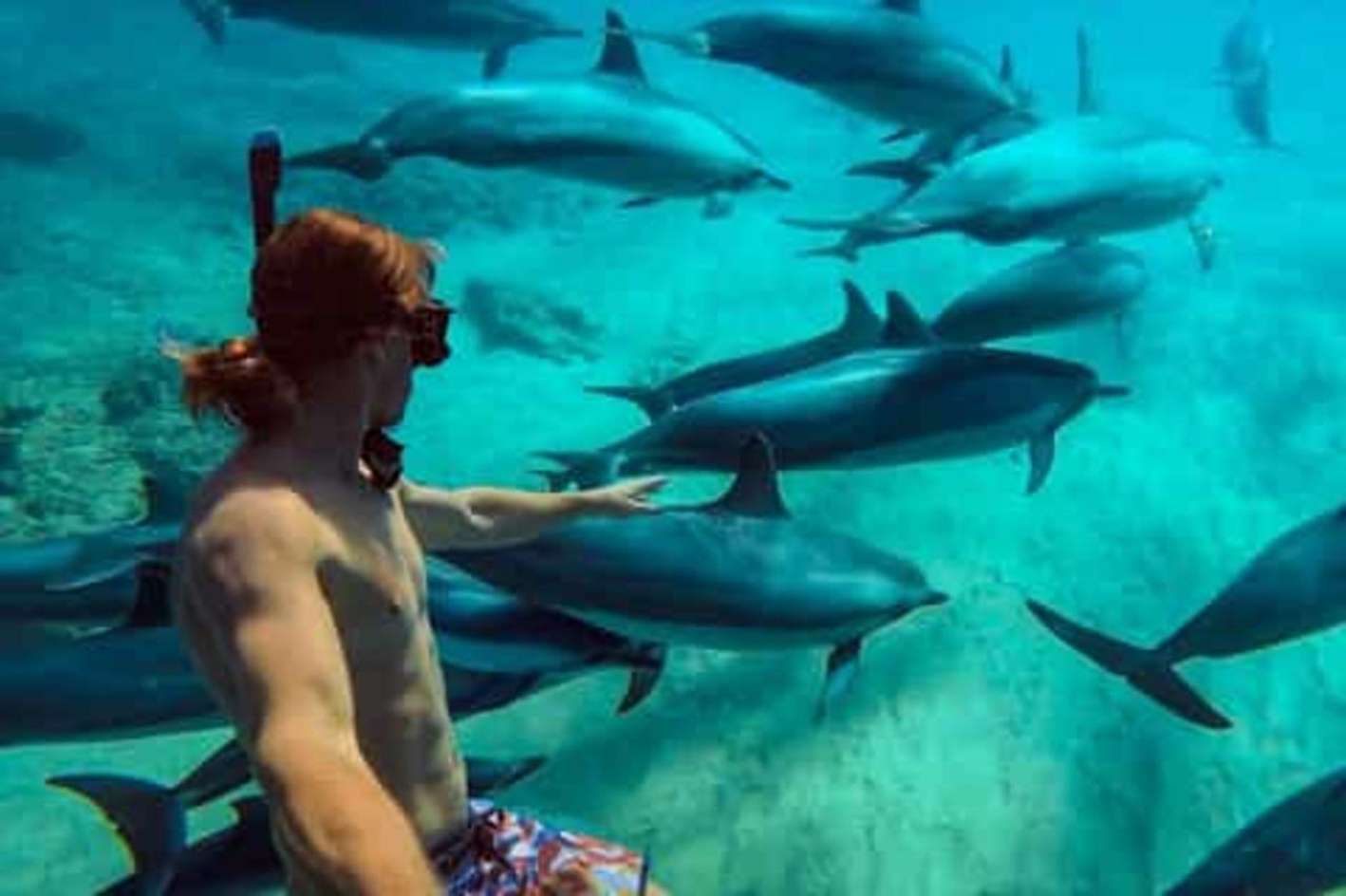
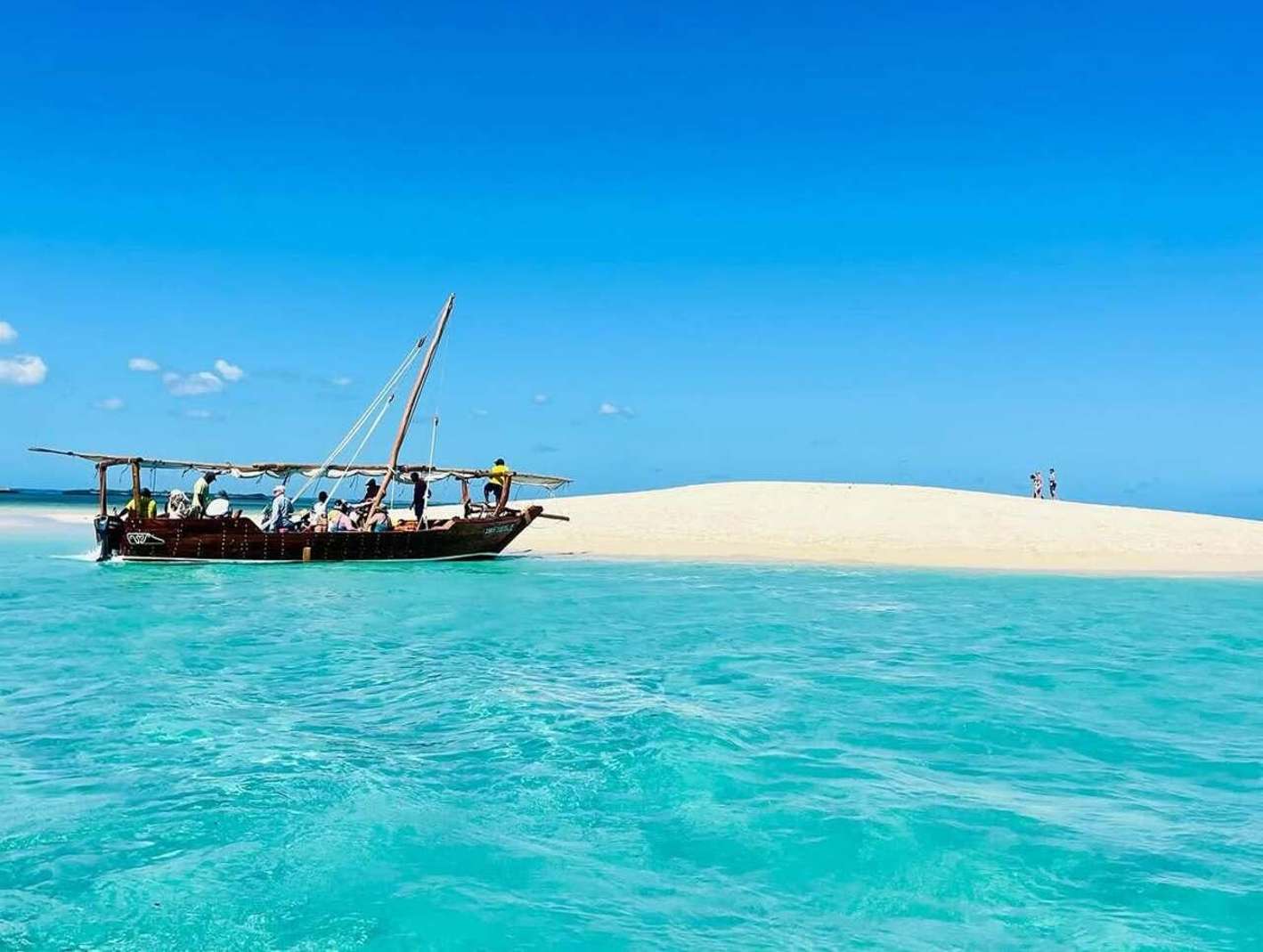
The boat leaves from the northeast coast and runs out to Mnemba Atoll, where wild dolphins surface alongside the hull on the crossing.
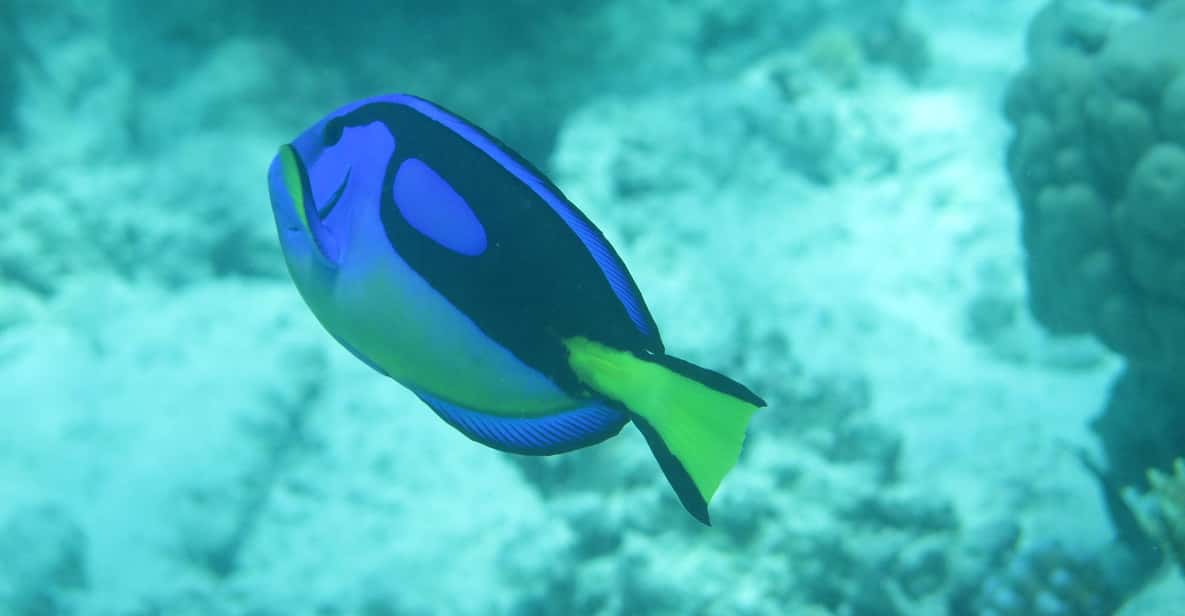
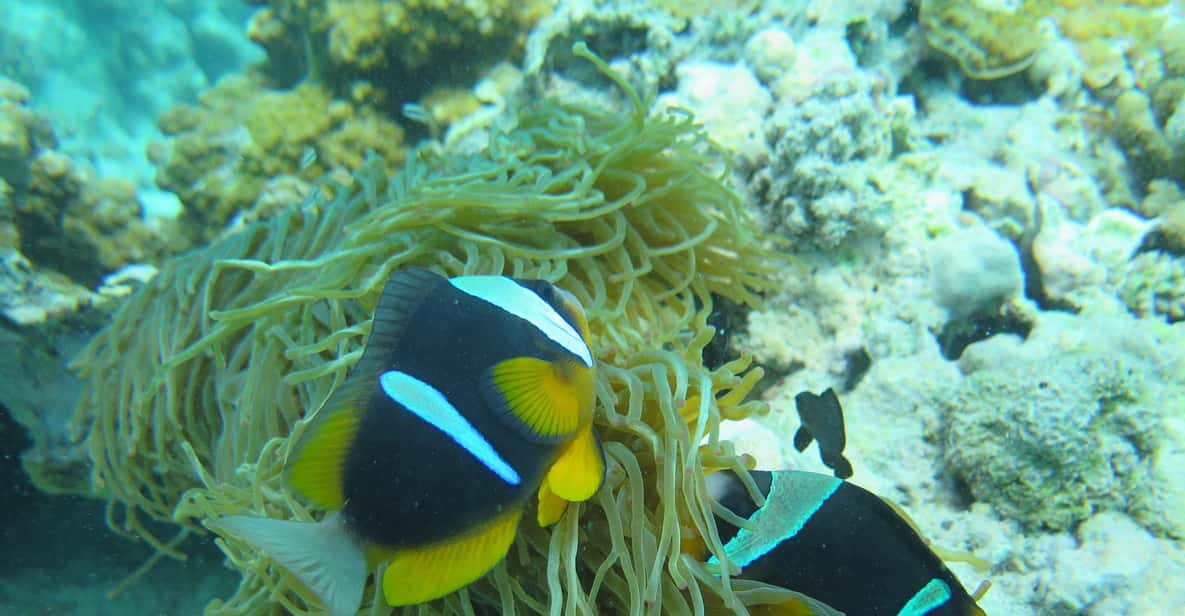
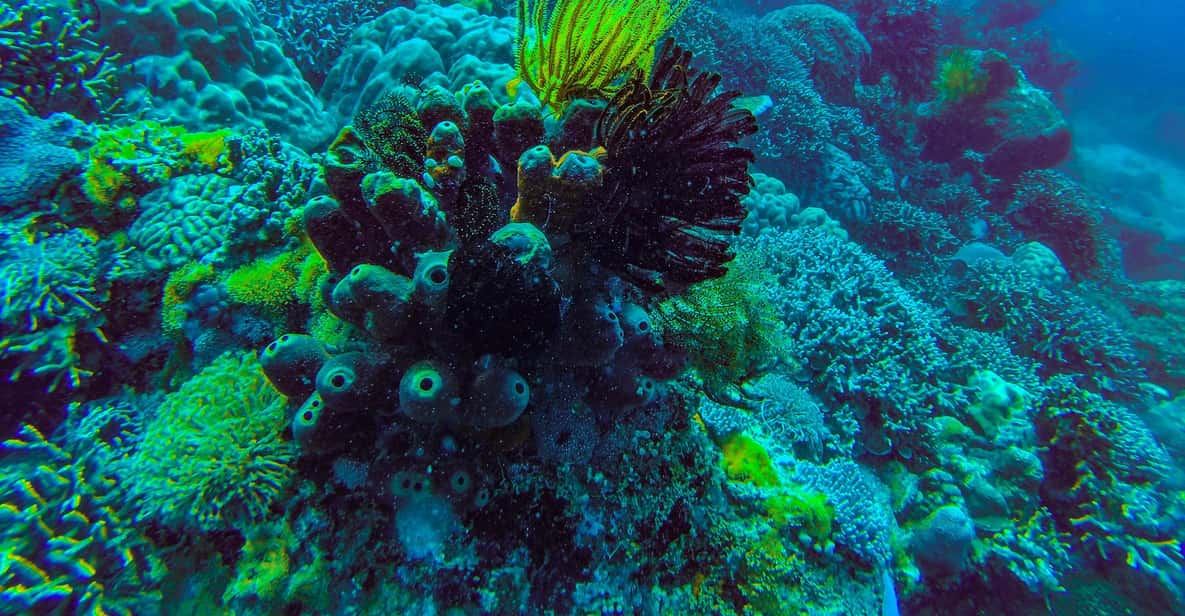
Underwater, it is turtle country: coral gardens, clouds of reef fish, and dolphins you more often hear than see. Guides on the boats keep it light, singing between stops and talking through the island's history as they go.
Zanzibar is good, convenient diving, and not the region's best.
A dedicated diver who chases unbleached reefs and strong currents will find more on Pemba, with its wall dives and drop-offs, or around Mafia Island, where a marine park protects more than 50 coral types and some 400 fish species, with small groups of three to five divers and whale sharks from October to March.
What Zanzibar trades in is ease: the sites sit off an island with hotels, flights and a certification course on the same beach.
It offers good, accessible diving. For dedicated divers, Pemba's walls and Mafia's protected reefs and whale shark season outperform it.
No. The PADI Open Water course takes you from complete beginner to certified diver in two to three days, with four open water dives built in.
So read the island honestly: come for the convenience and the turtles, and save Pemba's drop-offs for a dedicated dive trip.
The best time of year for diving in Zanzibar
Two monsoons run the calendar. The Kusi, from June onward, brings the long dry season and steady wind; the Kaskazi, from late December to February, brings the hottest beach weather and calm seas. April and May bring heavy rain, which can delay flights and dull a beach week.
September is the peak dive month, combining calm seas, active reef turtles, and the largest crowds of the year.
Tap a month to read it.
April has the quietest tours of the year and very calm water, though torrential rains reduce surface clarity.
Tap a month to read it.
November brings glassy, very calm waters and uncrowded dive boats between the peak seasons.
Tap a month to read it.
July is a bustling safari and dive month with active marine life alongside cooler, choppier seas.
Tap a month to read it.
Read the numbers against your trip and three windows stand out. November and December give the flattest water of the year, calm on virtually every day, with light crowds.
March and April are nearly as calm, and April also happens to be the peak month for turtle sightings. August and September come close on turtles and calm water, though September is the busiest month on the reefs.
If your holiday is fixed to June through October for a mainland safari, go anyway: July, August and September still deliver warm water and solid sightings, just with more boats around you. If the dates are yours to choose, aim for late in the year.
Visa, insurance and entry rules for Tanzania and Zanzibar
Paperwork comes before coral. Your passport must stay valid at least six months beyond arrival, with blank pages for stamps. One Tanzanian visa covers both the mainland and Zanzibar, applied for online through the official immigration portal or on arrival at the airports in Dar es Salaam, Kilimanjaro and Zanzibar.
Some nationalities need a referral visa approved before departure, so check your own country's rule. At immigration you show proof of accommodation and a return or onward ticket; the visa allows up to 90 days.
Zanzibar adds two rules of its own. Visitors must hold inbound travel insurance, specifically the mandatory Zanzibar Insurance Corporation coverage, which is checked on arrival. And the island enforces a strict public dress code: shoulders and knees covered everywhere outside the beach resorts.
Two small ones while you pack: single-use plastic carrier bags are banned nationwide, and photographing government buildings, airports, bridges or police officers is prohibited.
Where to stay and how to reach the dive sites - Nungwi, Kendwa, Matemwe
The dive day is decided the night before, by where your hotel sits. The northern and northeastern coasts win for dive departures, because the boats launch closest to the reefs and the morning transfer is short.
Nungwi and Kendwa, at the island's northern tip, have another advantage for swimmers and snorkelers: their beaches hold enough water that drastic low tides do not empty the sea in front of your lounger.
Matemwe, on the northeast coast, is the launch point for Mnemba Atoll, the island's most famous marine outing, and home to the dive center that runs the three-day PADI course.
If your resort is already booked elsewhere on the island, ask early about transfer times; a base far from the northeast can turn a short boat ride into a long morning drive. If the rooms are still open, book on the north or northeast coast and let the reef come to you.
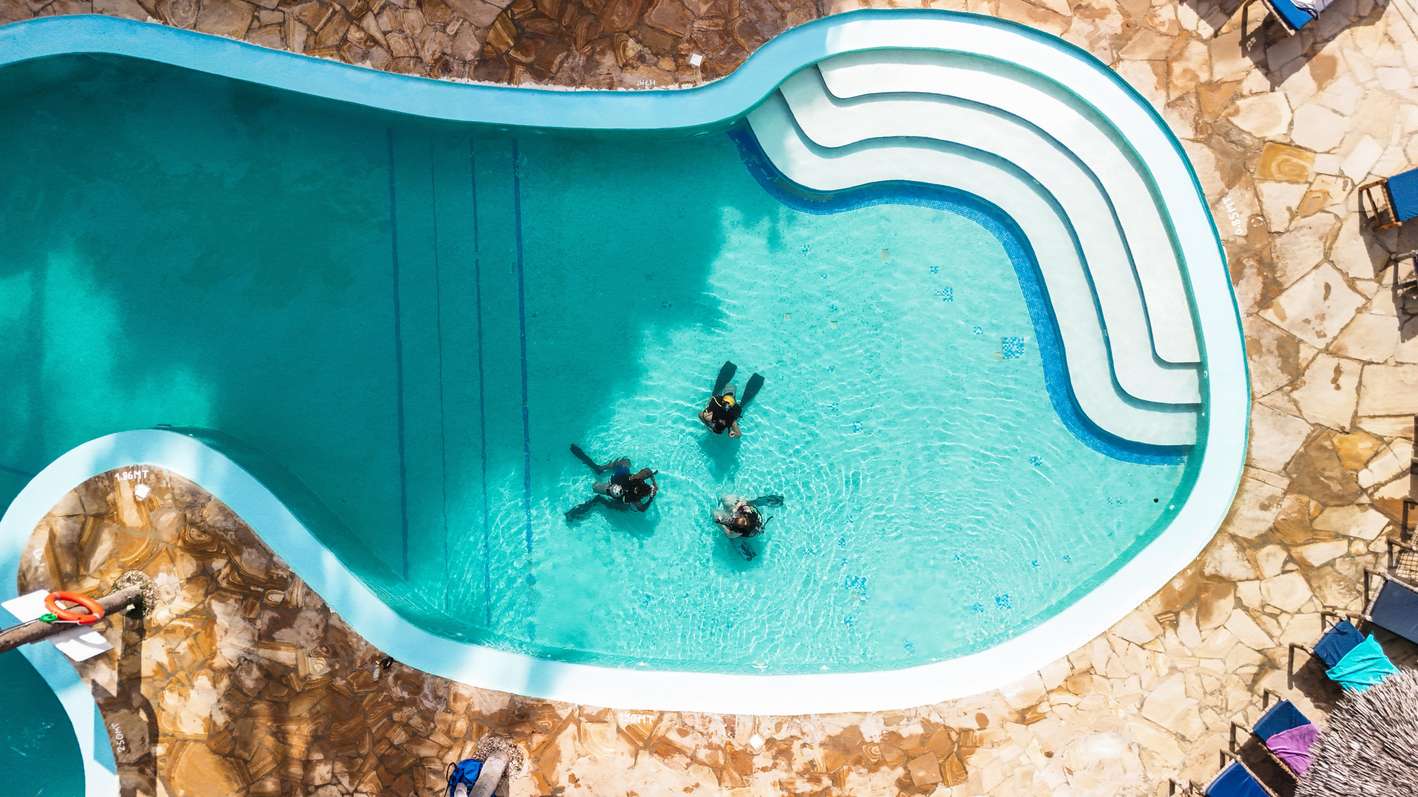
The PADI Open Water course in Zanzibar, day by day
The certification asks for two to three days of your holiday, and the days have a shape. Day one is theory: a classroom start at 9 am, finished by 4 pm, learning what the water will later test.
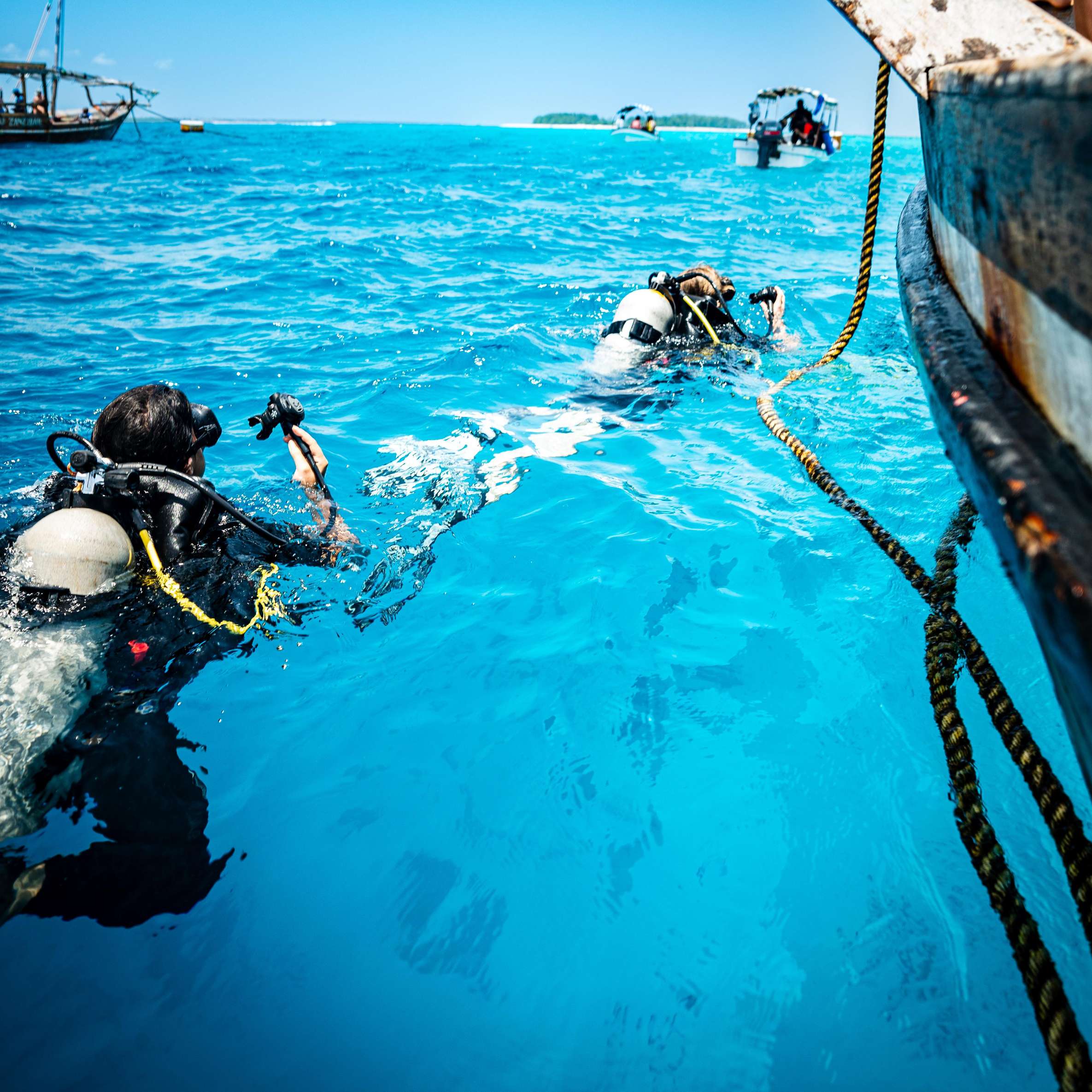
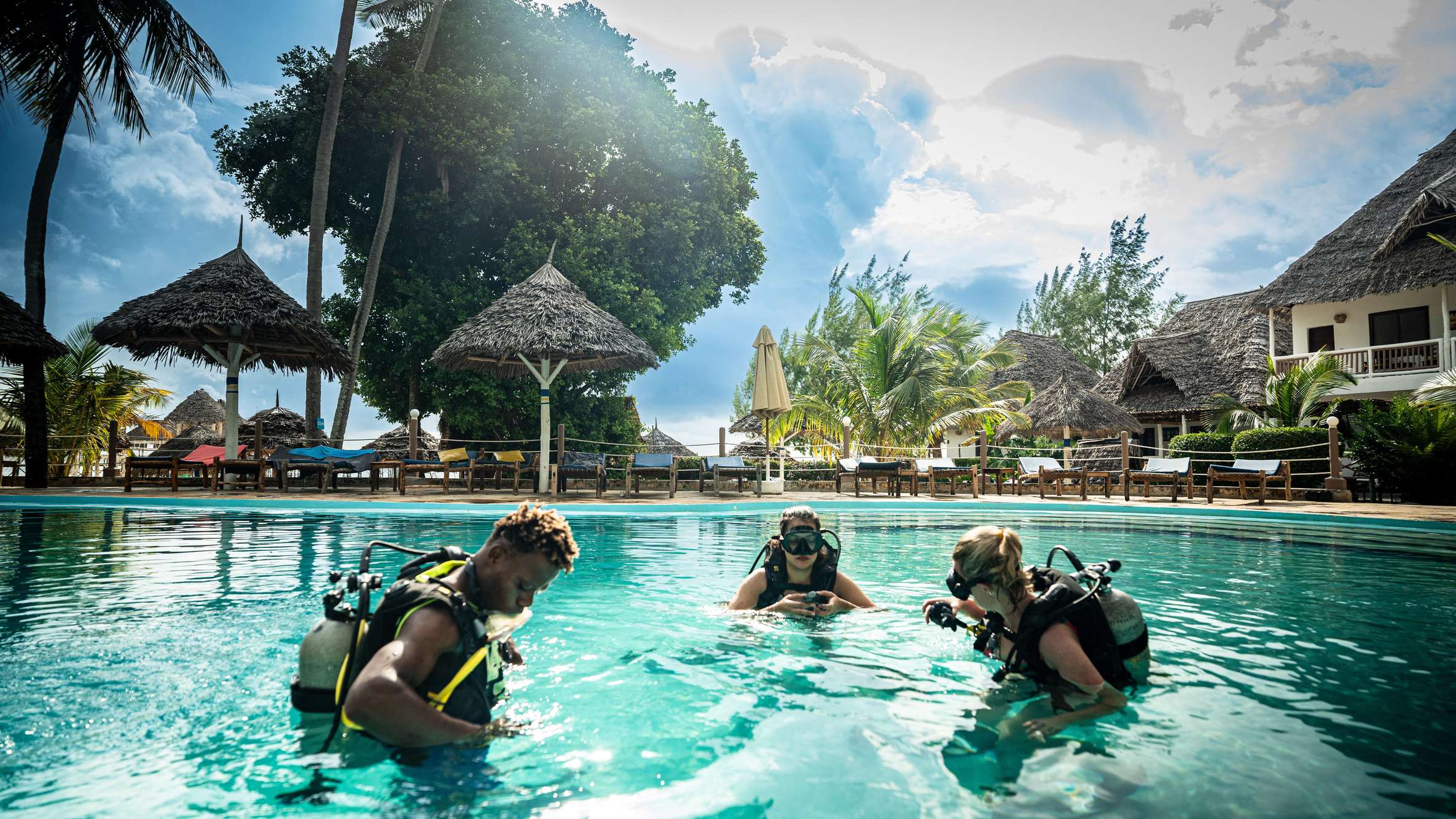
Day two puts you in the Indian Ocean with your instructor for the first dives, driven out to the dive center at Matemwe for the morning.
Day three goes further: two open dives at different locations, which is where the course stops feeling like school and starts feeling like the reason you came.
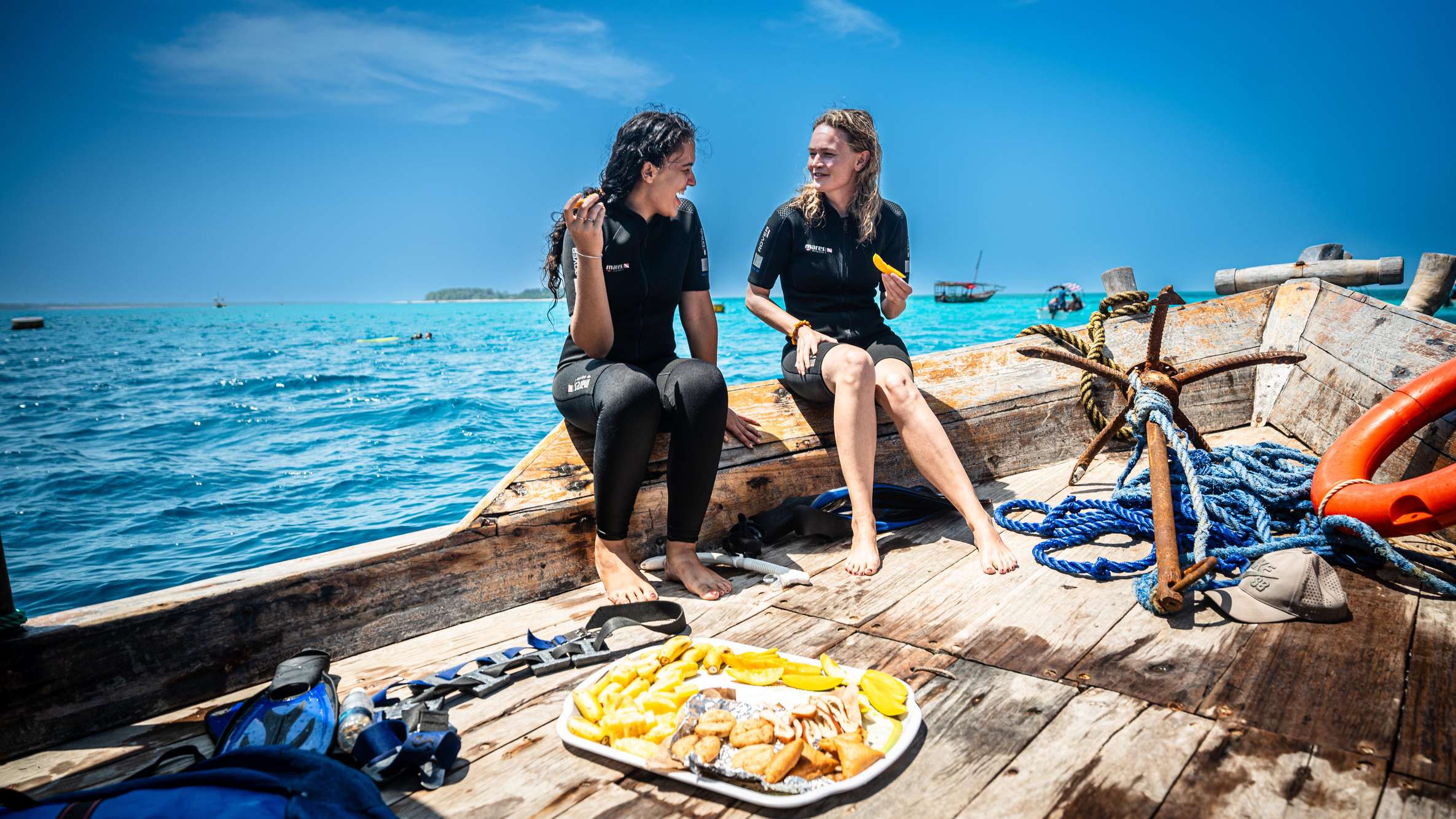
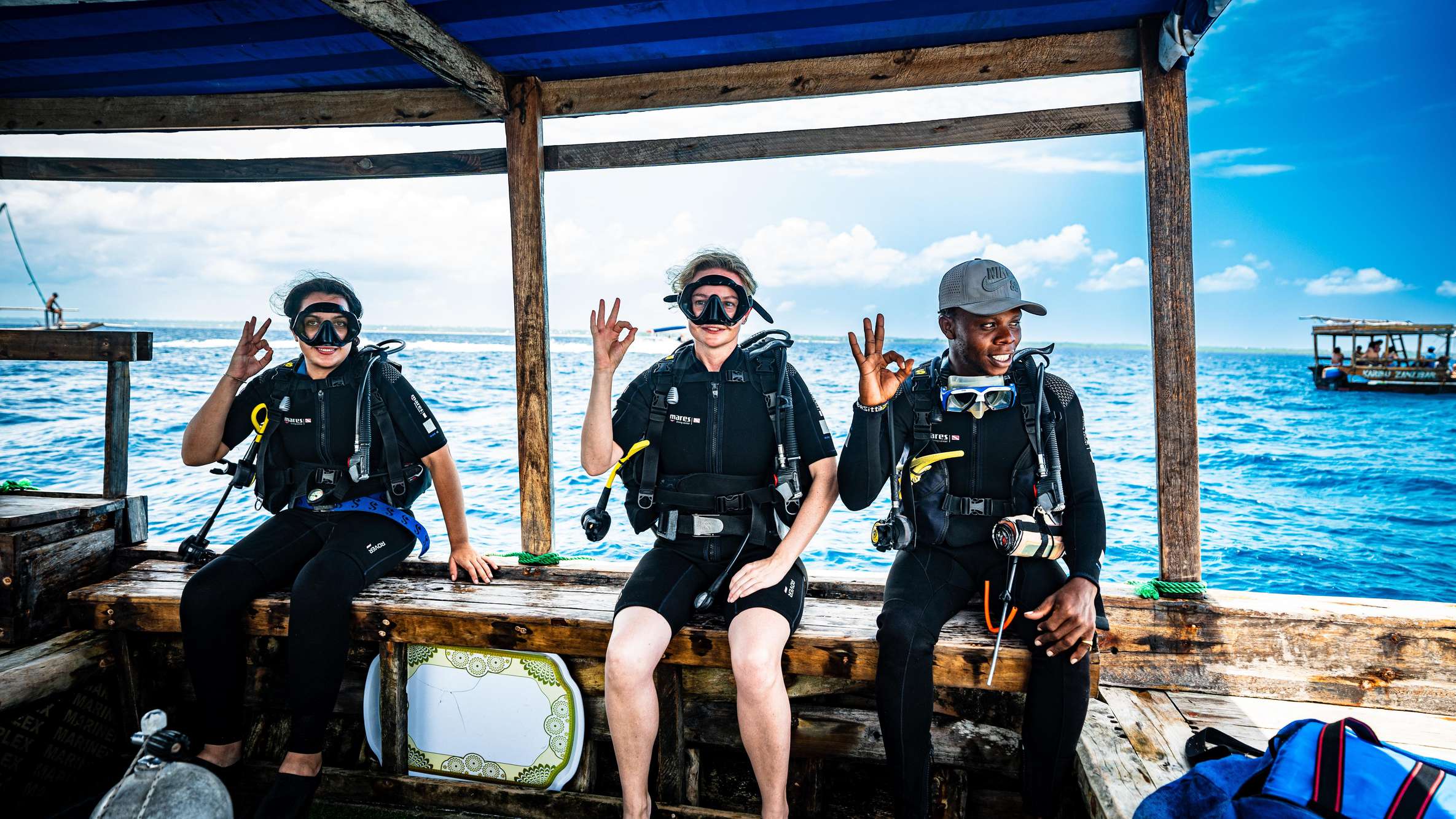
Boat transportation and a cruise are part of the course, so your surface intervals happen out on the water, with a light lunch, fresh fruit and drinking water on board.
- 1Day 1Theory and basics in the classroom
Runs 9 am to 4 pm
- 2Day 2First dives in the Indian Ocean with your instructor
Transfer from your hotel to the dive center at Matemwe
- 3Day 3Two open water dives at different locations
Boat transport and a cruise included; light lunch and fruit on board
- 4After day 3Your PADI certification is processed
A separate certificate fee is settled at the end of the course
Three days, and you hold a license any dive shop in the world will recognize.
Who can dive - age limits and the health questionnaire
Two gates stand between you and the water, and both are settled on paper. The first is age: participants must be at least 10 years old and in reasonable physical health, which makes the course a realistic family plan with teenagers.
The second is the standard RSTC and PADI medical questionnaire, which every dive center on the island uses. It asks about heart and lung conditions, ear problems, asthma, surgery and a list of similar items.
Answer yes to any relevant condition and the course waits: you need a written medical evaluation and clearance from a physician confirming you are fit to dive. Get that clearance at home, before the holiday, or you risk watching the boat leave without you.
Pregnancy Diving cannot be medically cleared during pregnancy; no dive center will take a pregnant diver underwater. Book a snorkeling boat day instead and keep the course for another trip.
Everyone else books with confidence: answer no across the form, bring the form, and the water is yours.
What a Zanzibar dive course costs and includes
The course price is closer to all-inclusive than most dive holidays: equipment rental, scuba diving gear, boat transportation and all four open water dives sit inside it, along with a light lunch, fresh fruit and drinking water, and an instructor who speaks English, French, Spanish or German.
Pick a version with hotel transfer or save a little by meeting at the dive center in Matemwe yourself.
Two payments stay outside the course. The marine entrance fee is charged per person on top, and the PADI certificate itself carries its own fee, settled per person after you finish. Budget both in, so the end-of-course paperwork brings no surprise.
One habit worth adopting: carry dollars in cash. At marine park collection points on the water, cards are typically not accepted when the fee is not already folded into a tour package, and a cashless gate is an awkward place to learn that.
Diving with a course, or snorkeling on a day trip instead
Three ways into the water, three different holidays. The full certification claims two to three days and ends with a license you carry for life.
The private Mnemba dolphin and snorkeling safari takes about four hours: a private boat to the atoll, wild dolphins on the crossing, then a snorkel over coral gardens, with gear and safety kit provided.
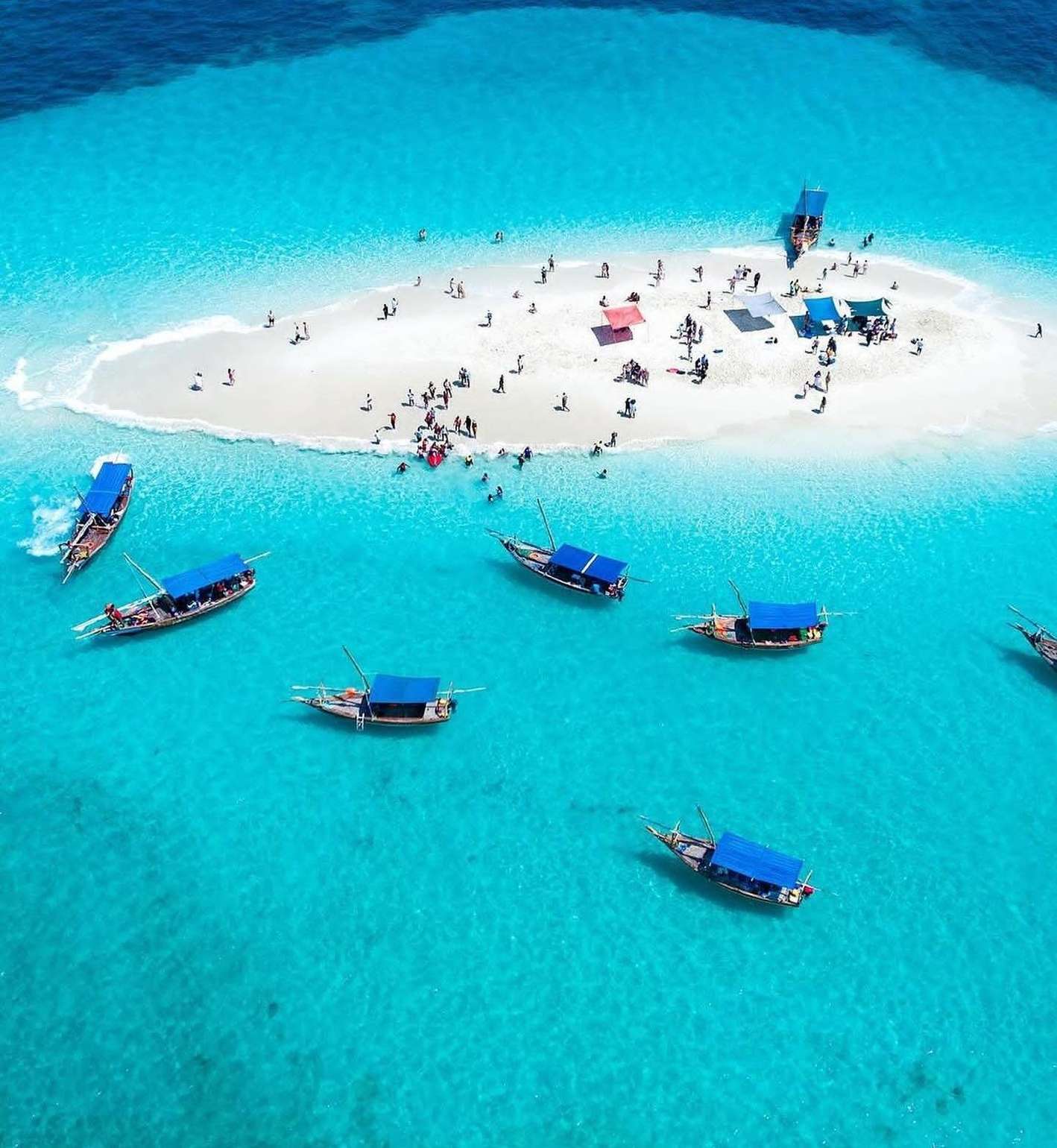
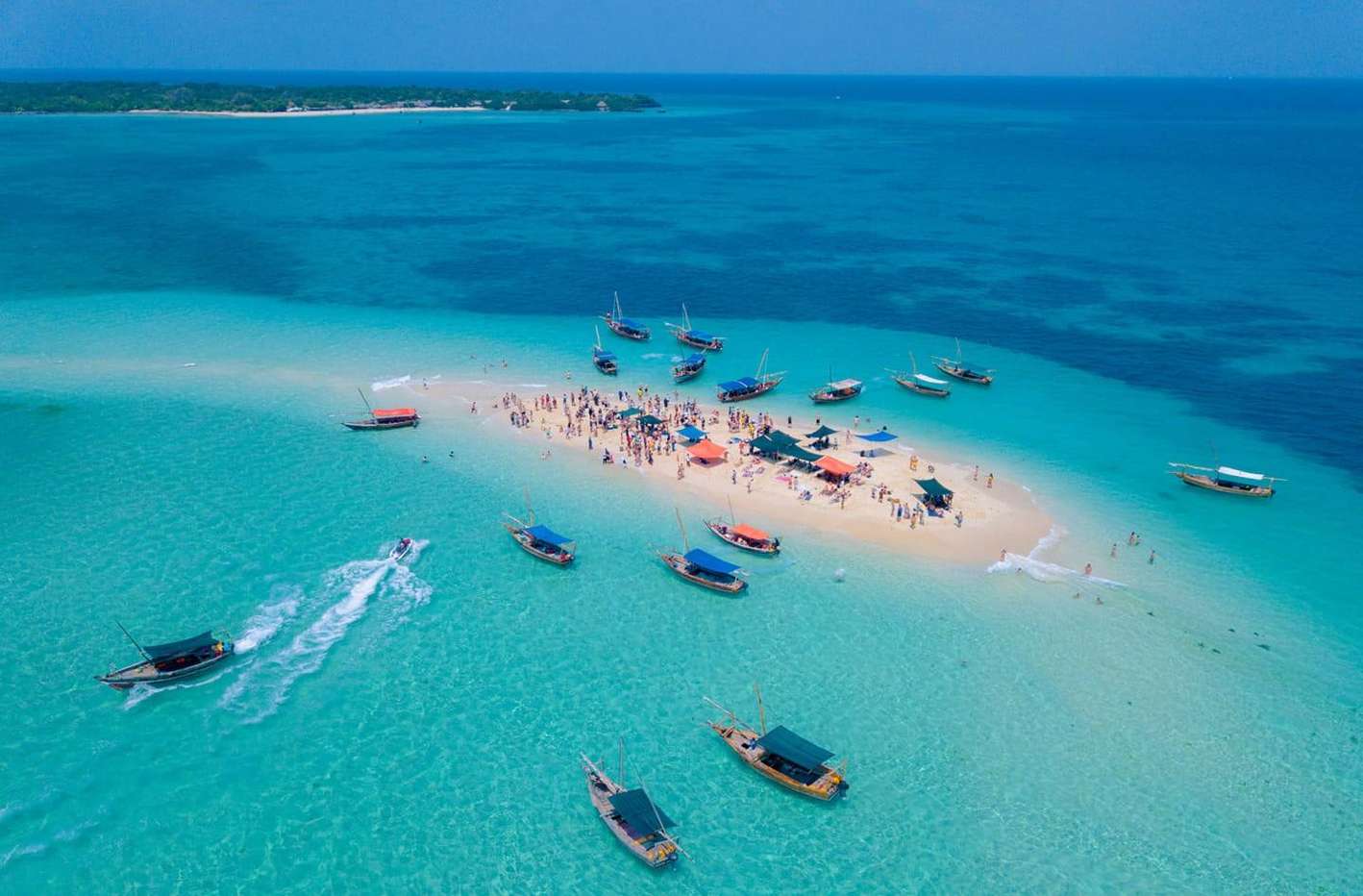
The full-day Safari Blue dhow trips run about seven hours out of Fumba, sailing to sandbanks, snorkeling the Menai Bay reefs and finishing with a seafood barbecue on Kwale Island.
Three ways into Zanzibar's water
| 3-day PADI Open Water course | Private Mnemba dolphin and snorkeling safari | Safari Blue dhow day | |
|---|---|---|---|
| Time needed | 2 to 3 days, most of a short holiday | About 4 hours | 6 to 8 hours |
| What you come home with | A globally recognized certification | Photos and a swim with wild dolphins | A full day of reefs, sandbanks and a seafood lunch |
| Gear | All equipment included | Mask, fins, snorkel and life jackets provided | Snorkeling kit and life jacket provided |
| Best for | Beginners who want the license for life | Non-diving partners, families and short stays | Beach weeks with a free day and mixed groups |
- Time needed
- 2 to 3 days, most of a short holiday
- What you come home with
- A globally recognized certification
- Gear
- All equipment included
- Best for
- Beginners who want the license for life
- Time needed
- About 4 hours
- What you come home with
- Photos and a swim with wild dolphins
- Gear
- Mask, fins, snorkel and life jackets provided
- Best for
- Non-diving partners, families and short stays
- Time needed
- 6 to 8 hours
- What you come home with
- A full day of reefs, sandbanks and a seafood lunch
- Gear
- Snorkeling kit and life jacket provided
- Best for
- Beach weeks with a free day and mixed groups
Match the option to the days you actually have, and no one in your group sits on the beach jealous of the others.
How to choose a dive center worth trusting
A dive center is only as good as its ratios and its staff. The established ones hold PADI Five Star status, run certified multilingual instructors, keep diver-to-guide ratios low at around four divers per guide, and group divers by experience level so a confident swimmer is not babysitting a nervous one.
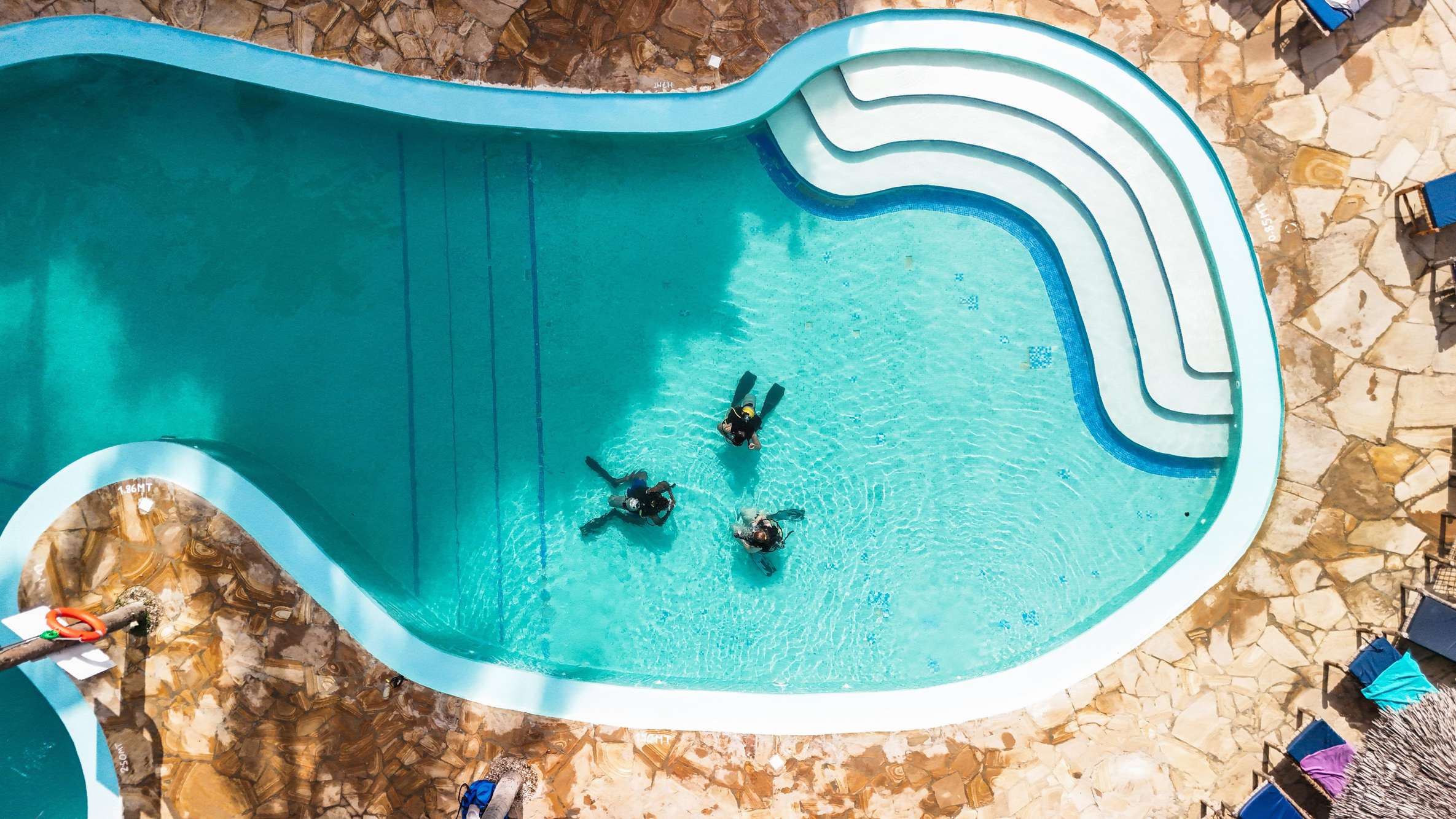
They have training pools and classrooms on site, rental gear in good condition with Nitrox available, insurance in place and organized transfers to the boats. The beach kiosks have a dhow and a price.
Emergency training separates the two further: staff at serious centers are drilled in first aid, oxygen and hyperbaric care, which matters more than any brochure line.
The three-day PADI Open Water Scuba Diving Safari ticks every box on that list: a professional instructor, equipment and boat included, pickup available, instruction in four languages and free cancellation up to 24 hours before it starts.
- A guide with youInstructor
- Free cancellationCancel up to 24 hours in advance for a full refund
- Book now, pay laterReserve your place and pay closer to the date
- Hotel pickupPickup available, Check availability for pickup options
- Your languageEnglish, French, German, Spanish
Hold any dive center in Zanzibar against that short list, and the choice makes itself.
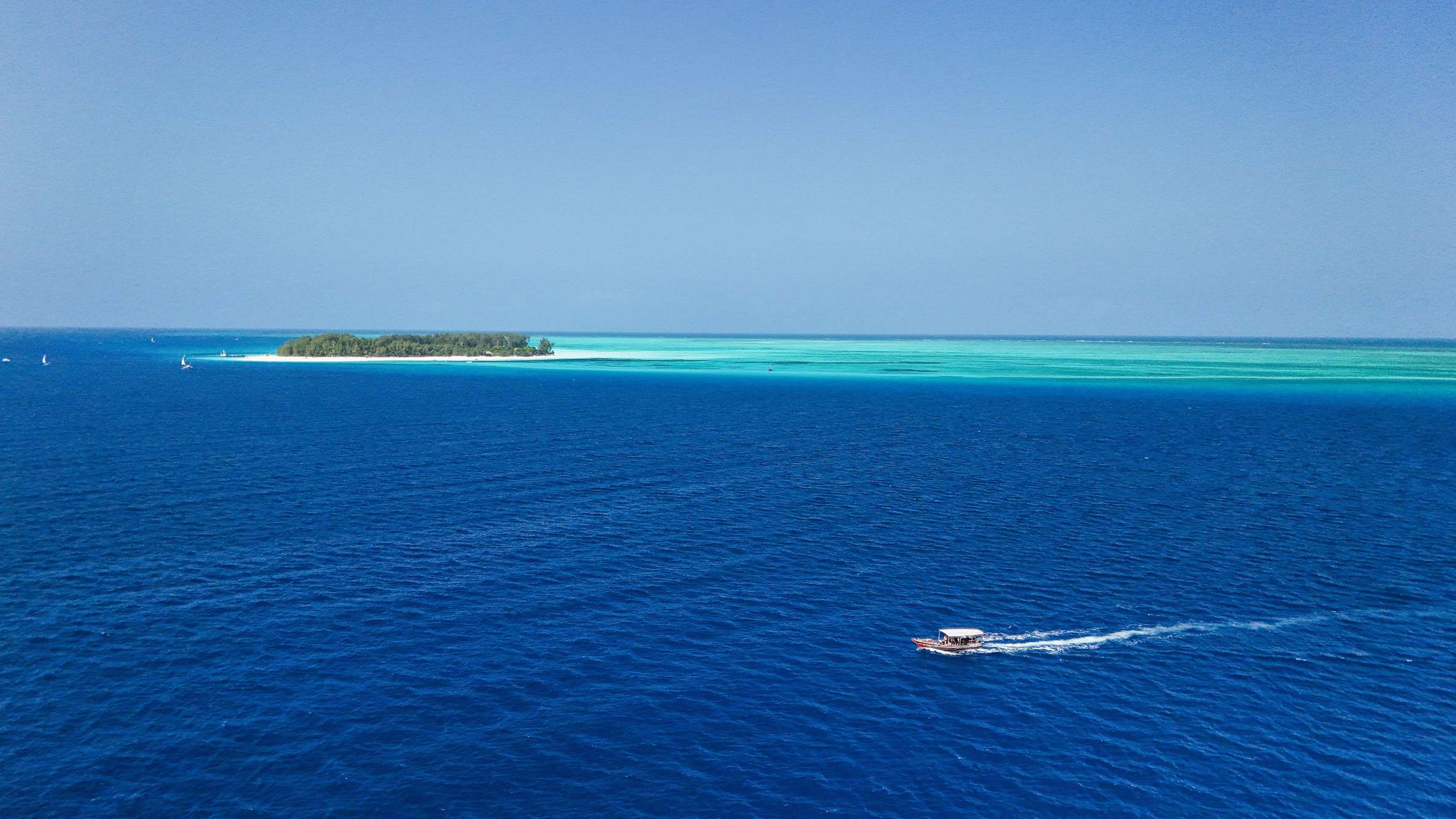
Dive safety, the hyperbaric chamber and flying after diving
The safety net is real and local. Unguja has a hyperbaric decompression chamber, run in partnership with Divers Alert Network and directed by a baromedicine specialist.
If a diver gets into serious trouble, the protocol is immediate first aid and oxygen, a call to local emergency services, notification of DAN and coordinated evacuation with the hyperbaric team. It is the kind of setup you hope never to meet, and reassuring to know exists a drive away.
The rule that shapes your itinerary is the no-fly window. After a single no-decompression dive, wait at least 12 hours before flying; after multiple dives or multiple days of diving, at least 18 hours, with 24 recommended. A decompression dive pushes the wait well beyond a day.
So sequence the week deliberately: start the course on day two of your holiday, not the last three days, and leave your final 24 hours free of diving before the flight home or the short hop to a mainland safari.
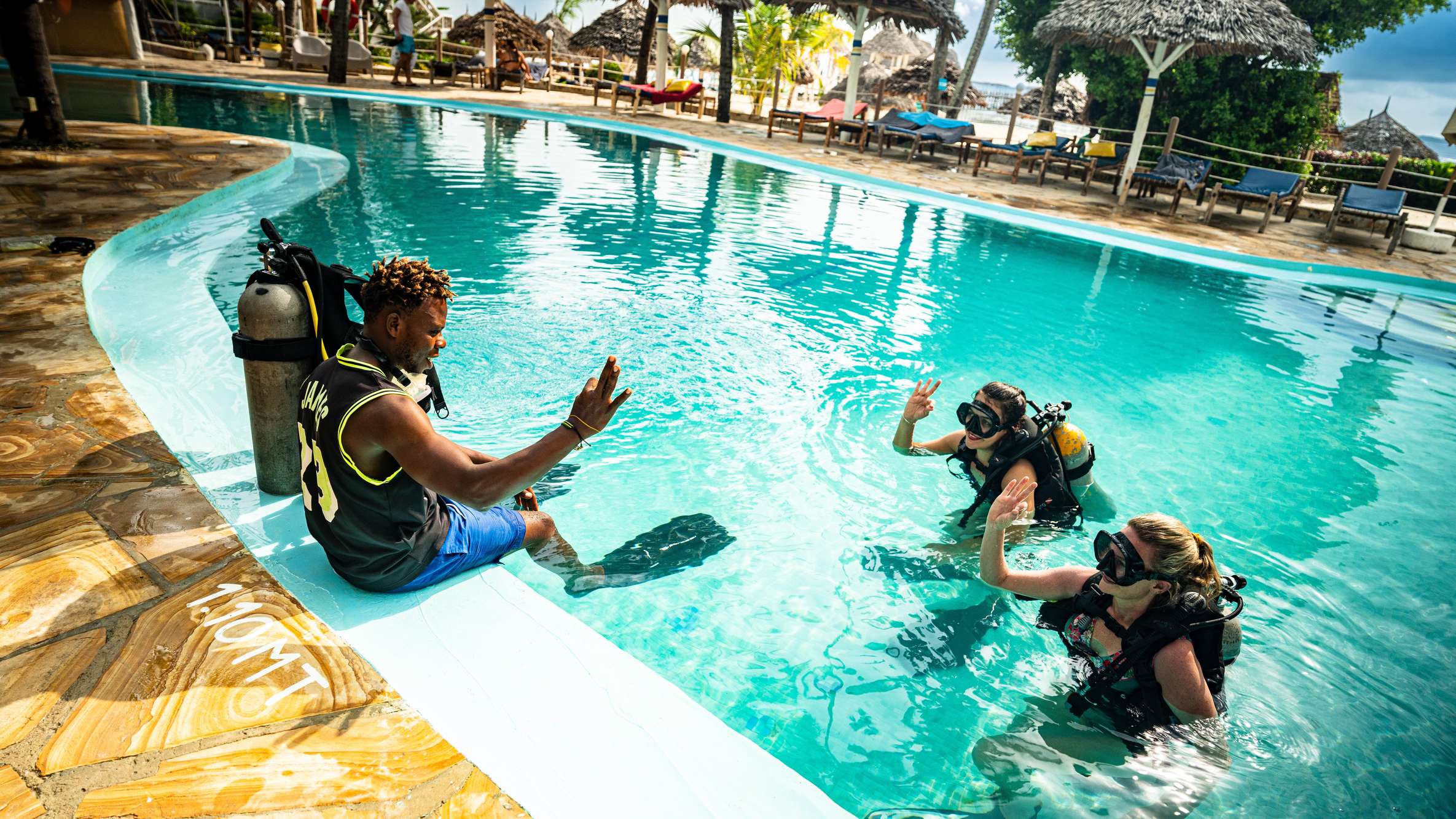
What to pack for a dive day, and what happens if plans change
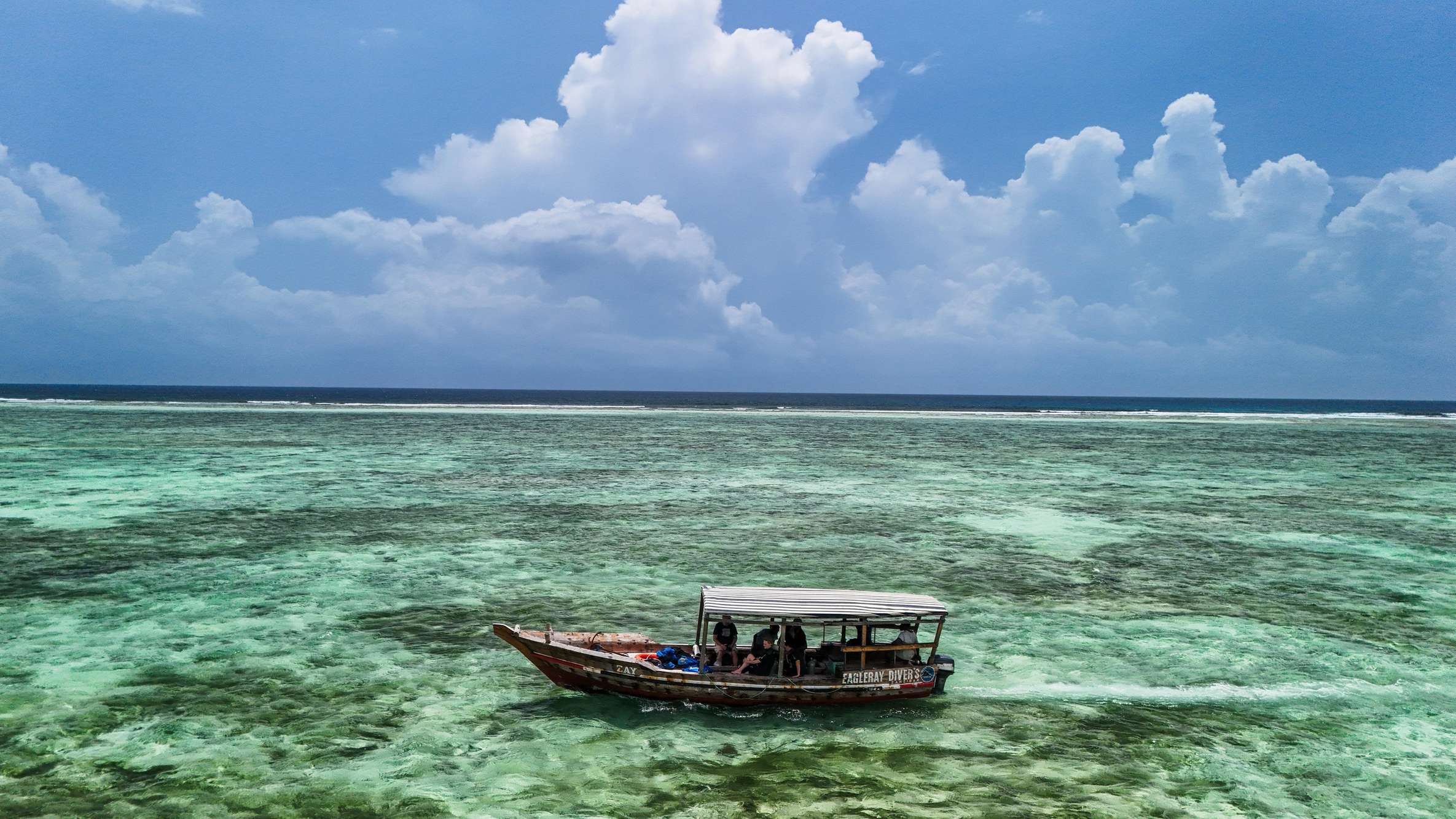
The boats are open wooden dhows with no cabin shade, and the surface intervals are spent on them under a high sun. Cover up with light long sleeves and a wide-brim hat, wear sunglasses, and use broad-spectrum water-resistant sunscreen on what stays exposed.
Reapply roughly every two hours and after every swim, and near coral pick a mineral sunscreen with zinc oxide or titanium dioxide, which is kinder to the reef you came to see.
Beyond that, packing is short: swimwear, a towel, and cash for the on-site marine fee.
When plans change
| If this happens | What happens then |
|---|---|
| The shared boat does not reach its minimum number of participants | The tour is rescheduled and the operator's coordinator contacts you to arrange a new date |
| Weather turns or conditions are unsafe | The departure time or date is moved; operators reserve that right for operational, weather or safety reasons |
| A dive day is washed out at the end of a tight schedule | Book the course for early in your stay so a moved morning does not collide with your flight |
| You need to change your own plans | The featured course allows free cancellation up to 24 hours in advance for a full refund |
A moved morning is a nuisance, never a lost holiday, as long as the course sits early in your week.
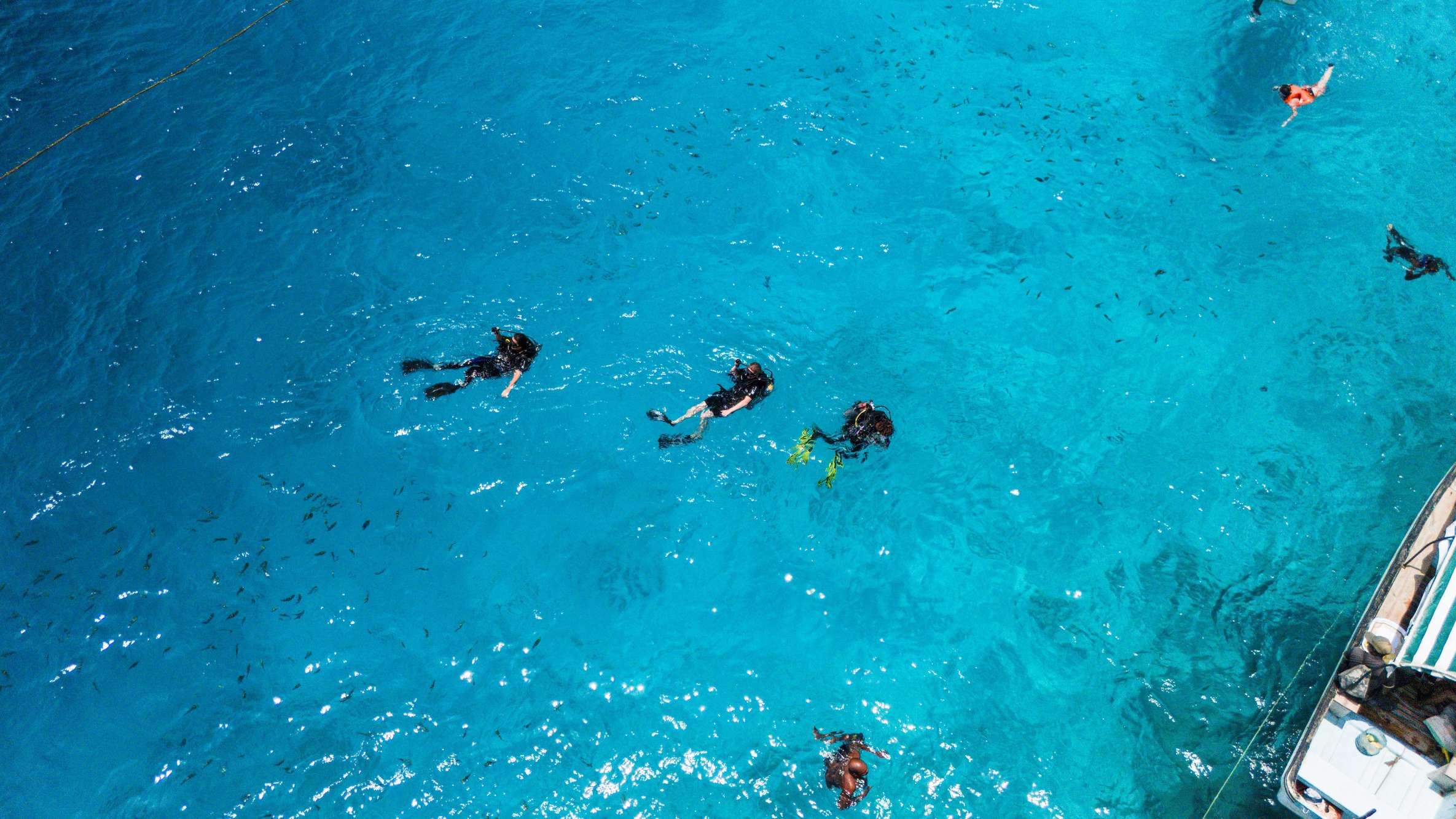
Beyond diving - add a Zanzibar snorkeling trip or safari
Certified divers can fill the remaining days without repeating themselves.
Non-diving partners and children get their own water days: the private Mnemba dolphin and snorkeling safari for a short morning with the dolphins, or one of the Safari Blue dhow trips from Fumba for a full day of sandbanks, reefs and a seafood barbecue on Kwale Island, where starfish dot the shallows.
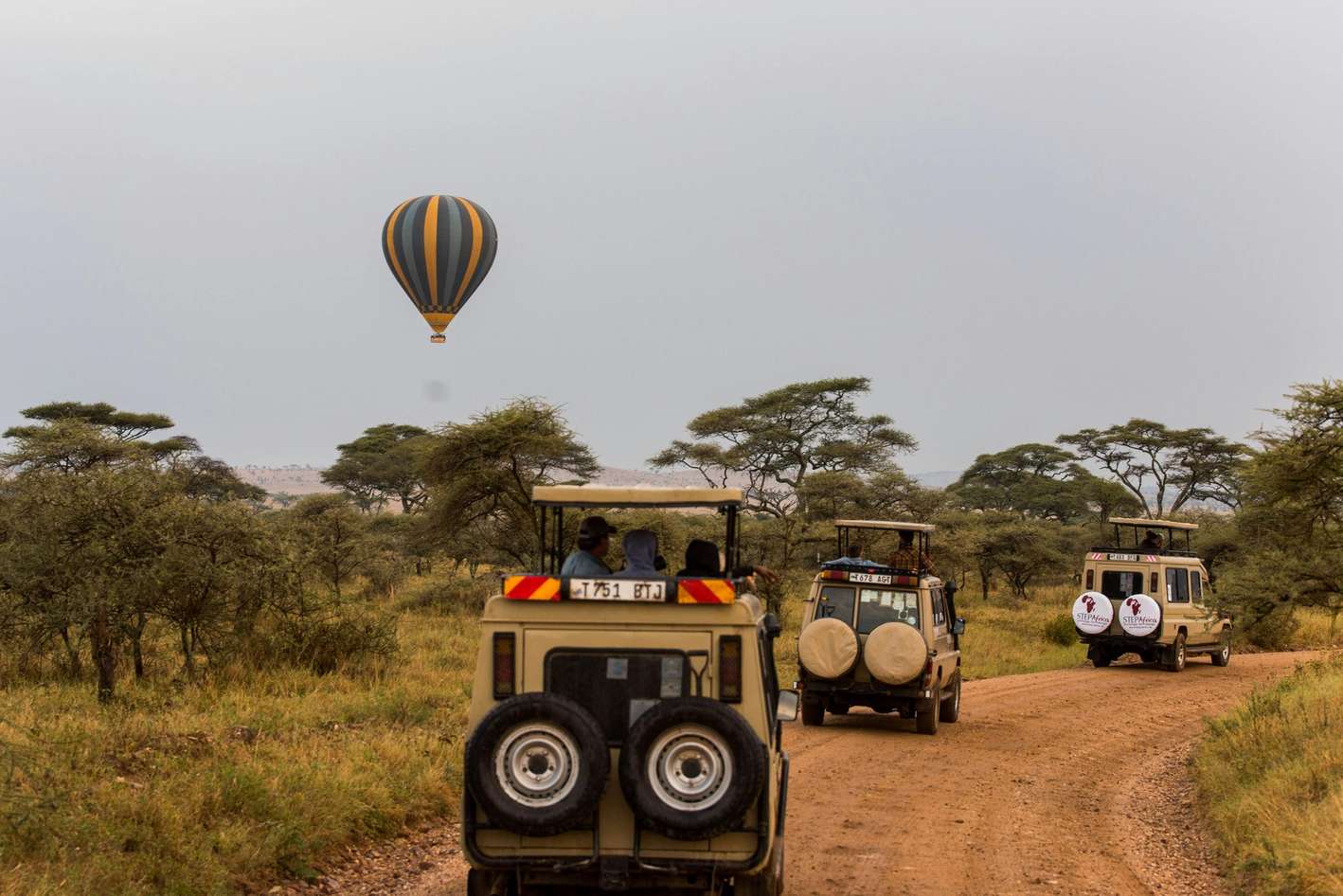
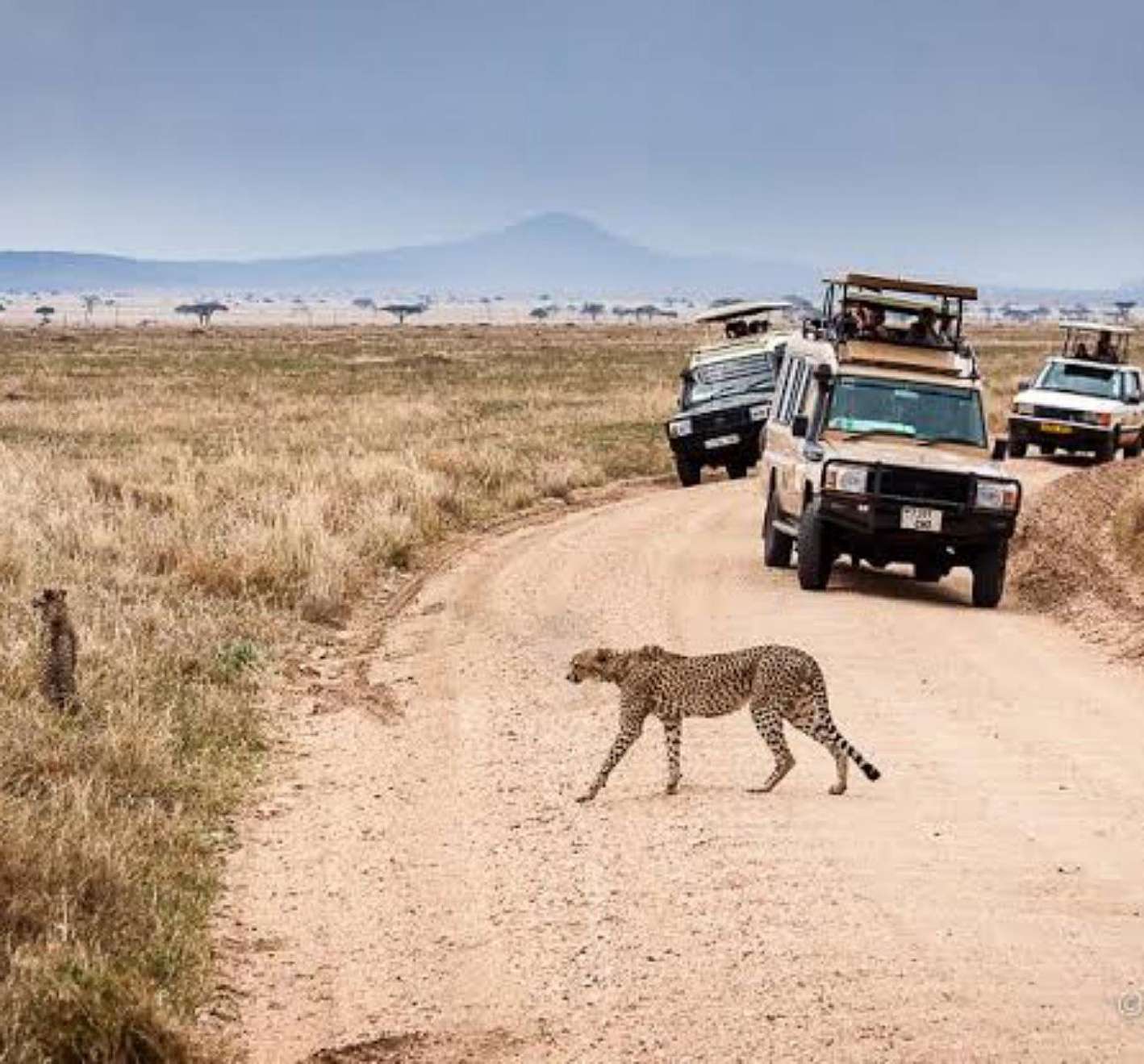
Then there is the mainland. Wildlife safaris to Mikumi or Nyerere National Park can be booked directly through Zanzibar resorts, and Mikumi sits closer than it looks: a direct flight to Kikoboga Airstrip takes 40 to 60 minutes, against six and a half to seven and a half hours by ferry and road.
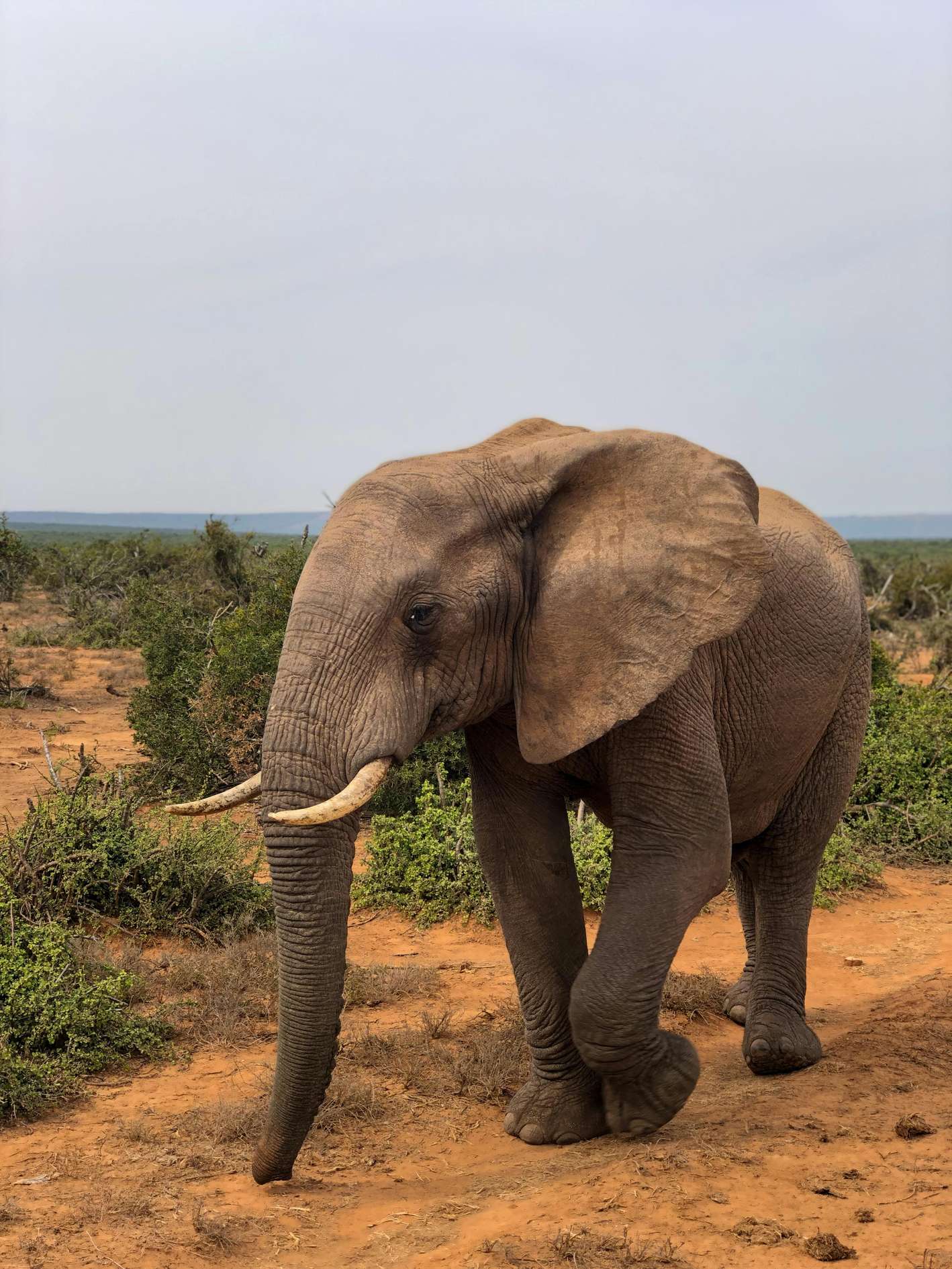
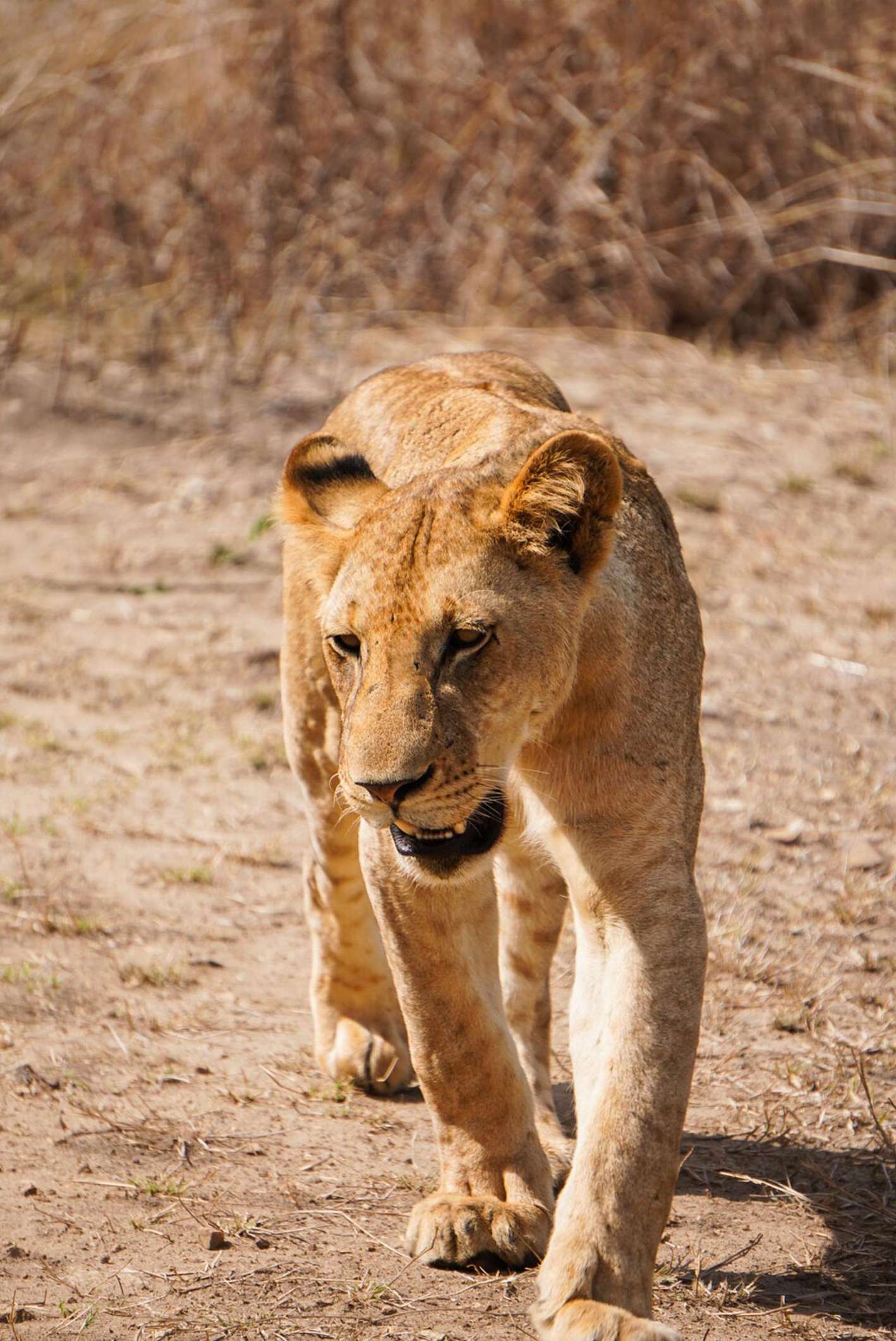
A diver who keeps the no-fly window clear can close a beach week with a day among elephants and lions.
Certification is the plan for committed divers; a reef day is the plan for everyone else. Both start from the same strip of northeast coast.
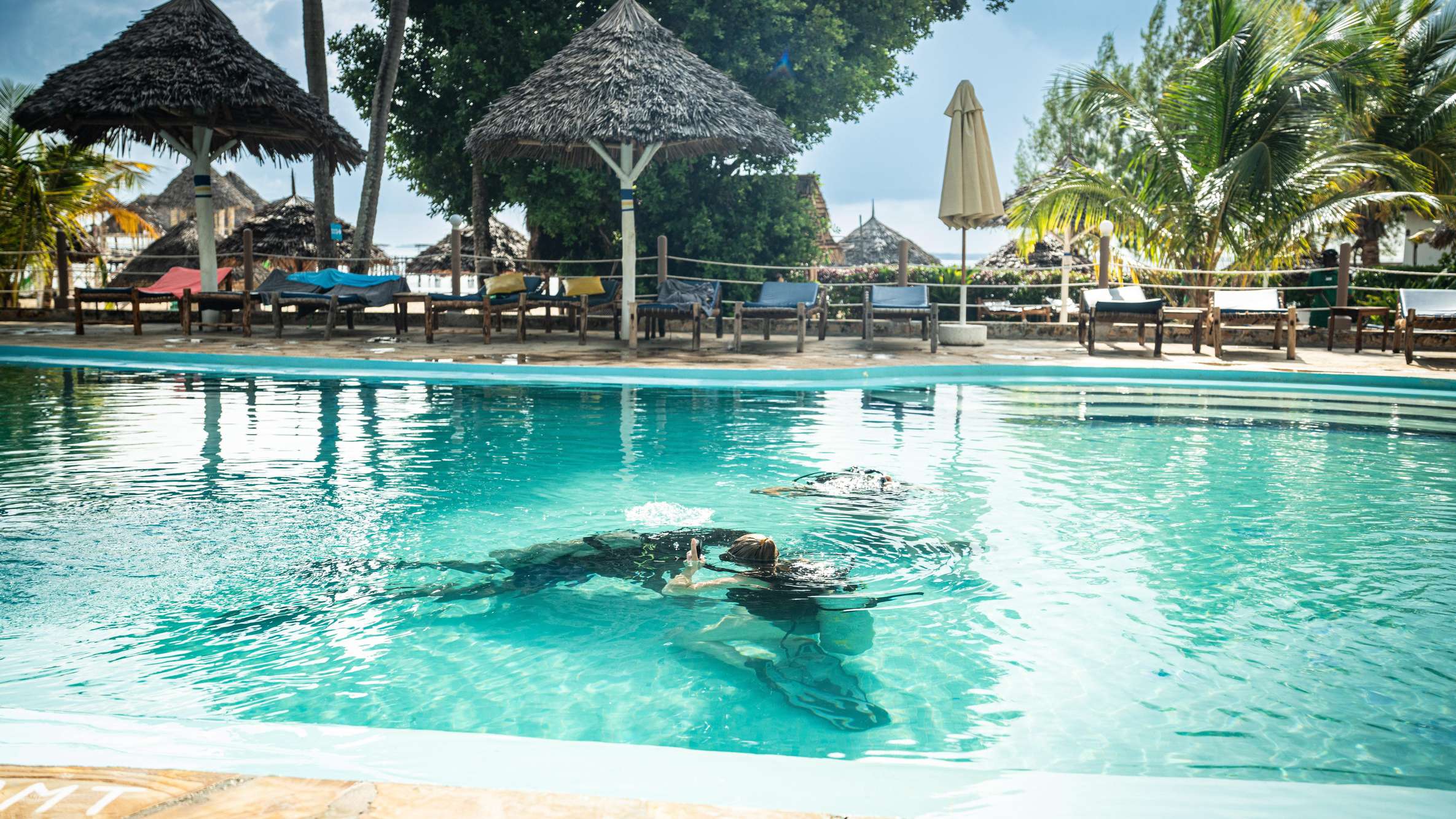
What to know before you book scuba diving in Zanzibar
Dive centers in Zanzibar use the standard PADI medical questionnaire, and a Yes on any relevant condition means a doctor must clear you in writing before you dive. Pregnancy is a strict contraindication and cannot be cleared. Sort this out before you travel.
The minimum age for the diving course is 10 years, and participants need to be in reasonable physical health. The course is also not suitable for people with heart problems or for pregnant travelers.
Flying too soon after a dive is dangerous, so plan around it. A single no-decompression dive requires a wait of at least 12 hours before any flight, and multiple dives in a day require 18 hours, with 24 hours recommended. Schedule your course early in your stay so the waiting hours pass on land.
Day one is theory, running from 9 am to 4 pm. The next days take you out to the Indian Ocean with your instructor, and the course includes four open water dives at different spots off Matemwe.
Two courses run here: a 3-day PADI Open Water course for beginners and a 2-day PADI Advanced Open Water course for certified divers. Each comes with or without hotel transfer, and the instructor speaks English, French, Spanish or German.
The course covers the practical things, so you do not need to buy gear for one trip:
- equipment rental and full scuba diving gear
- boat transportation and the cruise out to the reefs
- light lunch, fresh fruits and drinking water
- a professional instructor
Two things are billed separately: the marine park entrance fee, and the fee for the PADI certificate itself once you complete the course. Underwater photos are also not part of the package. Budget for both before you book.
Marine park fees are collected at the landing points, and cards are typically not accepted there. If the fee is not already part of your option, carry cash in US dollars for the day.
A hyperbaric decompression chamber operates on Unguja Island, managed with Divers Alert Network and directed by a baromedicine specialist. Established dive centers follow a clear protocol with first aid, oxygen and coordinated evacuation.
With a transfer option, the driver meets you at your hotel reception, and you should be waiting there five minutes before departure. Options without transfer start at a meeting point instead, which keeps the price down.
Worth the regulator, if you plan the week
The three-day PADI Open Water course suits beginners with three days to spare who want a license that travels home with them, and it is best booked for the start of a stay.
Non-divers, families with young children and anyone down to their last day will be happier on the private Mnemba snorkeling morning or a full Safari Blue dhow day. Dedicated divers chasing walls and whale sharks should look to Pemba or Mafia instead.
Your questions about scuba diving around Zanzibar
What is scuba diving in Zanzibar like?+
The island sits on Indian Ocean reefs with dolphins off Mnemba Atoll and starfish around Kwale Island for snorkelers. Zanzibar offers good scuba diving, and the northern and northeastern coasts give the easiest dive departures.
Where is the best scuba diving in Zanzibar?+
The north and northeast of the island are the best places to stay, since dive boats leave straight from there. Beaches like Nungwi and Kendwa also let you swim without waiting out drastic low tides.
Can I scuba dive in Zanzibar without a certification?+
Yes. Participants need to be at least 10 years old and in reasonable physical health, and a professional instructor handles the rest.
How long does a scuba diving course in Zanzibar take?+
The PADI Open Water course here runs 2 to 3 days and includes boat transportation, a cruise and 4 open water dives. An Advanced Open Water option shortens that to 2 days if you already hold the first level.
What does a scuba diving price in Zanzibar include?+
Equipment rental, scuba gear, boat transportation and the open water dives are part of the package.
How long must I wait after scuba diving before a flight?+
Wait at least 12 hours after a single no-decompression dive before flying. After several dives in a day or on consecutive days, the minimum is 18 hours, with 24 hours recommended, so plan your dive day before your safari flight with that gap in mind.
Can health problems stop me from diving?+
Dive centers use the standard RSTC and PADI medical questionnaire, and any Yes on it means a doctor's written clearance before you dive. Pregnancy cannot be cleared at all, so diving is off the table while expecting.
What happens if a diver gets injured near Zanzibar?+
A hyperbaric decompression chamber on Unguja Island runs in partnership with Divers Alert Network under a baromedicine specialist. In a serious case, operators give first aid and oxygen, call emergency services, notify DAN and coordinate evacuation with the hyperbaric team.
Can I combine scuba diving in Zanzibar with a wildlife safari?+
You can. Safaris to mainland parks like Mikumi or Nyerere can be booked directly through Zanzibar resorts, and northern circuit tours also run from here. Just leave the flight-safe gap of 18 to 24 hours between your last dive and takeoff.
What should non-divers in my group do instead?+
Snorkeling trips fill a day easily. Boat tours to Mnemba Atoll add dolphin watching, and excursions around Kwale Island include snorkeling over coral reefs plus a seafood lunch, so everyone gets time on the water without a certification.